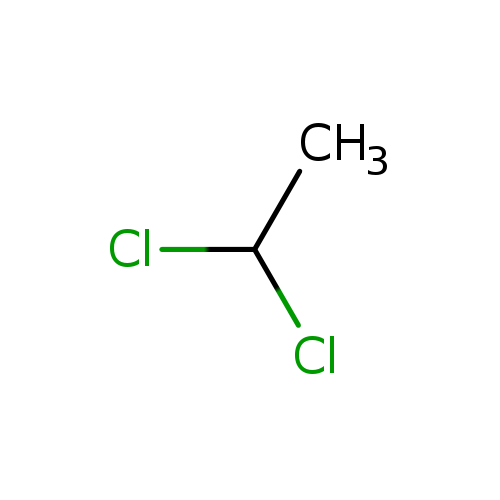
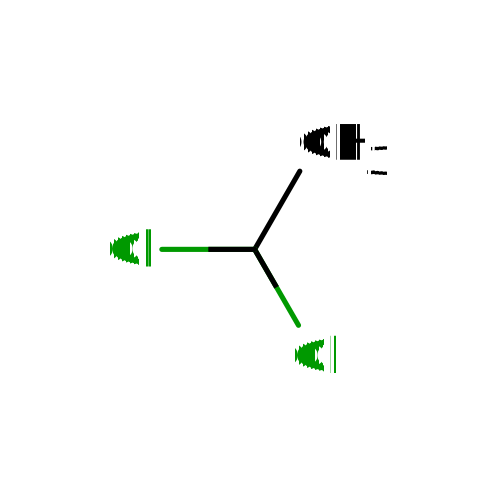
1,1-Dichloroethane is a colorless, oily, man-made liquid. It evaporates quickly at room temperature and has an odor like ether. 1,1-Dichloroethane burns easily. When 1,1-dichloroethane is released to the environment, it usually exists as a vapor rather than a liquid. It is used primarily to make 1,1,1-trichloroethane and a number of other chemicals. It is also used to dissolve other substances such as paint, varnish and finish removers, and to remove grease. 1,1-Dichloroethane was used as a surgical anesthetic, but is no longer. (2)
belongs to the class of organic compounds known as organochlorides. Organochlorides are compounds containing a chemical bond between a carbon atom and a chlorine atom.
The limited information available about 1,1-dichloroethane suggests that it may be nephrotoxic, fetotoxic, and possibly carcinogenic. 1,1-Dichloroethane has been observed to enhance cell transformation and results suggest that 1,1-dichloroethane or a metabolite can bind to cellular macromolecules such as DNA. It had been reported that 1,1-dichloroethane binds to nucleic acids and proteins in vivo and in vitro. This binding is also mediated by the liver cytochrome-P-450 system. Phenobarbital enhances the extent of covalent macromolecular binding. Hence, metabolites of 1,1-dichloroethane bind to the DNA, RNA, and tissue proteins. (2)
Metabolism
After absorption, 1,1-dichloroethane is distributed to the liver, kidney, lung, and stomach. In general, the identification of specific metabolites and the monitoring of enzyme activities indicate that the biotransformation of 1,1-dichloroethane is mediated by hepatic microsomal cytochrome P-450 system. Metabolism of 1,1-dichloroethane by hepatic microsomes results in the production of acetic acid as the major metabolite and 2,2-dichloroethanol, mono-, and dichloroacetic acid as minor metabolites. The initial steps in the metabolism of 1,1-dichloroethane were proposed to involve cytochrome P-450-dependent hydroxylations at either carbon. Hydroxylation at C-l would result in the production of an unstable alpha-haloalcohol, which can lose HCl to yield acetyl chloride. An alternative, but less favorable reaction, would be a chlorine shift to yield chloroacetyl chloride. These acyl chlorides can react with water to generate free acids or react with cellular constituents. Hydroxylation at C-2 would produce 2,2-dichloroethanol, which would undergo subsequent oxidation to dichloroacetaldehyde and dichloroacetic acid. 1,1-dichloroethane metabolites are excreted in urine and breathed out air. (2)
No indication of carcinogenicity (not listed by IARC). (1)
Uses/Sources
1,1-Dichloroethane is used primarily to make 1,1,1-trichloroethane and a number of other chemicals. It is also used to dissolve other substances such as paint, varnish and finish removers, and to remove grease. Exposure may results from breathing air containing vapors of 1,1-dichloroethane, drinking contaminated water, and through eye and skin contact. (2)
Minimum Risk Level
Not Available
Health Effects
1,1-dichloroethane can cause kidney disease after long-term, high-level exposure in the air. It is also known to cause liver damage, as well as central nervous system depression. 1,1-Dichloroethane can cause dermatitis on prolonged dermal exposure. (2, 6)
Symptoms
Burning sensation, cough, drowsiness, headache, nausea, dullness, salivation, sneezing, and vomiting can follow inhnalation or ingestion of 1,1-dichloroethane. Eye exposure can lead to redness and pain of the contact surface. Dermal exposure can lead to roughness and dry skin. has very little effect on the skin. Especially, persons with existing skin disorders may be more susceptible to the effects of this agent. (3, 5)
Treatment
Following oral exposure, immediately dilute with 4 to 8 ounces (120 to 240 mL) of water or milk and administer charcoal as a slurry (240 mL water/30 g charcoal). Consider insertion of a small, flexible nasogastric or orogastric tube to suction gastric contents after recent large ingestions (the risk of further mucosal injury must be weighed against potential benefits). Following inhalation exposure, Move patient to fresh air. Monitor for respiratory distress. If cough or difficulty breathing develops, evaluate for respiratory tract irritation, bronchitis, or pneumonitis. After eye exposure, irrigate exposed eyes with copious amounts of room temperature water for at least 15 minutes. If the exposure occurs through dermal contact, remove contaminated clothing and wash exposed area thoroughly with soap and water. In any case, a physician may need to examine the area if irritation or pain persists. (4)