Record Information
Version1.0
Creation Date2009-03-06 18:58:15 UTC
Update Date2026-03-26 21:20:28 UTC
Accession NumberCHEM000175
Identification
Common Nameo-Cresol
ClassSmall Molecule
Descriptiono-Cresol is a minor urinary metabolite of toluene, a widely used chemical with neurotoxicological properties. (4). o-Cresol is used commercially as a disinfectant. Exposure may occur by inhalation, by cutaneous adsorption or by oral ingestion. o-Cresol denature and precipitate cellular proteins and thus may rapidly cause poisoning. o-Cresol is metabolized by conjugation and oxidation. Ingestion of o-Cresol cause intense burning of mouth and throat, followed by marked abdominal pain and distress. The minimum lethal dose of cresol by mouth is about 2 g. (3).
Contaminant Sources
  • Clean Air Act Chemicals
  • EAFUS Chemicals
  • FooDB Chemicals
  • HMDB Contaminants - Feces
  • HMDB Contaminants - Urine
  • HPV EPA Chemicals
  • My Exposome Chemicals
  • OECD HPV Chemicals
  • STOFF IDENT Compounds
  • Sludge Chemicals
  • T3DB toxins
  • ToxCast & Tox21 Chemicals
Contaminant Type
  • Aromatic Hydrocarbon
  • Disinfectant
  • Food Toxin
  • Household Toxin
  • Industrial/Workplace Toxin
  • Metabolite
  • Natural Compound
  • Organic Compound
  • Pollutant
  • Solvent
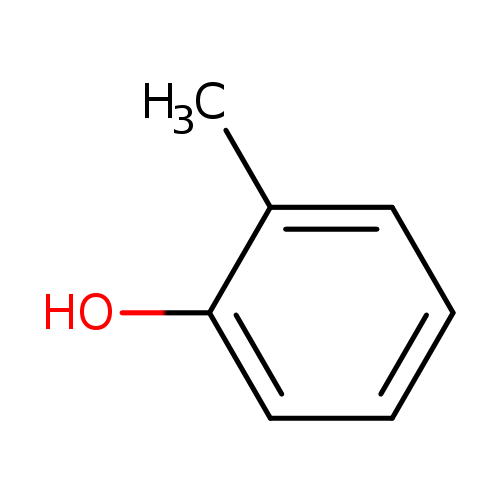
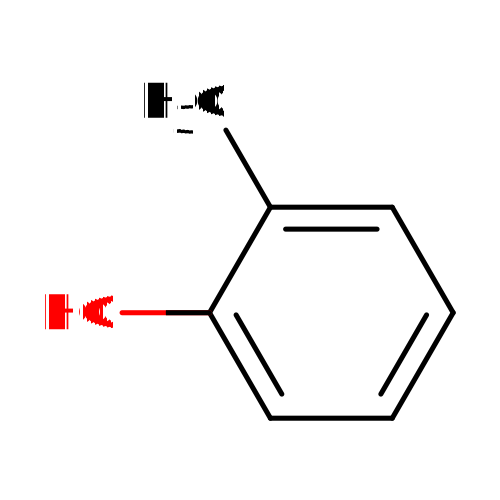
Chemical Structure
Thumb
Synonyms
ValueSource
1-Hydroxy-2-methylbenzeneChEBI
2-CresolChEBI
2-Hydroxy-1-methylbenzeneChEBI
2-HydroxytolueneChEBI
O-Cresylic acidChEBI
O-KresolChEBI
O-MethylphenolChEBI
Ortho-cresolChEBI
OrthocresolChEBI
O-CresylateGenerator
1-Methyl-2-hydroxybenzeneHMDB
2-MethylphenolHMDB, MeSH
O-HydroxytolueneHMDB
O-MethylphenylolHMDB
O-OxytolueneHMDB
O-ToluolHMDB
2-Cresol, potassium saltMeSH, HMDB
2-Cresol, ammonium saltMeSH, HMDB
2-Cresol, sodium saltMeSH, HMDB
Chemical FormulaC7H8O
Average Molecular Mass108.138 g/mol
Monoisotopic Mass108.058 g/mol
CAS Registry Number95-48-7
IUPAC Name2-methylphenol
Traditional Nameo-cresol
SMILESCC1=CC=CC=C1O
InChI IdentifierInChI=1S/C7H8O/c1-6-4-2-3-5-7(6)8/h2-5,8H,1H3
InChI KeyQWVGKYWNOKOFNN-UHFFFAOYSA-N
Chemical Taxonomy
Description belongs to the class of organic compounds known as ortho cresols. These are organic compounds containing an ortho-cresol moiety, which consists of a benzene bearing one hydroxyl group at ring positions 1 and 2, respectively.
KingdomOrganic compounds
Super ClassBenzenoids
ClassPhenols
Sub ClassCresols
Direct ParentOrtho cresols
Alternative Parents
Substituents
  • O-cresol
  • 1-hydroxy-4-unsubstituted benzenoid
  • 1-hydroxy-2-unsubstituted benzenoid
  • Toluene
  • Monocyclic benzene moiety
  • Organic oxygen compound
  • Hydrocarbon derivative
  • Organooxygen compound
  • Aromatic homomonocyclic compound
Molecular FrameworkAromatic homomonocyclic compounds
External Descriptors
Biological Properties
StatusDetected and Not Quantified
OriginEndogenous
Cellular Locations
  • Membrane
Biofluid LocationsNot Available
Tissue LocationsNot Available
PathwaysNot Available
ApplicationsNot Available
Biological Roles
Chemical RolesNot Available
Physical Properties
StateSolid
AppearanceColorless solids or liquids.
Experimental Properties
PropertyValue
Melting Point29.8°C
Boiling Point191.5°C (376.7°F)
Solubility25.9 mg/mL at 25°C
Predicted Properties
PropertyValueSource
Water Solubility27.5 g/LALOGPS
logP1.89ALOGPS
logP2.18ChemAxon
logS-0.59ALOGPS
pKa (Strongest Acidic)10.37ChemAxon
pKa (Strongest Basic)-5.5ChemAxon
Physiological Charge0ChemAxon
Hydrogen Acceptor Count1ChemAxon
Hydrogen Donor Count1ChemAxon
Polar Surface Area20.23 ŲChemAxon
Rotatable Bond Count0ChemAxon
Refractivity33.08 m³·mol⁻¹ChemAxon
Polarizability11.83 ųChemAxon
Number of Rings1ChemAxon
Bioavailability1ChemAxon
Rule of FiveYesChemAxon
Ghose FilterNoChemAxon
Veber's RuleYesChemAxon
MDDR-like RuleNoChemAxon
Spectra
Spectra
Spectrum TypeDescriptionSplash KeyView
GC-MSGC-MS Spectrum - EI-B (Non-derivatized)splash10-0a6r-9600000000-5a01d451557a1b35332aSpectrum
GC-MSGC-MS Spectrum - EI-B (Non-derivatized)splash10-0pbi-9200000000-be9e6e56af8374e66bebSpectrum
GC-MSGC-MS Spectrum - EI-B (Non-derivatized)splash10-0a4i-7900000000-c8eb63e9fe9da99fda0fSpectrum
GC-MSGC-MS Spectrum - GC-EI-TOF (Non-derivatized)splash10-00ko-5900000000-cef3087dea0c431cce4bSpectrum
GC-MSGC-MS Spectrum - EI-B (Non-derivatized)splash10-0a6r-9600000000-5a01d451557a1b35332aSpectrum
GC-MSGC-MS Spectrum - EI-B (Non-derivatized)splash10-0pbi-9200000000-be9e6e56af8374e66bebSpectrum
GC-MSGC-MS Spectrum - EI-B (Non-derivatized)splash10-0a4i-7900000000-c8eb63e9fe9da99fda0fSpectrum
GC-MSGC-MS Spectrum - GC-EI-TOF (Non-derivatized)splash10-00ko-5900000000-cef3087dea0c431cce4bSpectrum
Predicted GC-MSPredicted GC-MS Spectrum - GC-MS (Non-derivatized) - 70eV, Positivesplash10-0a4i-6900000000-7ba7c816e0edce6b772fSpectrum
Predicted GC-MSPredicted GC-MS Spectrum - GC-MS (1 TMS) - 70eV, Positivesplash10-06di-7900000000-db9d20fae81c588496feSpectrum
Predicted GC-MSPredicted GC-MS Spectrum - GC-MS (Non-derivatized) - 70eV, PositiveNot AvailableSpectrum
LC-MS/MSLC-MS/MS Spectrum - Quattro_QQQ 10V, Positive (Annotated)splash10-0a4i-5900000000-c7d0037b6de77737b7e4Spectrum
LC-MS/MSLC-MS/MS Spectrum - Quattro_QQQ 25V, Positive (Annotated)splash10-0006-9000000000-151af99851311002a3faSpectrum
LC-MS/MSLC-MS/MS Spectrum - Quattro_QQQ 40V, Positive (Annotated)splash10-03y3-9000000000-260e2bcf6f7dca1a3c9cSpectrum
LC-MS/MSLC-MS/MS Spectrum - EI-B (VARIAN MAT-44) , Positivesplash10-0a6r-9600000000-ac87a40c538d227b6915Spectrum
LC-MS/MSLC-MS/MS Spectrum - EI-B (HITACHI RMU-6L) , Positivesplash10-0pbi-9200000000-be9e6e56af8374e66bebSpectrum
LC-MS/MSLC-MS/MS Spectrum - EI-B (HITACHI RMU-7M) , Positivesplash10-0a4i-7900000000-1a7cfac9452c2b14f977Spectrum
Predicted LC-MS/MSPredicted LC-MS/MS Spectrum - 10V, Positivesplash10-0a4i-0900000000-5d6424b7db2e7e40d6d7Spectrum
Predicted LC-MS/MSPredicted LC-MS/MS Spectrum - 20V, Positivesplash10-0a4i-2900000000-e468ad1b8f28b32d7276Spectrum
Predicted LC-MS/MSPredicted LC-MS/MS Spectrum - 40V, Positivesplash10-0ufr-9000000000-2629c90f57b18d57c59dSpectrum
Predicted LC-MS/MSPredicted LC-MS/MS Spectrum - 10V, Negativesplash10-0a4i-0900000000-8feea1e7288d5bc80ea5Spectrum
Predicted LC-MS/MSPredicted LC-MS/MS Spectrum - 20V, Negativesplash10-0a4i-0900000000-22006f43be347c915292Spectrum
Predicted LC-MS/MSPredicted LC-MS/MS Spectrum - 40V, Negativesplash10-0a6u-9300000000-d3ec19098100f79d4ebdSpectrum
Predicted LC-MS/MSPredicted LC-MS/MS Spectrum - 10V, Negativesplash10-0a4i-0900000000-3f09649991cc4cfcf1ecSpectrum
Predicted LC-MS/MSPredicted LC-MS/MS Spectrum - 20V, Negativesplash10-0a4i-0900000000-3f09649991cc4cfcf1ecSpectrum
Predicted LC-MS/MSPredicted LC-MS/MS Spectrum - 40V, Negativesplash10-0i03-9100000000-267c04454ade05650a34Spectrum
Predicted LC-MS/MSPredicted LC-MS/MS Spectrum - 10V, Positivesplash10-0a4i-2900000000-c580eec1345db0ab9045Spectrum
Predicted LC-MS/MSPredicted LC-MS/MS Spectrum - 20V, Positivesplash10-002f-9000000000-923877cbbb5c2a1edb9cSpectrum
Predicted LC-MS/MSPredicted LC-MS/MS Spectrum - 40V, Positivesplash10-016u-9000000000-09eba92f6442b1a88ad5Spectrum
MSMass Spectrum (Electron Ionization)splash10-0a4i-9800000000-c390212681445a7e2727Spectrum
1D NMR1H NMR SpectrumNot AvailableSpectrum
1D NMR13C NMR SpectrumNot AvailableSpectrum
1D NMR1H NMR SpectrumNot AvailableSpectrum
1D NMR13C NMR SpectrumNot AvailableSpectrum
1D NMR1H NMR SpectrumNot AvailableSpectrum
1D NMR13C NMR SpectrumNot AvailableSpectrum
1D NMR1H NMR SpectrumNot AvailableSpectrum
1D NMR13C NMR SpectrumNot AvailableSpectrum
1D NMR1H NMR SpectrumNot AvailableSpectrum
1D NMR13C NMR SpectrumNot AvailableSpectrum
1D NMR1H NMR SpectrumNot AvailableSpectrum
1D NMR13C NMR SpectrumNot AvailableSpectrum
1D NMR1H NMR SpectrumNot AvailableSpectrum
1D NMR13C NMR SpectrumNot AvailableSpectrum
1D NMR1H NMR SpectrumNot AvailableSpectrum
1D NMR13C NMR SpectrumNot AvailableSpectrum
1D NMR1H NMR SpectrumNot AvailableSpectrum
1D NMR13C NMR SpectrumNot AvailableSpectrum
1D NMR1H NMR SpectrumNot AvailableSpectrum
1D NMR13C NMR SpectrumNot AvailableSpectrum
1D NMR1H NMR SpectrumNot AvailableSpectrum
1D NMR13C NMR SpectrumNot AvailableSpectrum
1D NMR1H NMR SpectrumNot AvailableSpectrum
1D NMR13C NMR SpectrumNot AvailableSpectrum
2D NMR[1H,13C] 2D NMR SpectrumNot AvailableSpectrum
Toxicity Profile
Route of ExposureOral (7) ; inhalation (7) ; dermal (7)
Mechanism of ToxicityTarget organs of ingested cresols in humans are the blood, kidneys, lungs, liver, heart, and central nervous system. Cresols impair the stratum corneum and produce coagulation necrosis by denaturating and precipitating proteins. They may also induce changes in neurotransmitter levels, affect the activities of some enzymes, increase lipid peroxidation, and change membrane fluidity in the brain. (7)
MetabolismCresols can be absorbed following inhalation, oral, and dermal exposure. Once in the body they can distribute rapidly into many organs and tissues. Cresols undergo oxidative metabolism in the liver and are rapidly eliminated, mostly in the urine, as sulfate or glucuronide conjugates. The activation of cresols by oxidation involves tyrosinase and thyroid peroxidase, forming a reactive quinone methide. Experiments with recombinant P-450s demonstrated cresol metabolism was mediated by several P-450s including CYP2D6, 2C19, 1A2, 1A1, and 2E1. (7, 1, 8, 2)
Toxicity ValuesLD50: 344 mg/kg (Oral, Mouse) (9) LD50: 179 mg/m3 (Inhalation, Mouse) (9) LD50: 620 mg/kg (Dermal, Mouse) (9)
Lethal DoseNot Available
Carcinogenicity (IARC Classification)No indication of carcinogenicity to humans (not listed by IARC).
Uses/SourcesCresols are used to as solvents, disinfectants and deodorizers, as well as to make other chemicals. They may be formed normally in the body from other compounds. Cresols are found in many foods and in wood and tobacco smoke, crude oil, coal tar, and in chemical mixtures used as wood preservatives. Small organisms in soil and water produce cresols when they break down materials in the environment. Breathing air containing cresols is the primary source of exposure. Exposure may also result from drinking contaminated water, eating contaminated food and coming into contact with liquids containing cresols. (7)
Minimum Risk LevelIntermediate Oral: 0.1 mg/kg/day (5) Chronic Oral: 0.1 mg/kg/day (5)
Health EffectsCresols breathed, ingested, or applied to the skin at very high levels can be very harmful because they are corrosive substances. Ingestion of high levels results in mouth and throat burns, abdominal pain, vomiting, kidney problems, and effects on the blood and nervous system. Skin contact with high levels of cresols can burn the skin and damage the kidneys, liver, blood, lungs, and brain. Tachycardia, respiratory failure, unconsciousness and death may occur in both cases. Many of these effects may not by caused directly by cresols, but may be a result of secondary reactions to shock caused by external and internal burns. (6, 7)
SymptomsIngestion of cresols results in burning of the mouth and throat, abdominal pain, and vomiting. Inhalation or dermal exposure to cresols can produce irritation and corrosion at the site of contact. (6)
TreatmentFollowing oral exposure, immediately dilute with 4 to 8 ounces (120 to 240 mL) of water or milk (not to exceed 4 ounces/120 mL in a child). Observe patients with ingestion carefully for the possible development of esophageal or gastrointestinal tract irritation or burns. If signs or symptoms of esophageal irritation or burns are present, consider endoscopy to determine the extent of injury. In case of hypotension, infuse isotonic fluid. If hypotension persists, administer dopamine or norepinephrine. In case of hypertension, monitor vital signs regularly. For mild/moderate asymptomatic hypertension (no end organ damage), pharmacologic treatment is generally not necessary. Following inhalation, move patient to fresh air. Monitor for respiratory distress. If cough or difficulty breathing develops, evaluate for respiratory tract irritation, bronchitis, or pneumonitis. Administer oxygen and assist ventilation as required. Treat bronchospasm with inhaled beta2 agonist and oral or parenteral corticosteroids. In case of acute lung injury, maintain ventilation and oxygenation and evaluate with frequent arterial blood gas or pulse oximetry monitoring. Early use of PEEP and mechanical ventilation may be needed. Following eye exposure, irrigate exposed eyes with copious amounts of room temperature water for at least 15 minutes. Following dermal exposure, remove contaminated clothing and wash exposed area thoroughly with soap and water. Treat dermal irritation or burns with standard topical therapy. Patients developing dermal hypersensitivity reactions may require treatment with systemic or topical corticosteroids or antihistamines. (10)
Concentrations
Not Available
DrugBank IDNot Available
HMDB IDHMDB0002055
FooDB IDFDB008785
Phenol Explorer IDNot Available
KNApSAcK IDC00030878
BiGG IDNot Available
BioCyc IDCPD-109
METLIN IDNot Available
PDB IDNot Available
Wikipedia LinkO-Cresol
Chemspider ID13835772
ChEBI ID28054
PubChem Compound ID335
Kegg Compound IDC01542
YMDB IDYMDB01457
ECMDB IDM2MDB005007
References
Synthesis ReferenceNot Available
MSDSLink
General References
1. https://www.ncbi.nlm.nih.gov/pubmed/?term=15687000
2. Mung D, Li L: Development of Chemical Isotope Labeling LC-MS for Milk Metabolomics: Comprehensive and Quantitative Profiling of the Amine/Phenol Submetabolome. Anal Chem. 2017 Apr 18;89(8):4435-4443. doi: 10.1021/acs.analchem.6b03737. Epub 2017 Mar 28.
3. Fustinoni S, Mercadante R, Campo L, Scibetta L, Valla C, Foa V: Determination of urinary ortho- and meta-cresol in humans by headspace SPME gas chromatography/mass spectrometry. J Chromatogr B Analyt Technol Biomed Life Sci. 2005 Mar 25;817(2):309-17.
4. Boatto G, Nieddu M, Carta A, Pau A, Lorenzoni S, Manconi P, Serra D: Determination of phenol and o-cresol by GC/MS in a fatal poisoning case. Forensic Sci Int. 2004 Jan 28;139(2-3):191-4.