Record Information
Version1.0
Creation Date2009-03-06 18:58:22 UTC
Update Date2026-03-27 00:49:41 UTC
Accession NumberCHEM000218
Identification
Common NameDibromochloromethane
ClassSmall Molecule
DescriptionDibromochloromethane (and bromoform also known as tribromomethane) are colorless to yellow, heavy, nonburnable liquids with a sweetish odor. These chemicals are possible contaminants of drinking water that has been chlorinated. Bromoform and dibromochloromethane may form when chlorine reacts with other naturally occurring substances in water, such as decomposing plant material. Plants in the ocean also produce small amounts of these chemicals. Carcinogenic effects have been observed in animals exposed to bromoform and dibromochloromethane. Dibromochloromethane induced liver tumors in male and female mice. The primary targets of bromoform and dibromochloromethane toxicit are liver, kidney, and central nervous system.
Contaminant Sources
  • Clean Air Act Chemicals
  • Disinfection Byproducts
  • HPV EPA Chemicals
  • IARC Carcinogens Group 3
  • T3DB toxins
  • ToxCast & Tox21 Chemicals
Contaminant Type
  • Bromide Compound
  • Food Toxin
  • Indicator and Reagent
  • Industrial/Workplace Toxin
  • Metabolite
  • Organic Compound
  • Organobromide
  • Organochloride
  • Pollutant
  • Synthetic Compound
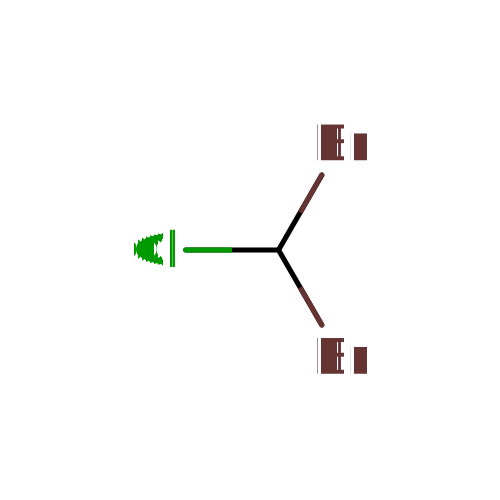
Chemical Structure
Thumb
Synonyms
ValueSource
ChlorodibromomethaneHMDB
Dibromo(chloro)methaneHMDB
Dibromo-chloro-methaneHMDB
DibromochloromethaneKEGG
Chemical FormulaCHBr2Cl
Average Molecular Mass208.280 g/mol
Monoisotopic Mass205.813 g/mol
CAS Registry Number124-48-1
IUPAC Namedibromo(chloro)methane
Traditional Namedibromochloromethane
SMILESClC(Br)Br
InChI IdentifierInChI=1S/CHBr2Cl/c2-1(3)4/h1H
InChI KeyGATVIKZLVQHOMN-UHFFFAOYSA-N
Chemical Taxonomy
Description belongs to the class of organic compounds known as trihalomethanes. These are organic compounds in which exactly three of the four hydrogen atoms of methane (CH4) are replaced by halogen atoms.
KingdomOrganic compounds
Super ClassOrganohalogen compounds
ClassAlkyl halides
Sub ClassHalomethanes
Direct ParentTrihalomethanes
Alternative Parents
Substituents
  • Trihalomethane
  • Hydrocarbon derivative
  • Organochloride
  • Organobromide
  • Alkyl chloride
  • Alkyl bromide
  • Aliphatic acyclic compound
Molecular FrameworkAliphatic acyclic compounds
External Descriptors
Biological Properties
StatusDetected and Not Quantified
OriginExogenous
Cellular Locations
  • Membrane
Biofluid LocationsNot Available
Tissue LocationsNot Available
PathwaysNot Available
ApplicationsNot Available
Biological RolesNot Available
Chemical RolesNot Available
Physical Properties
StateLiquid
AppearanceColorless to pale yellow liquid. (17)
Experimental Properties
PropertyValue
Melting Point-20°C
Boiling Point120 °C
Solubility2.7 mg/mL at 20 °C [HEIKES,DL (1987)]
Predicted Properties
PropertyValueSource
Water Solubility4.76 g/LALOGPS
logP2.17ALOGPS
logP2.13ChemAxon
logS-1.6ALOGPS
Physiological Charge0ChemAxon
Hydrogen Acceptor Count0ChemAxon
Hydrogen Donor Count0ChemAxon
Polar Surface Area0 ŲChemAxon
Rotatable Bond Count0ChemAxon
Refractivity26.98 m³·mol⁻¹ChemAxon
Polarizability10.68 ųChemAxon
Number of Rings0ChemAxon
Bioavailability1ChemAxon
Rule of FiveYesChemAxon
Ghose FilterNoChemAxon
Veber's RuleYesChemAxon
MDDR-like RuleNoChemAxon
Spectra
Spectra
Spectrum TypeDescriptionSplash KeyView
GC-MSGC-MS Spectrum - EI-B (Non-derivatized)splash10-004i-5900000000-0a5bd838330dc26d5a35Spectrum
Predicted GC-MSPredicted GC-MS Spectrum - GC-MS (Non-derivatized) - 70eV, Positivesplash10-0adi-0960000000-88b94675ee64d5a1fa39Spectrum
Predicted GC-MSPredicted GC-MS Spectrum - GC-MS (Non-derivatized) - 70eV, PositiveNot AvailableSpectrum
Predicted LC-MS/MSPredicted LC-MS/MS Spectrum - 10V, Positivesplash10-0a4i-0090000000-331858b80ef37cc92b57Spectrum
Predicted LC-MS/MSPredicted LC-MS/MS Spectrum - 20V, Positivesplash10-0a4i-0090000000-331858b80ef37cc92b57Spectrum
Predicted LC-MS/MSPredicted LC-MS/MS Spectrum - 40V, Positivesplash10-0a4i-0090000000-331858b80ef37cc92b57Spectrum
Predicted LC-MS/MSPredicted LC-MS/MS Spectrum - 10V, Negativesplash10-0udi-0090000000-23f04d542b2a35b2e302Spectrum
Predicted LC-MS/MSPredicted LC-MS/MS Spectrum - 20V, Negativesplash10-0udi-0090000000-23f04d542b2a35b2e302Spectrum
Predicted LC-MS/MSPredicted LC-MS/MS Spectrum - 40V, Negativesplash10-0udi-0090000000-23f04d542b2a35b2e302Spectrum
Predicted LC-MS/MSPredicted LC-MS/MS Spectrum - 10V, Positivesplash10-0a4i-0090000000-262798c8821c1a784f9fSpectrum
Predicted LC-MS/MSPredicted LC-MS/MS Spectrum - 20V, Positivesplash10-0a4i-0090000000-262798c8821c1a784f9fSpectrum
Predicted LC-MS/MSPredicted LC-MS/MS Spectrum - 40V, Positivesplash10-00b9-0900000000-30e20910a1b4ef59649fSpectrum
Predicted LC-MS/MSPredicted LC-MS/MS Spectrum - 10V, Negativesplash10-0udi-0090000000-1cd0365290e6754179c7Spectrum
Predicted LC-MS/MSPredicted LC-MS/MS Spectrum - 20V, Negativesplash10-0udi-0090000000-1cd0365290e6754179c7Spectrum
Predicted LC-MS/MSPredicted LC-MS/MS Spectrum - 40V, Negativesplash10-0udi-0090000000-1cd0365290e6754179c7Spectrum
MSMass Spectrum (Electron Ionization)splash10-004i-3900000000-2bd815439d7061bd9aa2Spectrum
1D NMR1H NMR SpectrumNot AvailableSpectrum
1D NMR13C NMR SpectrumNot AvailableSpectrum
1D NMR1H NMR SpectrumNot AvailableSpectrum
1D NMR13C NMR SpectrumNot AvailableSpectrum
1D NMR1H NMR SpectrumNot AvailableSpectrum
1D NMR13C NMR SpectrumNot AvailableSpectrum
1D NMR1H NMR SpectrumNot AvailableSpectrum
1D NMR13C NMR SpectrumNot AvailableSpectrum
1D NMR1H NMR SpectrumNot AvailableSpectrum
1D NMR13C NMR SpectrumNot AvailableSpectrum
1D NMR1H NMR SpectrumNot AvailableSpectrum
1D NMR13C NMR SpectrumNot AvailableSpectrum
1D NMR1H NMR SpectrumNot AvailableSpectrum
1D NMR13C NMR SpectrumNot AvailableSpectrum
1D NMR1H NMR SpectrumNot AvailableSpectrum
1D NMR13C NMR SpectrumNot AvailableSpectrum
1D NMR1H NMR SpectrumNot AvailableSpectrum
1D NMR13C NMR SpectrumNot AvailableSpectrum
1D NMR1H NMR SpectrumNot AvailableSpectrum
1D NMR13C NMR SpectrumNot AvailableSpectrum
1D NMR1H NMR SpectrumNot AvailableSpectrum
Toxicity Profile
Route of ExposureOral (17) ; inhalation (17) ; dermal (17)
Mechanism of ToxicityDibromochloromethane is oxidized into trihalomethanol by the cytochrome P-450 mixed function oxidase system of liver. Trihalomethanol then decomposes by loss of hydrogen and halide ions to yield the dihalocarbonyl (an analogue of phosgene), which is a highly reactive molecule, and may undergo a number of reactions, including direct reaction with cellular nucleophiles to yield covalent adducts, reaction with two moles of glutathione (GSH) to yield CO and oxidized glutathione (GSSG), and hydrolysis to yield CO2. The fraction of the dose converted to carbon monoxide has not been quantified, but dramatically increased levels of carboxyhemoglobin have been reported following oral exposure of rats to bromoform. (17)
MetabolismIn humans and laboratory animals, dibromochloromethane (and bromoform) are generally absorbed quickly. Dibromochloromethane (and bromoform) are thought to be metabolized by at least two route-independent pathways: oxidation by cytochrome P-450 mixed function oxidase system and conjugation via glutathione S-transferase. After ingestion, excretion occurs primarily by exhalation of the compound or of CO2. (17)
Toxicity ValuesNot Available
Lethal DoseNot Available
Carcinogenicity (IARC Classification)3, not classifiable as to its carcinogenicity to humans. (16)
Uses/SourcesDibromochloromethane exposition occurs by drinking water that has been treated with chlorine, at a swimming pool, by breathing bromoform or dibromochloromethane that has evaporated into the air, or by uptake from the water through the skin. Neither dibromochloromethane nor bromoform are likely to be found in food. (17)
Minimum Risk LevelNot Available
Health EffectsExposure to dibromochloromethane leads to central nervous system depression, which is probably the chief cause of death in acute exposures. Some studies in animals indicate that exposure to high doses of dibromochloromethane may also lead to liver and the kidney injury within a short period of time. (17)
SymptomsNot Available
TreatmentEYES: irrigate opened eyes for several minutes under running water. INGESTION: do not induce vomiting. Rinse mouth with water (never give anything by mouth to an unconscious person). Seek immediate medical advice. SKIN: should be treated immediately by rinsing the affected parts in cold running water for at least 15 minutes, followed by thorough washing with soap and water. If necessary, the person should shower and change contaminated clothing and shoes, and then must seek medical attention. INHALATION: supply fresh air. If required provide artificial respiration.
Concentrations
Not Available
DrugBank IDNot Available
HMDB IDHMDB0059903
FooDB IDNot Available
Phenol Explorer IDNot Available
KNApSAcK IDNot Available
BiGG IDNot Available
BioCyc IDNot Available
METLIN IDNot Available
PDB IDNot Available
Wikipedia LinkDibromochloromethane
Chemspider ID29036
ChEBI IDNot Available
PubChem Compound ID31296
Kegg Compound IDC14692
YMDB IDNot Available
ECMDB IDNot Available
References
Synthesis ReferenceNot Available
MSDSNot Available
General References
1. Weaver WA, Li J, Wen Y, Johnston J, Blatchley MR, Blatchley ER 3rd: Volatile disinfection by-product analysis from chlorinated indoor swimming pools. Water Res. 2009 Jul;43(13):3308-18. doi: 10.1016/j.watres.2009.04.035. Epub 2009 May 3.
2. Aguilera-Herrador E, Lucena R, Cardenas S, Valcarcel M: Determination of trihalomethanes in waters by ionic liquid-based single drop microextraction/gas chromatographic/mass spectrometry. J Chromatogr A. 2008 Oct 31;1209(1-2):76-82. doi: 10.1016/j.chroma.2008.09.030. Epub 2008 Sep 13.
3. Panyakapo M, Soontornchai S, Paopuree P: Cancer risk assessment from exposure to trihalomethanes in tap water and swimming pool water. J Environ Sci (China). 2008;20(3):372-8.
4. Chowdhury S, Champagne P, James McLellan P: Investigating effects of bromide ions on trihalomethanes and developing model for predicting bromodichloromethane in drinking water. Water Res. 2010 Apr;44(7):2349-59. doi: 10.1016/j.watres.2009.12.042. Epub 2010 Jan 6.
5. Padhi RK, Sowmya M, Mohanty AK, Bramha SN, Satpathy KK: Formation and speciation characteristics of brominated trihalomethanes in seawater chlorination. Water Environ Res. 2012 Nov;84(11):2003-9.
6. Ye B, Wang W, Yang L, Wei J, E X: Formation and modeling of disinfection by-products in drinking water of six cities in China. J Environ Monit. 2011 May;13(5):1271-5. doi: 10.1039/c0em00795a. Epub 2011 Mar 18.
7. Carter JM, Moran MJ, Zogorski JS, Price CV: Factors associated with sources, transport, and fate of chloroform and three other trihalomethanes in untreated groundwater used for drinking water. Environ Sci Technol. 2012 Aug 7;46(15):8189-97. doi: 10.1021/es301839p. Epub 2012 Jul 25.
8. Hansen KM, Zortea R, Piketty A, Vega SR, Andersen HR: Photolytic removal of DBPs by medium pressure UV in swimming pool water. Sci Total Environ. 2013 Jan 15;443:850-6. doi: 10.1016/j.scitotenv.2012.11.064. Epub 2012 Dec 14.
9. Yamamoto K, Mori Y: Simulating distribution of trihalomethane in tap water in the area receiving a combination of advanced treated water and conventionally treated different source water: 1998, 1999 and 2002 data on Osaka Prefecture and its surrounding cities, Japan. Bull Environ Contam Toxicol. 2009 Nov;83(5):677-80. doi: 10.1007/s00128-009-9777-6. Epub 2009 May 28.
10. Silva ZI, Rebelo MH, Silva MM, Alves AM, Cabral Mda C, Almeida AC, Aguiar FR, de Oliveira AL, Nogueira AC, Pinhal HR, Aguiar PM, Cardoso AS: Trihalomethanes in Lisbon indoor swimming pools: occurrence, determining factors, and health risk classification. J Toxicol Environ Health A. 2012;75(13-15):878-92. doi: 10.1080/15287394.2012.690706.
11. Villanueva CM, Castano-Vinyals G, Moreno V, Carrasco-Turigas G, Aragones N, Boldo E, Ardanaz E, Toledo E, Altzibar JM, Zaldua I, Azpiroz L, Goni F, Tardon A, Molina AJ, Martin V, Lopez-Rojo C, Jimenez-Moleon JJ, Capelo R, Gomez-Acebo I, Peiro R, Ripoll M, Gracia-Lavedan E, Nieuwenhujsen MJ, Rantakokko P, Goslan EH, Pollan M, Kogevinas M: Concentrations and correlations of disinfection by-products in municipal drinking water from an exposure assessment perspective. Environ Res. 2012 Apr;114:1-11. doi: 10.1016/j.envres.2012.02.002. Epub 2012 Mar 20.
12. Zhang L, Xu L, Zeng Q, Zhang SH, Xie H, Liu AL, Lu WQ: Comparison of DNA damage in human-derived hepatoma line (HepG2) exposed to the fifteen drinking water disinfection byproducts using the single cell gel electrophoresis assay. Mutat Res. 2012 Jan 24;741(1-2):89-94. doi: 10.1016/j.mrgentox.2011.11.004. Epub 2011 Nov 16.
13. Silva LK, Backer LC, Ashley DL, Gordon SM, Brinkman MC, Nuckols JR, Wilkes CR, Blount BC: The influence of physicochemical properties on the internal dose of trihalomethanes in humans following a controlled showering exposure. J Expo Sci Environ Epidemiol. 2013 Jan-Feb;23(1):39-45. doi: 10.1038/jes.2012.80. Epub 2012 Jul 25.
14. Cervera MI, Beltran J, Lopez FJ, Hernandez F: Determination of volatile organic compounds in water by headspace solid-phase microextraction gas chromatography coupled to tandem mass spectrometry with triple quadrupole analyzer. Anal Chim Acta. 2011 Oct 17;704(1-2):87-97. doi: 10.1016/j.aca.2011.08.012. Epub 2011 Aug 11.
15. Jakubowska N, Henkelmann B, Schramm KW, Namiesnik J: Optimization of a novel procedure for determination of VOCs in water and human urine samples based on SBSE coupled with TD-GC-HRMS. J Chromatogr Sci. 2009 Sep;47(8):689-93.