Record Information
Version1.0
Creation Date2009-03-23 00:30:42 UTC
Update Date2026-04-05 20:23:29 UTC
Accession NumberCHEM000612
Identification
Common NameNickel ammonium sulfate hexahydrate
ClassSmall Molecule
DescriptionNickel ammonium sulfate hexahydrate (H8N2NiO8S2) is an exogenous inorganic compound with an average molecular weight of 286.90 g/mol. It exists as a solid at room temperature. Nickel ammonium sulfate hexahydrate belongs to the transition metal sulfates, a subclass of transition metal oxoanionic compounds within the inorganic compounds. This substance is released from or found in electrical and electronic equipment, specifically antennas, electric switches, and thin magnetic films. The compound interacts with ten recorded protein targets. Nickel exhibits a high affinity for chromatin proteins, such as Histone H1.4 (H1-4) and Histone H2B type 1-C/E/F/G/I (H2BC4); the resulting complexing with heterochromatin can lead to DNA hypermethylation, condensation, gene silencing, and inhibition of histone acetylation, which disturb gene expression. Nickel also substitutes for iron in several proteins, which inhibits their activity. This occurs in alpha-ketoglutarate-dependent dioxygenases, including DNA oxidative demethylase ALKBH2 and Alpha-ketoglutarate-dependent dioxygenase alkB homolog 3 (ALKBH3), thereby inhibiting DNA repair. Similarly, nickel substitutes for iron in prolyl hydroxylases EGLN1, EGLN2, and EGLN3, which prevents their enzyme activity and causes hypoxia-mimic stress through the accumulation of hypoxia inducible factor 1 alpha. Furthermore, nickel inhibits the demethylation activity of jmjC domain-containing histone demethylation proteins (unnamed protein) by substituting for iron. Finally, nickel is known to substitute for other essential elements in calcineurin, specifically targeting the catalytic subunit alpha (PPP3CA) and subunits B type 1 (PPP3R1) and type 2 (PPP3R2).
Contaminant Sources
  • Clean Air Act Chemicals
  • IARC Carcinogens Group 1
  • T3DB toxins
Contaminant Type
  • Industrial/Workplace Toxin
  • Inorganic Compound
  • Nickel Compound
  • Pollutant
  • Synthetic Compound
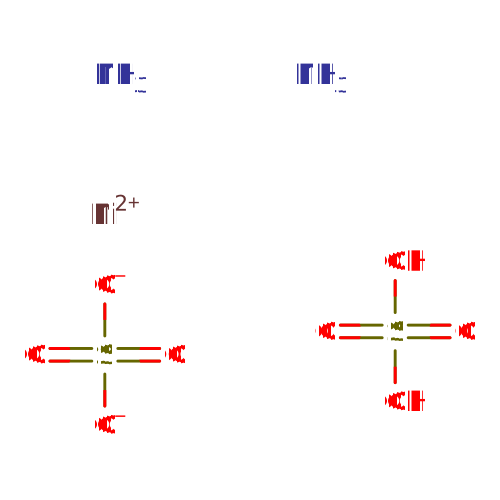
Chemical Structure
Thumb
Synonyms
ValueSource
Ammonium disulfatonickelate(II)ChEBI
Ammonium nickel sulfate (anhydrous)ChEBI
Diammonium nickel bis(sulphate)ChEBI
Nickel ammonium sulfateChEBI
Nickel ammonium sulfate (anhydrous)ChEBI
Nickel(II) ammonium sulfateChEBI
Ammonium disulfatonickelic acid(II)Generator
Ammonium disulphatonickelate(II)Generator
Ammonium disulphatonickelic acid(II)Generator
Ammonium nickel sulfuric acid (anhydrous)Generator
Ammonium nickel sulphate (anhydrous)Generator
Ammonium nickel sulphuric acid (anhydrous)Generator
Diammonium nickel bis(sulfate)Generator
Diammonium nickel bis(sulfuric acid)Generator
Diammonium nickel bis(sulphuric acid)Generator
Nickel ammonium sulfuric acidGenerator
Nickel ammonium sulphateGenerator
Nickel ammonium sulphuric acidGenerator
Nickel ammonium sulfuric acid (anhydrous)Generator
Nickel ammonium sulphate (anhydrous)Generator
Nickel ammonium sulphuric acid (anhydrous)Generator
Nickel(II) ammonium sulfuric acidGenerator
Nickel(II) ammonium sulphateGenerator
Nickel(II) ammonium sulphuric acidGenerator
Nickel ammonium sulfuric acid hexahydric acidGenerator
Nickel ammonium sulphate hexahydrateGenerator
Nickel ammonium sulphuric acid hexahydric acidGenerator
Ammonium nickel sulfateMeSH
Ammonium nickel sulfate, hexahydrateMeSH
Chemical FormulaH8N2NiO8S2
Average Molecular Mass286.896 g/mol
Monoisotopic Mass285.908 g/mol
CAS Registry Number15699-18-0
IUPAC NameNot Available
Traditional Namenickel(2+) ion sulfuric acid diamine sulfate
SMILESN.N.[Ni++].OS(O)(=O)=O.[O-]S([O-])(=O)=O
InChI IdentifierInChI=1S/2H3N.Ni.2H2O4S/c;;;2*1-5(2,3)4/h2*1H3;;2*(H2,1,2,3,4)/q;;+2;;/p-2
InChI KeyDAPUDVOJPZKTSI-UHFFFAOYSA-L
Chemical Taxonomy
Description belongs to the class of inorganic compounds known as transition metal sulfates. These are inorganic compounds in which the largest oxoanion is sulfate, and in which the heaviest atom not in an oxoanion is a transition metal.
KingdomInorganic compounds
Super ClassMixed metal/non-metal compounds
ClassTransition metal oxoanionic compounds
Sub ClassTransition metal sulfates
Direct ParentTransition metal sulfates
Alternative Parents
Substituents
  • Transition metal sulfate
  • Inorganic oxide
  • Inorganic salt
  • Inorganic nickel compound
Molecular FrameworkNot Available
External Descriptors
Biological Properties
StatusDetected and Not Quantified
OriginExogenous
Cellular Locations
  • Cytoplasm
  • Extracellular
Biofluid LocationsNot Available
Tissue LocationsNot Available
PathwaysNot Available
ApplicationsNot Available
Biological RolesNot Available
Chemical RolesNot Available
Physical Properties
StateSolid
AppearanceBlue-green solid.
Experimental Properties
PropertyValue
Melting PointNot Available
Boiling PointNot Available
SolubilityNot Available
Predicted Properties
PropertyValueSource
logP-0.84ChemAxon
pKa (Strongest Acidic)-3ChemAxon
Physiological Charge-2ChemAxon
Hydrogen Acceptor Count4ChemAxon
Hydrogen Donor Count0ChemAxon
Polar Surface Area80.26 ŲChemAxon
Rotatable Bond Count0ChemAxon
Refractivity11.53 m³·mol⁻¹ChemAxon
Polarizability5.81 ųChemAxon
Number of Rings0ChemAxon
Bioavailability1ChemAxon
Rule of FiveYesChemAxon
Ghose FilterNoChemAxon
Veber's RuleNoChemAxon
MDDR-like RuleNoChemAxon
Spectra
Spectra
Spectrum TypeDescriptionSplash KeyView
Predicted LC-MS/MSPredicted LC-MS/MS Spectrum - 10V, Positivesplash10-000i-0090000000-fd8cb20057f25a5b184cSpectrum
Predicted LC-MS/MSPredicted LC-MS/MS Spectrum - 20V, Positivesplash10-000i-0090000000-fd8cb20057f25a5b184cSpectrum
Predicted LC-MS/MSPredicted LC-MS/MS Spectrum - 40V, Positivesplash10-000i-0090000000-fd8cb20057f25a5b184cSpectrum
Predicted LC-MS/MSPredicted LC-MS/MS Spectrum - 10V, Negativesplash10-001i-0090000000-c5fd977dc7863dd722c2Spectrum
Predicted LC-MS/MSPredicted LC-MS/MS Spectrum - 20V, Negativesplash10-001i-0090000000-c5fd977dc7863dd722c2Spectrum
Predicted LC-MS/MSPredicted LC-MS/MS Spectrum - 40V, Negativesplash10-001i-0090000000-c5fd977dc7863dd722c2Spectrum
Toxicity Profile
Route of ExposureInhalation (3) ; oral (3) ; dermal (3)
Mechanism of ToxicityNickel is known to substitute for other essential elements in certain enzmes, such as calcineurin. It is genotoxic, and some nickel compounds have been shown to promote cell proliferation. Nickel has a high affinity for chromatin proteins, particularly histones and protamines. The complexing of nickel ions with heterochromatin results in a number of alterations including condensation, DNA hypermethylation, gene silencing, and inhibition of histone acetylation, which have been shown to disturb gene expression. Nickel has also been shown to alter several transcription factors, including hypoxia-inducible transcription factor, activating transcription factor, and NF-KB transcription factor. There is also evidence that nickel ions inhibit DNA repair, either by directly inhibiting DNA repair enzymes or competing with zinc ions for binding to zinc-finger DNA binding proteins, resulting in structural changes in DNA that prevent repair enzymes from binding. Nickel ions can also complex with a number of cellular ligands including amino acids, peptides, and proteins resulting in the generation of oxygen radicals, which induce base damage, DNA strand breaks, and DNA protein crosslinks. (3, 1)
MetabolismNickel is absorbed mainly through the lungs and gastrointestinal tract. Once in the body it enters the bloodstream, where it binds to albumin, L-histidine, and _2-macroglobulin. Nickel tends to accumulate in the lungs, thyroid, kidney, heart, and liver. Absorbed nickel is excreted in the urine, wherease unabsorbed nickel is excreted in the faeces. (3)
Toxicity ValuesNot Available
Lethal DoseNot Available
Carcinogenicity (IARC Classification)1, carcinogenic to humans. (6)
Uses/SourcesNot Available
Minimum Risk LevelChronic Inhalation: 0.0001 mg/m3 (5) Intermediate Oral: 0.01 mg/kg/day (5)
Health EffectsThe most common harmful health effect of nickel in humans is an allergic reaction. This usually manifests as a skin rash, although some people experience asthma attacks. Long term inhahation of nickel causes chronic bronchitis and reduced lung function, as well as damage to the naval cavity. Ingestion of excess nickel results in damage to the stomach, blood, liver, kidneys, and immune system, as well as having adverse effects on reproduction and development. (3)
SymptomsSymptoms of nickel poisoning include headache, nausea, vomiting, dizziness, irritability, and difficulty sleeping, followed by chest pains, sweating, rapid heart beat, and a dry cough. (4)
TreatmentExcess exposure to nickel is usually handled by preventing further exposure and symptomatic treatment. Nickel poisoning may also be treated using chelation therapy with sodium diethyldithiocarbamate. (4)

Concentrations
Not Available
DrugBank IDNot Available
HMDB IDNot Available
FooDB IDNot Available
Phenol Explorer IDNot Available
KNApSAcK IDNot Available
BiGG IDNot Available
BioCyc IDNot Available
METLIN IDNot Available
PDB IDNot Available
Wikipedia LinkNot Available
Chemspider IDNot Available
ChEBI ID86151
PubChem Compound ID27455
Kegg Compound IDNot Available
YMDB IDNot Available
ECMDB IDNot Available
References
Synthesis ReferenceNot Available
MSDSNot Available
General ReferencesNot Available