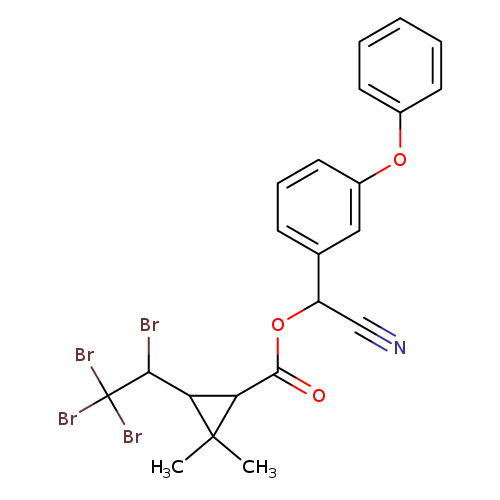
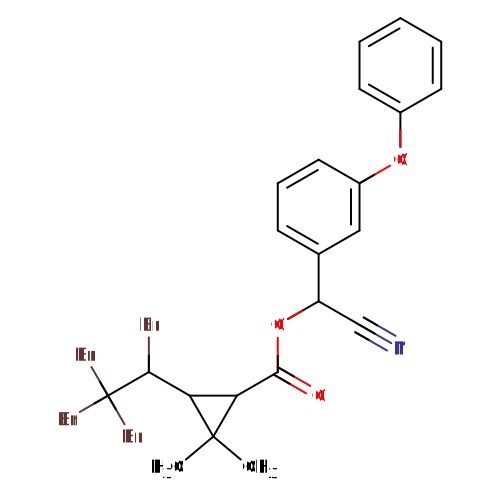
Tralomethrin is a pyrethroid insecticide. A pyrethroid is a synthetic chemical compound similar to the natural chemical pyrethrins produced by the flowers of pyrethrums (Chrysanthemum cinerariaefolium and C. coccineum). Pyrethroids are common in commercial products such as household insecticides and insect repellents. In the concentrations used in such products, they are generally harmless to human beings but can harm sensitive individuals. They are usually broken apart by sunlight and the atmosphere in one or two days, and do not significantly affect groundwater quality except for being toxic to fish. Insects with certain mutations in their sodium channel gene may be resistant to pyrethroid insecticides. (3, 2)
belongs to the class of organic compounds known as pyrethroids. These are organic compounds similar to the pyrethrins. Some pyrethroids containing a chrysanthemic acid esterified with a cyclopentenone (pyrethrins), or with a phenoxybenzyl group.
Pyrethroids exert their effect by prolonging the open phase of the sodium channel gates when a nerve cell is excited. They appear to bind to the membrane lipid phase in the immediate vicinity of the sodium channel, thus modifying the channel kinetics. This blocks the closing of the sodium gates in the nerves, and thus prolongs the return of the membrane potential to its resting state. The repetitive (sensory, motor) neuronal discharge and a prolonged negative afterpotential produces effects quite similar to those produced by DDT, leading to hyperactivity of the nervous system which can result in paralysis and/or death. Other mechanisms of action of pyrethroids include antagonism of gamma-aminobutyric acid (GABA)-mediated inhibition, modulation of nicotinic cholinergic transmission, enhancement of noradrenaline release, and actions on calcium ions. (6, 4)
Metabolism
Cypermethrin has been shown to be well absorbed after oral administration, extensively metabolized, and eliminated as polar conjugates in urine. The main route of metabolism was, as anticipated, via hydrolysis of the ester linkage. The cyclopropane-carboxylic acid moiety is subsequently excreted via the urine as the glucuronide conjugate. (4)
At high doses, signs of poisoning attributable to tralomethrin include profuse salivation and pulmonary edema, clonic seizures, opisthotonos (i.e., the spine is bent forward such that a supine body rests on its head and heels), coma, and death. At lower doses, commonly observed effects include paresthesia and erythema. (5)
Symptoms
Following oral exposure, severe fine tremor, marked reflex hyperexcitability, sympathetic activation can occur. Nausea, vomiting and abdominal pain commonly occur and develop following ingestion. Sudden bronchospasm, swelling of oral and laryngeal mucous membranes, and anaphylactoid reactions have been reported after inhalation. Hypersensitivity reactions characterized by pneumonitis, cough, dyspnea, wheezing, chest pain, irritability to sound and touch, and bronchospasm may occur too . Dermatitis is the main effect of a dermal exposure to tralomethrin. (7)
Treatment
Following oral exposure, the treatment is symptomatic and supportive and includes monitoring for the development of hypersensitivity reactions with respiratory distress. Provide adequate airway management when needed. Gastric decontamination is usually not required unless the pyrethrin product is combined with a hydrocarbon. Following inhalation exposure, move patient to fresh air. monitor for respiratory distress. If cough or difficulty breathing develops, evaluate for respiratory tract irritation, bronchitis, or pneumonitis. Administer oxygen and assist ventilation as required. Treat bronchospasm with inhaled beta2 agonist and oral or parenteral corticosteroids. In case of eye exposure, irrigate exposed eyes with copious amounts of room temperature water for at least 15 minutes. If irritation, pain, swelling, lacrimation, or photophobia persist, the patient should be seen in a health care facility. If the contamination occurs through dermal exposure, remove contaminated clothing and wash exposed area thoroughly with soap and water. A physician may need to examine the area if irritation or pain persists. Vitamin E topical application is highly effective in relieving parenthesis. (7)