Diisononyl phthalate (CHEM002617)
| Record Information | ||||||||||||||||||||||||||||||||||||||||||||||||||||||||||
|---|---|---|---|---|---|---|---|---|---|---|---|---|---|---|---|---|---|---|---|---|---|---|---|---|---|---|---|---|---|---|---|---|---|---|---|---|---|---|---|---|---|---|---|---|---|---|---|---|---|---|---|---|---|---|---|---|---|---|
| Version | 1.0 | |||||||||||||||||||||||||||||||||||||||||||||||||||||||||
| Creation Date | 2009-12-03 21:16:18 UTC | |||||||||||||||||||||||||||||||||||||||||||||||||||||||||
| Update Date | 2026-08-22 07:00:40 UTC | |||||||||||||||||||||||||||||||||||||||||||||||||||||||||
| Accession Number | CHEM002617 | |||||||||||||||||||||||||||||||||||||||||||||||||||||||||
| Identification | ||||||||||||||||||||||||||||||||||||||||||||||||||||||||||
| Common Name | Diisononyl phthalate | |||||||||||||||||||||||||||||||||||||||||||||||||||||||||
| Class | Small Molecule | |||||||||||||||||||||||||||||||||||||||||||||||||||||||||
| Description | Diisononyl phthalate (C26H42O4) is an exogenous organic compound with an average molecular weight of 418.61 g/mol. It exists as a liquid at room temperature. Diisononyl phthalate belongs to the benzoic acids and derivatives, a subclass of benzene and substituted derivatives within the organic compounds. Industrially, this compound is utilized as a plasticizer, a fragrance, and an adhesion/cohesion promoter. In the context of plastics, it is used in polyurethane, acrylonitrile butadiene styrene, and polyvinyl chloride. It is present in ethylene-vinyl acetate and polystyrene, and it is released in polyethylene terephthalate and polypropylene. Its presence in high-density polyethylene remains inconclusive, while it has not been detected in polyamide or polycarbonate. Exposure to diisononyl phthalate can occur through oral, inhalation, and touch routes. It is found in or released from four recorded sources: drinking water, indoor air, food contact materials, and amplifiers within electrical and electronic equipment. At a molecular level, the compound interacts with seven recorded protein targets, including peroxisome proliferator-activated receptor alpha (PPARA), peroxisome proliferator-activated receptor delta (PPARD), nuclear receptor subfamily 1 group I member 2 (NR1I2), and nuclear receptor subfamily 1 group I member 3 (NR1I3). | |||||||||||||||||||||||||||||||||||||||||||||||||||||||||
| Contaminant Sources |
| |||||||||||||||||||||||||||||||||||||||||||||||||||||||||
| Contaminant Type |
| |||||||||||||||||||||||||||||||||||||||||||||||||||||||||
| Chemical Structure | 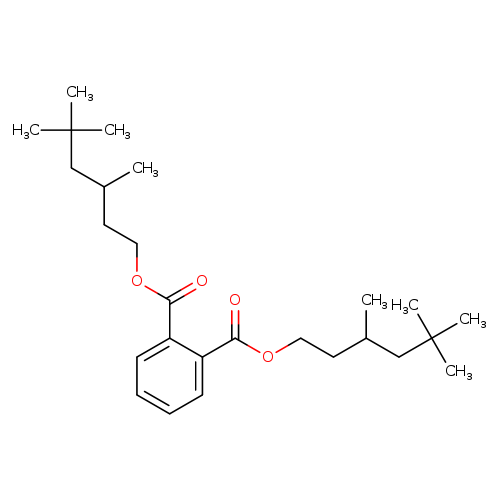 | |||||||||||||||||||||||||||||||||||||||||||||||||||||||||
| Synonyms |
| |||||||||||||||||||||||||||||||||||||||||||||||||||||||||
| Chemical Formula | C26H42O4 | |||||||||||||||||||||||||||||||||||||||||||||||||||||||||
| Average Molecular Mass | 418.609 g/mol | |||||||||||||||||||||||||||||||||||||||||||||||||||||||||
| Monoisotopic Mass | 418.308 g/mol | |||||||||||||||||||||||||||||||||||||||||||||||||||||||||
| CAS Registry Number | 28553-12-0 | |||||||||||||||||||||||||||||||||||||||||||||||||||||||||
| IUPAC Name | bis(3,5,5-trimethylhexyl) benzene-1,2-dicarboxylate | |||||||||||||||||||||||||||||||||||||||||||||||||||||||||
| Traditional Name | 1,2-bis(3,5,5-trimethylhexyl) phthalate | |||||||||||||||||||||||||||||||||||||||||||||||||||||||||
| SMILES | CC(CCOC(=O)C1=CC=CC=C1C(=O)OCCC(C)CC(C)(C)C)CC(C)(C)C | |||||||||||||||||||||||||||||||||||||||||||||||||||||||||
| InChI Identifier | InChI=1S/C26H42O4/c1-19(17-25(3,4)5)13-15-29-23(27)21-11-9-10-12-22(21)24(28)30-16-14-20(2)18-26(6,7)8/h9-12,19-20H,13-18H2,1-8H3 | |||||||||||||||||||||||||||||||||||||||||||||||||||||||||
| InChI Key | GDJOUZYAIHWDCA-UHFFFAOYSA-N | |||||||||||||||||||||||||||||||||||||||||||||||||||||||||
| Chemical Taxonomy | ||||||||||||||||||||||||||||||||||||||||||||||||||||||||||
| Description | belongs to the class of organic compounds known as benzoic acid esters. These are ester derivatives of benzoic acid. | |||||||||||||||||||||||||||||||||||||||||||||||||||||||||
| Kingdom | Organic compounds | |||||||||||||||||||||||||||||||||||||||||||||||||||||||||
| Super Class | Benzenoids | |||||||||||||||||||||||||||||||||||||||||||||||||||||||||
| Class | Benzene and substituted derivatives | |||||||||||||||||||||||||||||||||||||||||||||||||||||||||
| Sub Class | Benzoic acids and derivatives | |||||||||||||||||||||||||||||||||||||||||||||||||||||||||
| Direct Parent | Benzoic acid esters | |||||||||||||||||||||||||||||||||||||||||||||||||||||||||
| Alternative Parents | ||||||||||||||||||||||||||||||||||||||||||||||||||||||||||
| Substituents |
| |||||||||||||||||||||||||||||||||||||||||||||||||||||||||
| Molecular Framework | Aromatic homomonocyclic compounds | |||||||||||||||||||||||||||||||||||||||||||||||||||||||||
| External Descriptors | Not Available | |||||||||||||||||||||||||||||||||||||||||||||||||||||||||
| Biological Properties | ||||||||||||||||||||||||||||||||||||||||||||||||||||||||||
| Status | Detected and Not Quantified | |||||||||||||||||||||||||||||||||||||||||||||||||||||||||
| Origin | Exogenous | |||||||||||||||||||||||||||||||||||||||||||||||||||||||||
| Cellular Locations |
| |||||||||||||||||||||||||||||||||||||||||||||||||||||||||
| Biofluid Locations | Not Available | |||||||||||||||||||||||||||||||||||||||||||||||||||||||||
| Tissue Locations | Not Available | |||||||||||||||||||||||||||||||||||||||||||||||||||||||||
| Pathways | Not Available | |||||||||||||||||||||||||||||||||||||||||||||||||||||||||
| Applications | ||||||||||||||||||||||||||||||||||||||||||||||||||||||||||
| Biological Roles | Not Available | |||||||||||||||||||||||||||||||||||||||||||||||||||||||||
| Chemical Roles | Not Available | |||||||||||||||||||||||||||||||||||||||||||||||||||||||||
| Physical Properties | ||||||||||||||||||||||||||||||||||||||||||||||||||||||||||
| State | Liquid | |||||||||||||||||||||||||||||||||||||||||||||||||||||||||
| Appearance | Colorless liquid. | |||||||||||||||||||||||||||||||||||||||||||||||||||||||||
| Experimental Properties |
| |||||||||||||||||||||||||||||||||||||||||||||||||||||||||
| Predicted Properties |
| |||||||||||||||||||||||||||||||||||||||||||||||||||||||||
| Spectra | ||||||||||||||||||||||||||||||||||||||||||||||||||||||||||
| Spectra |
| |||||||||||||||||||||||||||||||||||||||||||||||||||||||||
| Toxicity Profile | ||||||||||||||||||||||||||||||||||||||||||||||||||||||||||
| Route of Exposure | Oral (4) ; inhalation (4) ; dermal (4) | |||||||||||||||||||||||||||||||||||||||||||||||||||||||||
| Mechanism of Toxicity | Phthalate esters are endocrine disruptors. They decrease foetal testis testosterone production and reduce the expression of steroidogenic genes by decreasing mRNA expression. Some phthalates have also been shown to reduce the expression of insulin-like peptide 3 (insl3), an important hormone secreted by the Leydig cell necessary for development of the gubernacular ligament. Animal studies have shown that these effects disrupt reproductive development and can cause a number of malformations in affected young. (2) | |||||||||||||||||||||||||||||||||||||||||||||||||||||||||
| Metabolism | Phthalate esters are first hydrolyzed to their monoester derivative. Once formed, the monoester derivative can be further hydrolyzed in vivo to phthalic acid or conjugated to glucuronide, both of which can then be excreted. The terminal or next-to-last carbon atom in the monoester can also be oxidized to an alcohol, which can be excreted as is or first oxidized to an aldehyde, ketone, or carboxylic acid. The monoester and oxidative metabolites are excreted in the urine and faeces. (3) | |||||||||||||||||||||||||||||||||||||||||||||||||||||||||
| Toxicity Values | LD50: >40000 mg/kg (Oral, Rat) (1) LD50: >9750 mg/kg (Intraperitoneal, Mouse) (1) LC50: >4.4 mg/L over 4 hours (Inhalation, Rat) (1) | |||||||||||||||||||||||||||||||||||||||||||||||||||||||||
| Lethal Dose | Not Available | |||||||||||||||||||||||||||||||||||||||||||||||||||||||||
| Carcinogenicity (IARC Classification) | No indication of carcinogenicity to humans (not listed by IARC). | |||||||||||||||||||||||||||||||||||||||||||||||||||||||||
| Uses/Sources | Phthalate esters are mainly used as plasticizers, primarily used to soften polyvinyl chloride. They are found in a number of products, including glues, building materials, personal care products, detergents and surfactants, packaging, children's toys, paints, pharmaceuticals, food products, and textiles. Phthalates are used in a variety of household applications such as shower curtains, vinyl upholstery, adhesives, floor tiles, food containers and wrappers, and cleaning materials. Personal care items containing phthalates include perfume, eye shadow, moisturizer, nail polish, liquid soap, and hair spray. (4) | |||||||||||||||||||||||||||||||||||||||||||||||||||||||||
| Minimum Risk Level | Not Available | |||||||||||||||||||||||||||||||||||||||||||||||||||||||||
| Health Effects | Phthalate esters are endocrine disruptors. Animal studies have shown that they disrupt reproductive development and can cause a number of malformations in affected young, such as reduced anogenital distance (AGD), cryptorchidism, hypospadias, and reduced fertility. The combination of effects associated with phthalates is called 'phthalate syndrome’. (2) | |||||||||||||||||||||||||||||||||||||||||||||||||||||||||
| Symptoms | Phthalate esters are endocrine disruptors and can cause a number of developmental malformations termed 'phthalate syndrome'. (2) | |||||||||||||||||||||||||||||||||||||||||||||||||||||||||
| Treatment | Not Available | |||||||||||||||||||||||||||||||||||||||||||||||||||||||||
| Concentrations | ||||||||||||||||||||||||||||||||||||||||||||||||||||||||||
| Not Available | ||||||||||||||||||||||||||||||||||||||||||||||||||||||||||
| External Links | ||||||||||||||||||||||||||||||||||||||||||||||||||||||||||
| DrugBank ID | Not Available | |||||||||||||||||||||||||||||||||||||||||||||||||||||||||
| HMDB ID | Not Available | |||||||||||||||||||||||||||||||||||||||||||||||||||||||||
| FooDB ID | Not Available | |||||||||||||||||||||||||||||||||||||||||||||||||||||||||
| Phenol Explorer ID | Not Available | |||||||||||||||||||||||||||||||||||||||||||||||||||||||||
| KNApSAcK ID | Not Available | |||||||||||||||||||||||||||||||||||||||||||||||||||||||||
| BiGG ID | Not Available | |||||||||||||||||||||||||||||||||||||||||||||||||||||||||
| BioCyc ID | Not Available | |||||||||||||||||||||||||||||||||||||||||||||||||||||||||
| METLIN ID | Not Available | |||||||||||||||||||||||||||||||||||||||||||||||||||||||||
| PDB ID | Not Available | |||||||||||||||||||||||||||||||||||||||||||||||||||||||||
| Wikipedia Link | Diisononyl phthalate | |||||||||||||||||||||||||||||||||||||||||||||||||||||||||
| Chemspider ID | Not Available | |||||||||||||||||||||||||||||||||||||||||||||||||||||||||
| ChEBI ID | Not Available | |||||||||||||||||||||||||||||||||||||||||||||||||||||||||
| PubChem Compound ID | 34277 | |||||||||||||||||||||||||||||||||||||||||||||||||||||||||
| Kegg Compound ID | Not Available | |||||||||||||||||||||||||||||||||||||||||||||||||||||||||
| YMDB ID | Not Available | |||||||||||||||||||||||||||||||||||||||||||||||||||||||||
| ECMDB ID | Not Available | |||||||||||||||||||||||||||||||||||||||||||||||||||||||||
| References | ||||||||||||||||||||||||||||||||||||||||||||||||||||||||||
| Synthesis Reference | Not Available | |||||||||||||||||||||||||||||||||||||||||||||||||||||||||
| MSDS | Not Available | |||||||||||||||||||||||||||||||||||||||||||||||||||||||||
| General References | Not Available | |||||||||||||||||||||||||||||||||||||||||||||||||||||||||