Record Information
Version1.0
Creation Date2014-08-29 05:47:14 UTC
Update Date2026-04-16 21:00:13 UTC
Accession NumberCHEM003113
Identification
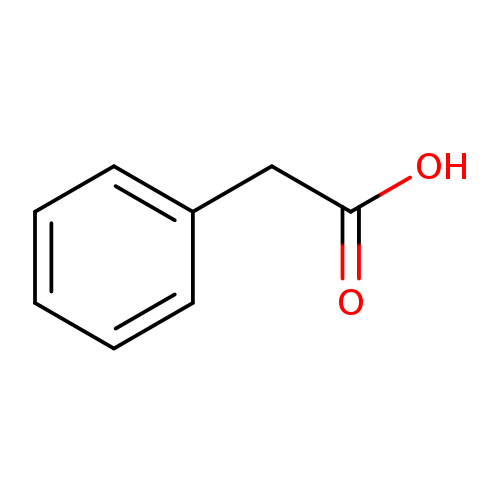
Common NamePhenylacetic acid
ClassSmall Molecule
DescriptionPhenylacetic acid is a uremic toxin. Uremic toxins can be subdivided into three major groups based upon their chemical and physical characteristics: 1) small, water-soluble, non-protein-bound compounds, such as urea; 2) small, lipid-soluble and/or protein-bound compounds, such as the phenols and 3) larger so-called middle-molecules, such as beta2-microglobulin. Chronic exposure of uremic toxins can lead to a number of conditions including renal damage, chronic kidney disease and cardiovascular disease. Phenyl acetate (or phenylacetate) is a carboxylic acid ester that has been found in the biofluids of patients with nephritis and/or hepatitis as well as patients with phenylketonuria (PKU). Excess phenylalanine in the body can be disposed of through a transamination process leading to the production of phenylpyruvate. The phenylpyruvate can be further metabolized into a number of products. Decarboxylation of phenylpyruvate gives phenylacetate, while a reduction reaction gives phenyllactate. The phenylacetate can be further conjugated with glutamine to give phenylacetyl glutamine. All of these metabolites can be detected in serum and urine of PKU patients. Phenyl acetate is also produced endogenously as the metabolite of 2-Phenylethylamine, which is mainly metabolized by monoamine oxidase to form phenyl acetate. 2-phenylethylamine is an endogenous amphetamine which may modulate central adrenergic functions, and the urinary phenyl acetate levels have been postulated as a marker for depression. Phenylacetate is also found in essential oils, e.g. neroli, rose oil, free and as esters' and in many fruits. As a result it is used as a perfumery and flavoring ingredient. (1, 2, 3).
Contaminant Sources
  • DEA Chemicals
  • EAFUS Chemicals
  • FooDB Chemicals
  • HMDB Contaminants - Feces
  • HMDB Contaminants - Urine
  • HPV EPA Chemicals
  • STOFF IDENT Compounds
  • T3DB toxins
  • ToxCast & Tox21 Chemicals
Contaminant Type
  • Food Toxin
  • Industrial/Workplace Toxin
  • Metabolite
  • Natural Compound
  • Organic Compound
  • Uremic Toxin
Chemical Structure
Thumb
Synonyms
ValueSource
2-PHENYLACETIC ACIDChEBI
2-Phenylethanoic acidChEBI
alpha-Toluic acidChEBI
Benzeneacetic acidChEBI
Benzylformic acidChEBI
Omega-phenylacetic acidChEBI
PAChEBI
PhenylacetateKegg
2-PHENYLACETateGenerator
a-ToluateGenerator
a-Toluic acidGenerator
alpha-ToluateGenerator
Α-toluateGenerator
Α-toluic acidGenerator
BenzeneacetateGenerator
BenzylformateGenerator
Omega-phenylacetateGenerator
PhenylethanoateHMDB
W-PhenylacetateHMDB
W-Phenylacetic acidHMDB
Phenylacetic acid, potassium saltHMDB
Sodium phenylacetateHMDB
Phenylacetic acid, lithium saltHMDB
Phenylacetic acid, sodium saltHMDB
Phenylacetic acid, ammonium saltHMDB
Phenylacetic acid, calcium saltHMDB
Phenylacetic acid, cesium saltHMDB
Phenylacetic acid, mercury saltHMDB
Phenylacetic acid, rubidium saltHMDB
Phenylacetic acid, sodium salt , carboxy-(11)C-labeled CPDHMDB
PAAPhytoBank
ω-Phenylacetic acidPhytoBank
Phenylacetic acidHMDB
Chemical FormulaC8H8O2
Average Molecular Mass136.148 g/mol
Monoisotopic Mass136.052 g/mol
CAS Registry Number103-82-2
IUPAC Name2-phenylacetic acid
Traditional Nameω-phenylacetic acid
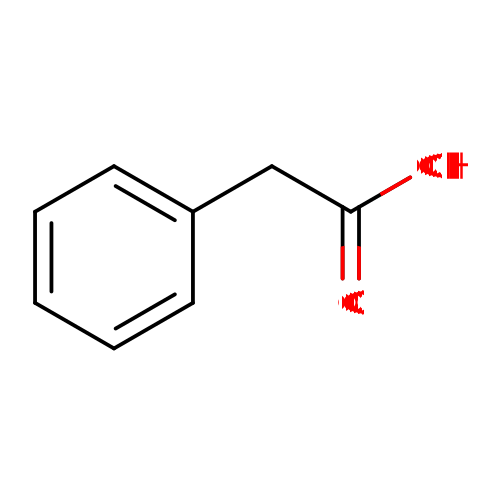
SMILESOC(=O)CC1=CC=CC=C1
InChI IdentifierInChI=1S/C8H8O2/c9-8(10)6-7-4-2-1-3-5-7/h1-5H,6H2,(H,9,10)
InChI KeyWLJVXDMOQOGPHL-UHFFFAOYSA-N
Chemical Taxonomy
Description belongs to the class of organic compounds known as benzene and substituted derivatives. These are aromatic compounds containing one monocyclic ring system consisting of benzene.
KingdomOrganic compounds
Super ClassBenzenoids
ClassBenzene and substituted derivatives
Sub ClassNot Available
Direct ParentBenzene and substituted derivatives
Alternative Parents
Substituents
  • Monocyclic benzene moiety
  • Monocarboxylic acid or derivatives
  • Carboxylic acid
  • Carboxylic acid derivative
  • Organic oxygen compound
  • Organic oxide
  • Hydrocarbon derivative
  • Organooxygen compound
  • Carbonyl group
  • Aromatic homomonocyclic compound
Molecular FrameworkAromatic homomonocyclic compounds
External Descriptors
Biological Properties
StatusDetected and Not Quantified
OriginEndogenous
Cellular Locations
  • Cytoplasm
  • Extracellular
Biofluid LocationsNot Available
Tissue LocationsNot Available
PathwaysNot Available
ApplicationsNot Available
Biological Roles
Chemical RolesNot Available
Physical Properties
StateSolid
AppearanceWhite powder.
Experimental Properties
PropertyValue
Melting Point76.7°C
Boiling Point265.5°C
Solubility16.6 mg/mL
Predicted Properties
PropertyValueSource
Water Solubility3.61 g/LALOGPS
logP1.72ALOGPS
logP1.61ChemAxon
logS-1.6ALOGPS
pKa (Strongest Acidic)4.55ChemAxon
Physiological Charge-1ChemAxon
Hydrogen Acceptor Count2ChemAxon
Hydrogen Donor Count1ChemAxon
Polar Surface Area37.3 ŲChemAxon
Rotatable Bond Count2ChemAxon
Refractivity37.37 m³·mol⁻¹ChemAxon
Polarizability13.85 ųChemAxon
Number of Rings1ChemAxon
Bioavailability1ChemAxon
Rule of FiveYesChemAxon
Ghose FilterNoChemAxon
Veber's RuleYesChemAxon
MDDR-like RuleNoChemAxon
Spectra
Spectra
Spectrum TypeDescriptionSplash KeyView
GC-MSGC-MS Spectrum - GC-MS (1 TMS)splash10-0006-9700000000-c07461cdad68959aa53fSpectrum
GC-MSGC-MS Spectrum - EI-B (Non-derivatized)splash10-0006-9100000000-de65c7c0092343a4e599Spectrum
GC-MSGC-MS Spectrum - GC-MS (Non-derivatized)splash10-0006-9700000000-c07461cdad68959aa53fSpectrum
GC-MSGC-MS Spectrum - GC-EI-TOF (Non-derivatized)splash10-0006-9700000000-43e86e45beae2fa6704fSpectrum
Predicted GC-MSPredicted GC-MS Spectrum - GC-MS (Non-derivatized) - 70eV, Positivesplash10-0006-9200000000-dc43e5e062b0ed500c5fSpectrum
Predicted GC-MSPredicted GC-MS Spectrum - GC-MS (1 TMS) - 70eV, Positivesplash10-0006-9100000000-aaef76d181aebe492bbeSpectrum
Predicted GC-MSPredicted GC-MS Spectrum - GC-MS (Non-derivatized) - 70eV, PositiveNot AvailableSpectrum
Predicted GC-MSPredicted GC-MS Spectrum - GC-MS (TBDMS_1_1) - 70eV, PositiveNot AvailableSpectrum
LC-MS/MSLC-MS/MS Spectrum - EI-B (HITACHI M-80B) , Positivesplash10-0006-9100000000-de65c7c0092343a4e599Spectrum
LC-MS/MSLC-MS/MS Spectrum - LC-ESI-IT , negativesplash10-0006-9000000000-6ca33b098558bf13801cSpectrum
LC-MS/MSLC-MS/MS Spectrum - , negativesplash10-000i-0900000000-f898aafe4cecc87d26f1Spectrum
LC-MS/MSLC-MS/MS Spectrum - 10V, Positivesplash10-0006-9400000000-aa5bff1d7a8df7c97bdbSpectrum
LC-MS/MSLC-MS/MS Spectrum - 40V, Positivesplash10-014i-9000000000-6a017c8136a375269f3eSpectrum
LC-MS/MSLC-MS/MS Spectrum - 35V, Negativesplash10-000i-2900000000-d79f9224f2390d6b17a2Spectrum
LC-MS/MSLC-MS/MS Spectrum - 20V, Positivesplash10-0006-9000000000-e712b088c9a3d3855ec7Spectrum
LC-MS/MSLC-MS/MS Spectrum - 40V, Negativesplash10-01ri-9000000000-f0ed89dae2c22d4c538cSpectrum
LC-MS/MSLC-MS/MS Spectrum - 20V, Negativesplash10-053i-2900000000-3e4bf20b985893f203e7Spectrum
LC-MS/MSLC-MS/MS Spectrum - 10V, Negativesplash10-000i-1900000000-5419b00a9c7c126093dbSpectrum
LC-MS/MSLC-MS/MS Spectrum - 35V, Negativesplash10-000i-1900000000-9a2e089c5511fa2bf210Spectrum
Predicted LC-MS/MSPredicted LC-MS/MS Spectrum - 10V, Positivesplash10-00kr-2900000000-94a6f40f937bf9d7e4c7Spectrum
Predicted LC-MS/MSPredicted LC-MS/MS Spectrum - 20V, Positivesplash10-0006-9500000000-8d3540e40bfc0e4c0e5fSpectrum
Predicted LC-MS/MSPredicted LC-MS/MS Spectrum - 40V, Positivesplash10-0006-9000000000-417ad1f13a593ac780b9Spectrum
Predicted LC-MS/MSPredicted LC-MS/MS Spectrum - 10V, Negativesplash10-000l-5900000000-0ed04a623daaf32fffdaSpectrum
Predicted LC-MS/MSPredicted LC-MS/MS Spectrum - 20V, Negativesplash10-000l-8900000000-709928d6b823240d3528Spectrum
Predicted LC-MS/MSPredicted LC-MS/MS Spectrum - 40V, Negativesplash10-00kf-9600000000-4a7739132344f3dec710Spectrum
Predicted LC-MS/MSPredicted LC-MS/MS Spectrum - 10V, Negativesplash10-0006-9000000000-5671d4c535a6553aaf0dSpectrum
Predicted LC-MS/MSPredicted LC-MS/MS Spectrum - 20V, Negativesplash10-0006-9000000000-5671d4c535a6553aaf0dSpectrum
Predicted LC-MS/MSPredicted LC-MS/MS Spectrum - 40V, Negativesplash10-0006-9000000000-5e37e9f4d7b24c763302Spectrum
Predicted LC-MS/MSPredicted LC-MS/MS Spectrum - 10V, Positivesplash10-00kf-9800000000-aacb25995ab02725e0f4Spectrum
Predicted LC-MS/MSPredicted LC-MS/MS Spectrum - 20V, Positivesplash10-0006-9100000000-930a2cbe3e9fb1915075Spectrum
Predicted LC-MS/MSPredicted LC-MS/MS Spectrum - 40V, Positivesplash10-00kf-9000000000-199de8006c0d100aaabbSpectrum
MSMass Spectrum (Electron Ionization)splash10-0006-9100000000-1e23fd8e6ce900cd8e4cSpectrum
1D NMR1H NMR SpectrumNot AvailableSpectrum
1D NMR13C NMR SpectrumNot AvailableSpectrum
1D NMR1H NMR SpectrumNot AvailableSpectrum
1D NMR13C NMR SpectrumNot AvailableSpectrum
1D NMR1H NMR SpectrumNot AvailableSpectrum
1D NMR13C NMR SpectrumNot AvailableSpectrum
1D NMR1H NMR SpectrumNot AvailableSpectrum
1D NMR13C NMR SpectrumNot AvailableSpectrum
1D NMR1H NMR SpectrumNot AvailableSpectrum
1D NMR13C NMR SpectrumNot AvailableSpectrum
1D NMR1H NMR SpectrumNot AvailableSpectrum
1D NMR13C NMR SpectrumNot AvailableSpectrum
1D NMR1H NMR SpectrumNot AvailableSpectrum
1D NMR13C NMR SpectrumNot AvailableSpectrum
1D NMR1H NMR SpectrumNot AvailableSpectrum
1D NMR13C NMR SpectrumNot AvailableSpectrum
1D NMR1H NMR SpectrumNot AvailableSpectrum
1D NMR13C NMR SpectrumNot AvailableSpectrum
1D NMR1H NMR SpectrumNot AvailableSpectrum
1D NMR13C NMR SpectrumNot AvailableSpectrum
1D NMR1H NMR SpectrumNot AvailableSpectrum
1D NMR13C NMR SpectrumNot AvailableSpectrum
1D NMR1H NMR SpectrumNot AvailableSpectrum
2D NMR[1H,13C] 2D NMR SpectrumNot AvailableSpectrum
Toxicity Profile
Route of ExposureEndogenous, Ingestion, Dermal (contact)
Mechanism of ToxicityUremic toxins such as phenylacetic acid are actively transported into the kidneys via organic ion transporters (especially OAT3). Increased levels of uremic toxins can stimulate the production of reactive oxygen species. This seems to be mediated by the direct binding or inhibition by uremic toxins of the enzyme NADPH oxidase (especially NOX4 which is abundant in the kidneys and heart) (5). Reactive oxygen species can induce several different DNA methyltransferases (DNMTs) which are involved in the silencing of a protein known as KLOTHO. KLOTHO has been identified as having important roles in anti-aging, mineral metabolism, and vitamin D metabolism. A number of studies have indicated that KLOTHO mRNA and protein levels are reduced during acute or chronic kidney diseases in response to high local levels of reactive oxygen species (6)
MetabolismUremic toxins tend to accumulate in the blood either through dietary excess or through poor filtration by the kidneys. Most uremic toxins are metabolic waste products and are normally excreted in the urine or feces.
Toxicity ValuesNot Available
Lethal DoseNot Available
Carcinogenicity (IARC Classification)No indication of carcinogenicity to humans (not listed by IARC).
Uses/SourcesNaturally produced by the body (endogenous).
Minimum Risk LevelNot Available
Health EffectsChronic exposure to uremic toxins can lead to a number of conditions including renal damage, chronic kidney disease and cardiovascular disease.
SymptomsAs a uremic toxin, this compound can cause uremic syndrome. Uremic syndrome may affect any part of the body and can cause nausea, vomiting, loss of appetite, and weight loss. It can also cause changes in mental status, such as confusion, reduced awareness, agitation, psychosis, seizures, and coma. Abnormal bleeding, such as bleeding spontaneously or profusely from a very minor injury can also occur. Heart problems, such as an irregular heartbeat, inflammation in the sac that surrounds the heart (pericarditis), and increased pressure on the heart can be seen in patients with uremic syndrome. Shortness of breath from fluid buildup in the space between the lungs and the chest wall (pleural effusion) can also be present.
TreatmentKidney dialysis is usually needed to relieve the symptoms of uremic syndrome until normal kidney function can be restored.
Concentrations
Not Available
DrugBank IDDB09269
HMDB IDHMDB0000209
FooDB IDFDB031100
Phenol Explorer IDNot Available
KNApSAcK IDC00000750
BiGG ID1486426
BioCyc IDPHENYLACETATE
METLIN ID129
PDB IDNot Available
Wikipedia LinkPhenylacetic_acid
Chemspider ID10181341
ChEBI ID30745
PubChem Compound ID999
Kegg Compound IDC07086
YMDB IDYMDB00891
ECMDB IDECMDB21416
References
Synthesis ReferenceZhou, Shu-jing; Li, Jin-lian; Luan, Fang. New synthetic method for benzeneacetic acid. Huaxue Yu Shengwu Gongcheng (2005), 22(2), 43-44.
MSDSLink
General References
1. Zhou, Shu-jing; Li, Jin-lian; Luan, Fang. New synthetic method for benzeneacetic acid. Huaxue Yu Shengwu Gongcheng (2005), 22(2), 43-44.
2. Jankowski J, van der Giet M, Jankowski V, Schmidt S, Hemeier M, Mahn B, Giebing G, Tolle M, Luftmann H, Schluter H, Zidek W, Tepel M: Increased plasma phenylacetic acid in patients with end-stage renal failure inhibits iNOS expression. J Clin Invest. 2003 Jul;112(2):256-64.
3. Pontoni G, Rotondo F, Spagnuolo G, Aurino MT, Carteni-Farina M, Zappia V, Lama G: Diagnosis and follow-up of cystinuria: use of proton magnetic resonance spectroscopy. Amino Acids. 2000;19(2):469-76.
4. Rubin A, Knadler MP, Ho PP, Bechtol LD, Wolen RL: Stereoselective inversion of (R)-fenoprofen to (S)-fenoprofen in humans. J Pharm Sci. 1985 Jan;74(1):82-4.
5. Davis BA, Kennedy SH, D'Souza J, Durden DA, Goldbloom DS, Boulton AA: Correlations of plasma and urinary phenylacetic acid and phenylethylamine concentrations with eating behavior and mood rating scores in brofaromine-treated women with bulimia nervosa. J Psychiatry Neurosci. 1994 Jul;19(4):282-8.
6. Silvennoinen R, Malminiemi K, Malminiemi O, Seppala E, Vilpo J: Pharmacokinetics of chlorambucil in patients with chronic lymphocytic leukaemia: comparison of different days, cycles and doses. Pharmacol Toxicol. 2000 Nov;87(5):223-8.
7. Ostergaard J, Larsen C: Bioreversible derivatives of phenol. 2. Reactivity of carbonate esters with fatty acid-like structures towards hydrolysis in aqueous solutions. Molecules. 2007 Oct 30;12(10):2396-412.
8. Lorentz K, Flatter B, Augustin E: Arylesterase in serum: elaboration and clinical application of a fixed-incubation method. Clin Chem. 1979 Oct;25(10):1714-20.
9. Sabelli HC, Fawcett J, Gusovsky F, Javaid J, Edwards J, Jeffriess H: Urinary phenyl acetate: a diagnostic test for depression? Science. 1983 Jun 10;220(4602):1187-8.
10. Duranton F, Cohen G, De Smet R, Rodriguez M, Jankowski J, Vanholder R, Argiles A: Normal and pathologic concentrations of uremic toxins. J Am Soc Nephrol. 2012 Jul;23(7):1258-70. doi: 10.1681/ASN.2011121175. Epub 2012 May 24.
11. https://www.ncbi.nlm.nih.gov/pubmed/?term=12147706
12. https://www.ncbi.nlm.nih.gov/pubmed/?term=12569987
13. https://www.ncbi.nlm.nih.gov/pubmed/?term=15057459
14. https://www.ncbi.nlm.nih.gov/pubmed/?term=15506622
15. https://www.ncbi.nlm.nih.gov/pubmed/?term=15646820
16. https://www.ncbi.nlm.nih.gov/pubmed/?term=17622769
17. https://www.ncbi.nlm.nih.gov/pubmed/?term=2083978
18. https://www.ncbi.nlm.nih.gov/pubmed/?term=24587751
19. https://www.ncbi.nlm.nih.gov/pubmed/?term=24631718
20. https://www.ncbi.nlm.nih.gov/pubmed/?term=7544181
21. https://www.ncbi.nlm.nih.gov/pubmed/?term=7716788