Record Information
Version1.0
Creation Date2014-08-29 06:17:47 UTC
Update Date2026-04-17 19:06:00 UTC
Accession NumberCHEM003266
Identification
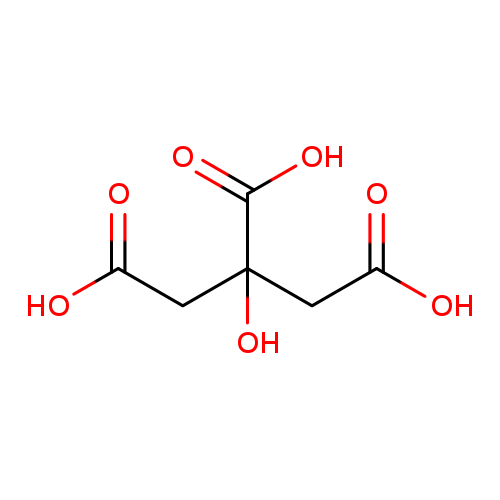
Common NameCitric acid
ClassSmall Molecule
DescriptionCitric acid (citrate) is a weak acid that is formed in the tricarboxylic acid cycle or that may be introduced with diet. The evaluation of plasma citric acid is scarcely used in the diagnosis of human diseases. On the contrary urinary citrate excretion is a common tool in the differential diagnosis of kidney stones, renal tubular acidosis and it plays also a role in bone diseases. The importance of hypocitraturia should be considered with regard to bone mass, urine crystallization and urolithiasis. The secretory epithelial cells of the prostate gland of humans and other animals posses a unique citrate-related metabolic pathway regulated by testosterone and prolactin. This specialized hormone-regulated metabolic activity is responsible for the major prostate function of the production and secretion of extraordinarily high levels of citrate. The key regulatory enzymes directly associated with citrate production in the prostate cells are mitochondrial aspartate aminotransferase, pyruvate dehydrogenase, and mitochondrial aconitase. testosterone and prolactin are involved in the regulation of the corresponding genes associated with these enzymes. The regulatory regions of these genes contain the necessary response elements that confer the ability of both hormones to control gene transcription. Protein kinase c (PKC) is the signaling pathway for the prolactin regulation of the metabolic genes in prostate cells. testosterone and prolactin regulation of these metabolic genes (which are constitutively expressed in all mammalian cells) is specific for these citrate-producing cells. Citric acid is found in citrus fruits, most concentrated in lemons and limes, where it can comprise as much as 8% of the dry weight of the fruit. Citric acid is a natural preservative and is also used to add an acidic (sour) taste to foods and soft drinks. The salts of citric acid (citrates) can be used as anticoagulants due to their calcium chelating ability. Intolerance to citric acid in the diet is known to exist. Little information is available as the condition appears to be rare, but like other types of food intolerance it is often described as a pseudo-allergic reaction. (1, 2).
Contaminant Sources
  • Cosmetic Chemicals
  • EAFUS Chemicals
  • FooDB Chemicals
  • HMDB Contaminants - Urine
  • HPV EPA Chemicals
  • OECD HPV Chemicals
  • STOFF IDENT Compounds
  • T3DB toxins
  • ToxCast & Tox21 Chemicals
Contaminant Type
  • Animal Toxin
  • Anticoagulant
  • Chelating Agent
  • Drug
  • Food Toxin
  • Household Toxin
  • Industrial/Workplace Toxin
  • Metabolite
  • Natural Compound
  • Nutraceutical
  • Organic Compound
Chemical Structure
Thumb
Synonyms
ValueSource
2-Hydroxy-1,2,3-propanetricarboxylic acidChEBI
2-Hydroxytricarballylic acidChEBI
3-Carboxy-3-hydroxypentane-1,5-dioic acidChEBI
CitronensaeureChEBI
e330ChEBI
H3CitChEBI
Anhydrous citric acidKegg
Citric acid anhydrousKegg
2-Hydroxy-1,2,3-propanetricarboxylateGenerator
2-HydroxytricarballylateGenerator
3-Carboxy-3-hydroxypentane-1,5-dioateGenerator
Anhydrous citrateGenerator
Citrate anhydrousGenerator
CitrateGenerator
AcilettenHMDB
beta-HydroxytricarballylateHMDB
beta-Hydroxytricarballylic acidHMDB
ChemfillHMDB
CitracleanHMDB
CitrettenHMDB
CitroHMDB
e 330HMDB
Hydrocerol aHMDB
Kyselina citronovaHMDB
Suby gHMDB
Uro-trainerHMDB
Acid monohydrate, citricHMDB
Monohydrate, citric acidHMDB
Citric acid, anhydrousHMDB
Citric acid monohydrateHMDB
Uralyt uHMDB
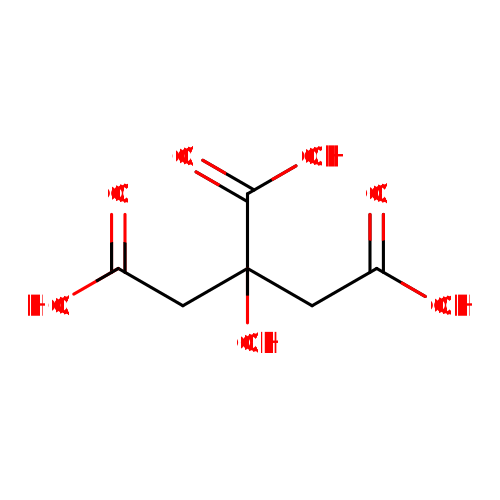
Chemical FormulaC6H8O7
Average Molecular Mass192.124 g/mol
Monoisotopic Mass192.027 g/mol
CAS Registry Number77-92-9
IUPAC Name2-hydroxypropane-1,2,3-tricarboxylic acid
Traditional Namecitric acid
SMILESOC(=O)CC(O)(CC(O)=O)C(O)=O
InChI IdentifierInChI=1S/C6H8O7/c7-3(8)1-6(13,5(11)12)2-4(9)10/h13H,1-2H2,(H,7,8)(H,9,10)(H,11,12)
InChI KeyKRKNYBCHXYNGOX-UHFFFAOYSA-N
Chemical Taxonomy
Description belongs to the class of organic compounds known as tricarboxylic acids and derivatives. These are carboxylic acids containing exactly three carboxyl groups.
KingdomOrganic compounds
Super ClassOrganic acids and derivatives
ClassCarboxylic acids and derivatives
Sub ClassTricarboxylic acids and derivatives
Direct ParentTricarboxylic acids and derivatives
Alternative Parents
Substituents
  • Tricarboxylic acid or derivatives
  • Hydroxy acid
  • Alpha-hydroxy acid
  • Tertiary alcohol
  • Carboxylic acid
  • Organic oxygen compound
  • Organic oxide
  • Hydrocarbon derivative
  • Organooxygen compound
  • Carbonyl group
  • Alcohol
  • Aliphatic acyclic compound
Molecular FrameworkAliphatic acyclic compounds
External Descriptors
Biological Properties
StatusDetected and Not Quantified
OriginEndogenous
Cellular Locations
  • Cytoplasm
  • Extracellular
  • Mitochondria
Biofluid LocationsNot Available
Tissue Locations
  • All Tissues
  • Prostate
Pathways
NameSMPDB LinkKEGG Link
Citric Acid CycleSMP00057 map00020
Transfer of Acetyl Groups into MitochondriaSMP00466 Not Available
Biotinidase DeficiencySMP00174 Not Available
Fumarase deficiencySMP00547 Not Available
Applications
Biological Roles
Chemical Roles
Physical Properties
StateSolid
AppearanceWhite powder.
Experimental Properties
PropertyValue
Melting Point153°C
Boiling PointNot Available
Solubility5.92E+005 mg/L (at 20°C)
Predicted Properties
PropertyValueSource
Water Solubility106 g/LALOGPS
logP-1.3ALOGPS
logP-1.3ChemAxon
logS-0.26ALOGPS
pKa (Strongest Acidic)3.05ChemAxon
pKa (Strongest Basic)-4.2ChemAxon
Physiological Charge-3ChemAxon
Hydrogen Acceptor Count7ChemAxon
Hydrogen Donor Count4ChemAxon
Polar Surface Area132.13 ŲChemAxon
Rotatable Bond Count5ChemAxon
Refractivity35.62 m³·mol⁻¹ChemAxon
Polarizability15.54 ųChemAxon
Number of Rings0ChemAxon
Bioavailability1ChemAxon
Rule of FiveYesChemAxon
Ghose FilterNoChemAxon
Veber's RuleNoChemAxon
MDDR-like RuleNoChemAxon
Spectra
Spectra
Spectrum TypeDescriptionSplash KeyView
GC-MSGC-MS Spectrum - GC-EI-TOF (Pegasus III TOF-MS system, Leco; GC 6890, Agilent Technologies) (4 TMS)splash10-0002-0941000000-c310fda0e6a19bf6ae40Spectrum
GC-MSGC-MS Spectrum - GC-EI-TOF (Pegasus III TOF-MS system, Leco; GC 6890, Agilent Technologies) (4 TMS)splash10-0002-0941000000-f1dfda3e9abc7cfb6b2aSpectrum
GC-MSGC-MS Spectrum - GC-EI-TOF (Pegasus III TOF-MS system, Leco; GC 6890, Agilent Technologies) (4 TMS)splash10-006t-0952000000-ba3a1a80815f65afd05cSpectrum
GC-MSGC-MS Spectrum - GC-EI-TOF (Pegasus III TOF-MS system, Leco; GC 6890, Agilent Technologies) (Non-derivatized)splash10-0002-0951000000-48857e9baebe16d9fc8dSpectrum
GC-MSGC-MS Spectrum - GC-EI-TOF (Pegasus III TOF-MS system, Leco; GC 6890, Agilent Technologies) (4 TMS)splash10-00di-9531000000-b6fd7d038634694f0873Spectrum
GC-MSGC-MS Spectrum - GC-MS (4 TMS)splash10-00di-0593000000-b193bbba8c0cefdfe42aSpectrum
GC-MSGC-MS Spectrum - GC-EI-TOF (Non-derivatized)splash10-0002-0941000000-c310fda0e6a19bf6ae40Spectrum
GC-MSGC-MS Spectrum - GC-EI-TOF (Non-derivatized)splash10-0002-0941000000-f1dfda3e9abc7cfb6b2aSpectrum
GC-MSGC-MS Spectrum - GC-EI-TOF (Non-derivatized)splash10-006t-0952000000-ba3a1a80815f65afd05cSpectrum
GC-MSGC-MS Spectrum - GC-EI-TOF (Non-derivatized)splash10-0002-0951000000-48857e9baebe16d9fc8dSpectrum
GC-MSGC-MS Spectrum - GC-EI-TOF (Non-derivatized)splash10-00di-9531000000-b6fd7d038634694f0873Spectrum
GC-MSGC-MS Spectrum - GC-MS (Non-derivatized)splash10-00di-0593000000-b193bbba8c0cefdfe42aSpectrum
GC-MSGC-MS Spectrum - GC-EI-TOF (Non-derivatized)splash10-0002-0941000000-573230e47a4efb1e36a5Spectrum
Predicted GC-MSPredicted GC-MS Spectrum - GC-MS (Non-derivatized) - 70eV, Positivesplash10-002k-6900000000-d1a61a52f6efdec3101aSpectrum
Predicted GC-MSPredicted GC-MS Spectrum - GC-MS (4 TMS) - 70eV, Positivesplash10-02ib-6019300000-6d5ebea10441c6d4149aSpectrum
Predicted GC-MSPredicted GC-MS Spectrum - GC-MS (Non-derivatized) - 70eV, PositiveNot AvailableSpectrum
Predicted GC-MSPredicted GC-MS Spectrum - GC-MS (TMS_1_1) - 70eV, PositiveNot AvailableSpectrum
Predicted GC-MSPredicted GC-MS Spectrum - GC-MS (TMS_1_2) - 70eV, PositiveNot AvailableSpectrum
Predicted GC-MSPredicted GC-MS Spectrum - GC-MS (TMS_1_3) - 70eV, PositiveNot AvailableSpectrum
Predicted GC-MSPredicted GC-MS Spectrum - GC-MS (TMS_2_1) - 70eV, PositiveNot AvailableSpectrum
Predicted GC-MSPredicted GC-MS Spectrum - GC-MS (TMS_2_2) - 70eV, PositiveNot AvailableSpectrum
Predicted GC-MSPredicted GC-MS Spectrum - GC-MS (TMS_2_3) - 70eV, PositiveNot AvailableSpectrum
Predicted GC-MSPredicted GC-MS Spectrum - GC-MS (TMS_2_4) - 70eV, PositiveNot AvailableSpectrum
Predicted GC-MSPredicted GC-MS Spectrum - GC-MS (TMS_3_1) - 70eV, PositiveNot AvailableSpectrum
Predicted GC-MSPredicted GC-MS Spectrum - GC-MS (TMS_3_2) - 70eV, PositiveNot AvailableSpectrum
LC-MS/MSLC-MS/MS Spectrum - Quattro_QQQ 10V, Negative (Annotated)splash10-03di-2900000000-956001b034bbc0b7da96Spectrum
LC-MS/MSLC-MS/MS Spectrum - Quattro_QQQ 25V, Negative (Annotated)splash10-000l-9100000000-55e34e2c1616942fd4f2Spectrum
LC-MS/MSLC-MS/MS Spectrum - Quattro_QQQ 40V, Negative (Annotated)splash10-000f-9000000000-7b8be3e90a4daf85f04aSpectrum
LC-MS/MSLC-MS/MS Spectrum - LC-ESI-ITFT (LTQ Orbitrap XL, Thermo Scientfic) , Negativesplash10-0006-0911200000-af80d22f720facc4813aSpectrum
LC-MS/MSLC-MS/MS Spectrum - LC-ESI-ITFT (LTQ Orbitrap XL, Thermo Scientfic) , Negativesplash10-014i-9000000000-6f4fedbb19821898fb22Spectrum
LC-MS/MSLC-MS/MS Spectrum - LC-ESI-ITFT (LTQ Orbitrap XL, Thermo Scientfic) , Negativesplash10-03di-0900000000-8eff68ab89f7ce2262beSpectrum
LC-MS/MSLC-MS/MS Spectrum - LC-ESI-ITFT (LTQ Orbitrap XL, Thermo Scientfic) , Negativesplash10-0fsi-0019300000-b370c4c3dd656c8eb729Spectrum
LC-MS/MSLC-MS/MS Spectrum - LC-ESI-ITFT (LTQ Orbitrap XL, Thermo Scientfic) , Negativesplash10-0006-0912100000-05e8ceb6dd97f7b9af98Spectrum
LC-MS/MSLC-MS/MS Spectrum - LC-ESI-ITFT (LTQ Orbitrap XL, Thermo Scientfic) , Negativesplash10-014i-9000000000-e4b67745443c48a63bd6Spectrum
LC-MS/MSLC-MS/MS Spectrum - LC-ESI-ITFT (LTQ Orbitrap XL, Thermo Scientfic) , Negativesplash10-03di-0900000000-92536abec982e0a653a0Spectrum
LC-MS/MSLC-MS/MS Spectrum - LC-ESI-ITFT (LTQ Orbitrap XL, Thermo Scientfic) , Negativesplash10-03di-0190000000-35772df08490f451d828Spectrum
LC-MS/MSLC-MS/MS Spectrum - LC-ESI-QQ (API3000, Applied Biosystems) 10V, Negativesplash10-0006-0900000000-35856cc258368d13e1ffSpectrum
LC-MS/MSLC-MS/MS Spectrum - LC-ESI-QQ (API3000, Applied Biosystems) 20V, Negativesplash10-03di-3900000000-7170fdcb9749e6d6c2fbSpectrum
LC-MS/MSLC-MS/MS Spectrum - LC-ESI-QQ (API3000, Applied Biosystems) 30V, Negativesplash10-01p9-9500000000-9a502981b0a9e1ea35adSpectrum
LC-MS/MSLC-MS/MS Spectrum - LC-ESI-QQ (API3000, Applied Biosystems) 40V, Negativesplash10-000i-9100000000-ed0c86b90e1f4966d025Spectrum
LC-MS/MSLC-MS/MS Spectrum - LC-ESI-QQ (API3000, Applied Biosystems) 50V, Negativesplash10-0a4r-9000000000-b8a975c2d639d8c91afbSpectrum
LC-MS/MSLC-MS/MS Spectrum - LC-ESI-QTOF (UPLC Q-Tof Premier, Waters) , Negativesplash10-03di-2900000000-30970a4250098e148658Spectrum
LC-MS/MSLC-MS/MS Spectrum - LC-ESI-QQ , negativesplash10-0006-0900000000-a587dddf188152c5d7b0Spectrum
LC-MS/MSLC-MS/MS Spectrum - LC-ESI-QQ , negativesplash10-03di-3900000000-7170fdcb9749e6d6c2fbSpectrum
Predicted LC-MS/MSPredicted LC-MS/MS Spectrum - 10V, Positivesplash10-0037-0900000000-06dccacb53e75edc8b8dSpectrum
Predicted LC-MS/MSPredicted LC-MS/MS Spectrum - 20V, Positivesplash10-02cu-5900000000-bfea9d561968b2670b13Spectrum
Predicted LC-MS/MSPredicted LC-MS/MS Spectrum - 40V, Positivesplash10-002r-7900000000-b1d32e4661447b09a017Spectrum
Predicted LC-MS/MSPredicted LC-MS/MS Spectrum - 10V, Negativesplash10-0005-1900000000-d074598ec2180f8b600cSpectrum
Predicted LC-MS/MSPredicted LC-MS/MS Spectrum - 20V, Negativesplash10-0k92-3900000000-9917f196271a495d3d1eSpectrum
Predicted LC-MS/MSPredicted LC-MS/MS Spectrum - 40V, Negativesplash10-0pb9-9600000000-513b016c7c951d1e0b12Spectrum
MSMass Spectrum (Electron Ionization)splash10-002f-9400000000-fb757b614278bb898b54Spectrum
1D NMR1H NMR SpectrumNot AvailableSpectrum
1D NMR13C NMR SpectrumNot AvailableSpectrum
1D NMR1H NMR SpectrumNot AvailableSpectrum
1D NMR13C NMR SpectrumNot AvailableSpectrum
1D NMR1H NMR SpectrumNot AvailableSpectrum
1D NMR13C NMR SpectrumNot AvailableSpectrum
1D NMR1H NMR SpectrumNot AvailableSpectrum
1D NMR13C NMR SpectrumNot AvailableSpectrum
1D NMR1H NMR SpectrumNot AvailableSpectrum
1D NMR13C NMR SpectrumNot AvailableSpectrum
1D NMR1H NMR SpectrumNot AvailableSpectrum
1D NMR13C NMR SpectrumNot AvailableSpectrum
1D NMR1H NMR SpectrumNot AvailableSpectrum
1D NMR13C NMR SpectrumNot AvailableSpectrum
1D NMR1H NMR SpectrumNot AvailableSpectrum
1D NMR13C NMR SpectrumNot AvailableSpectrum
1D NMR1H NMR SpectrumNot AvailableSpectrum
1D NMR13C NMR SpectrumNot AvailableSpectrum
1D NMR1H NMR SpectrumNot AvailableSpectrum
1D NMR13C NMR SpectrumNot AvailableSpectrum
1D NMR1H NMR SpectrumNot AvailableSpectrum
1D NMR13C NMR SpectrumNot AvailableSpectrum
2D NMR[1H,1H] 2D NMR SpectrumNot AvailableSpectrum
2D NMR[1H,13C] 2D NMR SpectrumNot AvailableSpectrum
Toxicity Profile
Route of ExposureNot Available
Mechanism of ToxicityNot Available
MetabolismNot Available
Toxicity ValuesORAL (LD50): Acute: 5040 mg/kg [Mouse]. 3000 mg/kg [Rat].
Lethal DoseNot Available
Carcinogenicity (IARC Classification)No indication of carcinogenicity to humans (not listed by IARC).
Uses/SourcesThis is an endogenously produced metabolite found in the human body. It is used in metabolic reactions, catabolic reactions or waste generation.
Minimum Risk LevelNot Available
Health EffectsNot Available
SymptomsNot Available
TreatmentNot Available
Concentrations
Not Available
DrugBank IDDB04272
HMDB IDHMDB0000094
FooDB IDFDB030735
Phenol Explorer IDNot Available
KNApSAcK IDC00007619
BiGG ID34080
BioCyc IDCIT
METLIN ID124
PDB IDNot Available
Wikipedia LinkCitric_Acid
Chemspider ID305
ChEBI ID30769
PubChem Compound ID311
Kegg Compound IDC00158
YMDB IDYMDB00086
ECMDB IDECMDB00094
References
Synthesis Reference

Karl E. Wiegand, “Chemical process for producing citric acid.” U.S. Patent US3962287, issued 0000.

MSDSLink
General References
1. Evans, D. W. S. Hydrolysis of ethyl methylenecitrate [5,5-bis(ethoxycarbonylmethyl)-1,3-dioxolan-4-one] and an attempted synthesis of agaric acid. Journal of the Chemical Society (1959), 1313-14.
2. Faulkner A, Pollock HT: Changes in the concentration of metabolites in milk from cows fed on diets supplemented with soyabean oil or fatty acids. J Dairy Res. 1989 May;56(2):179-83.
3. Hurtaud C, Lemosquet S, Rulquin H: Effect of graded duodenal infusions of glucose on yield and composition of milk from dairy cows. 2. Diets based on grass silage. J Dairy Sci. 2000 Dec;83(12):2952-62. doi: 10.3168/jds.S0022-0302(00)75195-2.
4. Tsioulpas A, Grandison AS, Lewis MJ: Changes in physical properties of bovine milk from the colostrum period to early lactation. J Dairy Sci. 2007 Nov;90(11):5012-7. doi: 10.3168/jds.2007-0192.
5. Klein MS, Almstetter MF, Schlamberger G, Nurnberger N, Dettmer K, Oefner PJ, Meyer HH, Wiedemann S, Gronwald W: Nuclear magnetic resonance and mass spectrometry-based milk metabolomics in dairy cows during early and late lactation. J Dairy Sci. 2010 Apr;93(4):1539-50. doi: 10.3168/jds.2009-2563.
6. Klein MS, Buttchereit N, Miemczyk SP, Immervoll AK, Louis C, Wiedemann S, Junge W, Thaller G, Oefner PJ, Gronwald W: NMR metabolomic analysis of dairy cows reveals milk glycerophosphocholine to phosphocholine ratio as prognostic biomarker for risk of ketosis. J Proteome Res. 2012 Feb 3;11(2):1373-81. doi: 10.1021/pr201017n. Epub 2011 Dec 9.
7. Jensen HB, Poulsen NA, Andersen KK, Hammershoj M, Poulsen HD, Larsen LB: Distinct composition of bovine milk from Jersey and Holstein-Friesian cows with good, poor, or noncoagulation properties as reflected in protein genetic variants and isoforms. J Dairy Sci. 2012 Dec;95(12):6905-17. doi: 10.3168/jds.2012-5675. Epub 2012 Oct 3.
8. Sundekilde UK, Poulsen NA, Larsen LB, Bertram HC: Nuclear magnetic resonance metabonomics reveals strong association between milk metabolites and somatic cell count in bovine milk. J Dairy Sci. 2013 Jan;96(1):290-9. doi: 10.3168/jds.2012-5819. Epub 2012 Nov 22.
9. Sundekilde UK, Gustavsson F, Poulsen NA, Glantz M, Paulsson M, Larsen LB, Bertram HC: Association between the bovine milk metabolome and rennet-induced coagulation properties of milk. J Dairy Sci. 2014 Oct;97(10):6076-84. doi: 10.3168/jds.2014-8304. Epub 2014 Jul 30.
10. Buitenhuis AJ, Sundekilde UK, Poulsen NA, Bertram HC, Larsen LB, Sorensen P: Estimation of genetic parameters and detection of quantitative trait loci for metabolites in Danish Holstein milk. J Dairy Sci. 2013 May;96(5):3285-95. doi: 10.3168/jds.2012-5914. Epub 2013 Mar 15.
11. Maher AD, Hayes B, Cocks B, Marett L, Wales WJ, Rochfort SJ: Latent biochemical relationships in the blood-milk metabolic axis of dairy cows revealed by statistical integration of 1H NMR spectroscopic data. J Proteome Res. 2013 Mar 1;12(3):1428-35. doi: 10.1021/pr301056q. Epub 2013 Feb 21.
12. O'Callaghan TF, Vazquez-Fresno R, Serra-Cayuela A, Dong E, Mandal R, Hennessy D, McAuliffe S, Dillon P, Wishart DS, Stanton C, Ross RP: Pasture Feeding Changes the Bovine Rumen and Milk Metabolome. Metabolites. 2018 Apr 6;8(2). pii: metabo8020027. doi: 10.3390/metabo8020027.
13. Kurt J. Boudonck, Matthew W. Mitchell, Jacob Wulff and John A. Ryals. Characterization of the biochemical variability of bovine milk using metabolomics. Metabolomics (2009) 5:375?386
14. A. Foroutan et al. The Chemical Composition of Commercial Cow's Milk (in preparation)
15. Evans, D. W. S. Hydrolysis of ethyl methylenecitrate [5,5-bis(ethoxycarbonylmethyl)-1,3-dioxolan-4-one] and an attempted synthesis of agaric acid. Journal of the Chemical Society (1959), 1313-14.
16. Moreno AJ, Brown JM, Salinas JA, Feaster BL 3rd, Brown TJ: Ga-67 positivity in sarcoidosis of the skin with coincident thyroid uptake of uncertain etiology. Clin Nucl Med. 1984 Mar;9(3):165-6.
17. Wenk J, Foitzik A, Achterberg V, Sabiwalsky A, Dissemond J, Meewes C, Reitz A, Brenneisen P, Wlaschek M, Meyer-Ingold W, Scharffetter-Kochanek K: Selective pick-up of increased iron by deferoxamine-coupled cellulose abrogates the iron-driven induction of matrix-degrading metalloproteinase 1 and lipid peroxidation in human dermal fibroblasts in vitro: a new dressing concept. J Invest Dermatol. 2001 Jun;116(6):833-9.
18. Wei R, Han JJ, Bai B, Ren DL, Chen B, Yang MF, Xia ZL: Analysis of factors influencing the blood levels and activities of tissue-type plasminogen activator (t-PA). Clin Hemorheol Microcirc. 2003;29(3-4):351-6.
19. McBane RD 2nd, Karnicki K, Tahirkheli N, Miller RS, Owen WG: Platelet characteristics associated with coronary artery disease. J Thromb Haemost. 2003 Jun;1(6):1296-303.
20. Jurasovic J, Cvitkovic P, Pizent A, Colak B, Telisman S: Semen quality and reproductive endocrine function with regard to blood cadmium in Croatian male subjects. Biometals. 2004 Dec;17(6):735-43.
21. Mairiang E, Hanpanich P, Sriboonlue P: In vivo 31P-MRS assessment of muscle-pH, cytolsolic-[Mg2+] and phosphorylation potential after supplementing hypokaliuric renal stone patients with potassium and magnesium salts. Magn Reson Imaging. 2004 Jun;22(5):715-9.
22. Tammen H, Schulte I, Hess R, Menzel C, Kellmann M, Mohring T, Schulz-Knappe P: Peptidomic analysis of human blood specimens: comparison between plasma specimens and serum by differential peptide display. Proteomics. 2005 Aug;5(13):3414-22.
23. Chiueh CC, Andoh T, Lai AR, Lai E, Krishna G: Neuroprotective strategies in Parkinson's disease: protection against progressive nigral damage induced by free radicals. Neurotox Res. 2000;2(2-3):293-310.
24. Batchelor WB, Tolleson TR, Huang Y, Larsen RL, Mantell RM, Dillard P, Davidian M, Zhang D, Cantor WJ, Sketch MH Jr, Ohman EM, Zidar JP, Gretler D, DiBattiste PM, Tcheng JE, Califf RM, Harrington RA: Randomized COMparison of platelet inhibition with abciximab, tiRofiban and eptifibatide during percutaneous coronary intervention in acute coronary syndromes: the COMPARE trial. Comparison Of Measurements of Platelet aggregation with Aggrastat, Reopro, and Eptifibatide. Circulation. 2002 Sep 17;106(12):1470-6.
25. A J, Trygg J, Gullberg J, Johansson AI, Jonsson P, Antti H, Marklund SL, Moritz T: Extraction and GC/MS analysis of the human blood plasma metabolome. Anal Chem. 2005 Dec 15;77(24):8086-94.
26. Bairaktari E, Katopodis K, Siamopoulos KC, Tsolas O: Paraquat-induced renal injury studied by 1H nuclear magnetic resonance spectroscopy of urine. Clin Chem. 1998 Jun;44(6 Pt 1):1256-61.
27. Wan KW, Malgesini B, Verpilio I, Ferruti P, Griffiths PC, Paul A, Hann AC, Duncan R: Poly(amidoamine) salt form: effect on pH-dependent membrane activity and polymer conformation in solution. Biomacromolecules. 2004 May-Jun;5(3):1102-9.
28. Solheim BG, Flesland O, Brosstad F, Mollnes TE, Seghatchian J: Improved preservation of coagulation factors after pre-storage leukocyte depletion of whole blood. Transfus Apher Sci. 2003 Oct;29(2):133-9.
29. Seiffert D, Thomas BE, Bradley JD, Munzer DA, Tchinnes MA, Kornhauser DM, Cain VA, Hua TA, Feuerstein GZ, Martin DE, Stern AM: Effects of the glycoprotein IIb/IIIa antagonist Roxifiban on P-selectin expression, fibrinogen binding, and microaggregate formation in a phase I dose-finding study: no evidence for platelet activation during treatment with a glycoprotein IIb/IIIa antagonist. Platelets. 2003 May;14(3):179-87.
30. Hoffmann GF, Meier-Augenstein W, Stockler S, Surtees R, Rating D, Nyhan WL: Physiology and pathophysiology of organic acids in cerebrospinal fluid. J Inherit Metab Dis. 1993;16(4):648-69.
31. Odvina CV, Mason RP, Pak CY: Prevention of thiazide-induced hypokalemia without magnesium depletion by potassium-magnesium-citrate. Am J Ther. 2006 Mar-Apr;13(2):101-8.
32. Wevers RA, Engelke U, Wendel U, de Jong JG, Gabreels FJ, Heerschap A: Standardized method for high-resolution 1H-NMR of cerebrospinal fluid. Clin Chem. 1995 May;41(5):744-51.
33. Commodari F, Arnold DL, Sanctuary BC, Shoubridge EA: 1H NMR characterization of normal human cerebrospinal fluid and the detection of methylmalonic acid in a vitamin B12 deficient patient. NMR Biomed. 1991 Aug;4(4):192-200.
34. McBane RD 2nd, Karnicki K, Miller RS, Owen WG: The impact of peripheral arterial disease on circulating platelets. Thromb Res. 2004;113(2):137-45.
35. Abe T, Kobata H, Hanba Y, Kitabata Y, Narukawa N, Hasegawa H, Abe T, Fukagawa M: Study of plasma exchange for liver failure: beneficial and harmful effects. Ther Apher Dial. 2004 Jun;8(3):180-4.
36. Sreekumar A, Poisson LM, Rajendiran TM, Khan AP, Cao Q, Yu J, Laxman B, Mehra R, Lonigro RJ, Li Y, Nyati MK, Ahsan A, Kalyana-Sundaram S, Han B, Cao X, Byun J, Omenn GS, Ghosh D, Pennathur S, Alexander DC, Berger A, Shuster JR, Wei JT, Varambally S, Beecher C, Chinnaiyan AM: Metabolomic profiles delineate potential role for sarcosine in prostate cancer progression. Nature. 2009 Feb 12;457(7231):910-4. doi: 10.1038/nature07762.
37. Caudarella R, Vescini F, Buffa A, Stefoni S: Citrate and mineral metabolism: kidney stones and bone disease. Front Biosci. 2003 Sep 1;8:s1084-106.
38. Costello LC, Franklin RB: Testosterone and prolactin regulation of metabolic genes and citrate metabolism of prostate epithelial cells. Horm Metab Res. 2002 Aug;34(8):417-24.
39. Elshenawy S, Pinney SE, Stuart T, Doulias PT, Zura G, Parry S, Elovitz MA, Bennett MJ, Bansal A, Strauss JF 3rd, Ischiropoulos H, Simmons RA: The Metabolomic Signature of the Placenta in Spontaneous Preterm Birth. Int J Mol Sci. 2020 Feb 4;21(3). pii: ijms21031043. doi: 10.3390/ijms21031043.
40. https://www.ncbi.nlm.nih.gov/pubmed/?term=11762832
41. https://www.ncbi.nlm.nih.gov/pubmed/?term=11782123
42. https://www.ncbi.nlm.nih.gov/pubmed/?term=11857437
43. https://www.ncbi.nlm.nih.gov/pubmed/?term=14537820
44. https://www.ncbi.nlm.nih.gov/pubmed/?term=15311880
45. https://www.ncbi.nlm.nih.gov/pubmed/?term=15934243
46. https://www.ncbi.nlm.nih.gov/pubmed/?term=16232627
47. https://www.ncbi.nlm.nih.gov/pubmed/?term=17190852
48. https://www.ncbi.nlm.nih.gov/pubmed/?term=17357118
49. https://www.ncbi.nlm.nih.gov/pubmed/?term=17604395
50. https://www.ncbi.nlm.nih.gov/pubmed/?term=18298573
51. https://www.ncbi.nlm.nih.gov/pubmed/?term=18960216
52. https://www.ncbi.nlm.nih.gov/pubmed/?term=19288211
53. https://www.ncbi.nlm.nih.gov/pubmed/?term=22115968
54. https://www.ncbi.nlm.nih.gov/pubmed/?term=22192423
55. https://www.ncbi.nlm.nih.gov/pubmed/?term=22264346
56. https://www.ncbi.nlm.nih.gov/pubmed/?term=22373571
57. https://www.ncbi.nlm.nih.gov/pubmed/?term=22509852