Record Information
Version1.0
Creation Date2014-08-29 06:35:14 UTC
Update Date2026-05-14 16:24:17 UTC
Accession NumberCHEM003325
Identification
Common NameL-Leucine
ClassSmall Molecule
DescriptionL-Leucine belongs to the amino acids, peptides, and analogues, a subclass of carboxylic acids and derivatives within the organic compounds. It has the chemical formula C6H13NO2 and an average molecular weight of 131.17 g/mol. This endogenous compound exists as a solid at room temperature. L-Leucine acts as a metabolite in plants, Escherichia coli, and Saccharomyces cerevisiae, and functions biologically as an antioxidant (PMC4632414, PMC9265340). Industrial applications include its use as an anti-static agent, a softener and conditioner, and a flavouring and nutrient. The compound is detected in various tissues, including the bladder, kidney, intestine, placenta, prostate, testes, epidermis, fibroblasts, nerve cells, neuron, platelet, adrenal medulla, adipose tissue, muscle, and skeletal muscle. It interacts with several protein targets, including Leucine--tRNA ligase, mitochondrial (LARS2), tRNA wybutosine-synthesizing protein 4 (LCMT2), Leucine carboxyl methyltransferase 1 (LCMT1), and Leucine--tRNA ligase, cytoplasmic (LARS1), among four other proteins. L-Leucine is found in 32 recorded sources, including electrical and electronic equipment such as antennas, adjustable resistors, electric hearing aids, conductors or conductive bodies characterised by the conductive materials, and auxiliary devices. It is also found in household cleaning and consumer products, including bleaching agents, perfumes within detergents and soaps, cigar cigarettes, other smoking requisites, and non electric simulated smoking devices. Additionally, it is present in food, food processing and cookware, specifically in the preparation of malt, vinegar, wine or sparkling wine, fermentation processes for beer, and food preservation. Regarding health effects, L-Leucine is used as a treatment for hypertension (PMC12146500) and has a therapeutic effect on fatigue (PMC13400281). It is associated with obesity (PMC7463425) and hemolysis (PMC10011573). Blood levels of the compound are decreased in liver cirrhosis (PMC7913291) and elevated in breast cancer (PMC9910008).
Contaminant Sources
  • Cosmetic Chemicals
  • EAFUS Chemicals
  • FooDB Chemicals
  • HMDB Contaminants - Feces
  • HMDB Contaminants - Urine
  • HPV EPA Chemicals
  • T3DB toxins
Contaminant Type
  • Amine
  • Amino Acid, Essential
  • Animal Toxin
  • Dietary Supplement
  • Drug
  • Food Toxin
  • Metabolite
  • Micronutrient
  • Natural Compound
  • Nutraceutical
  • Organic Compound
  • Supplement
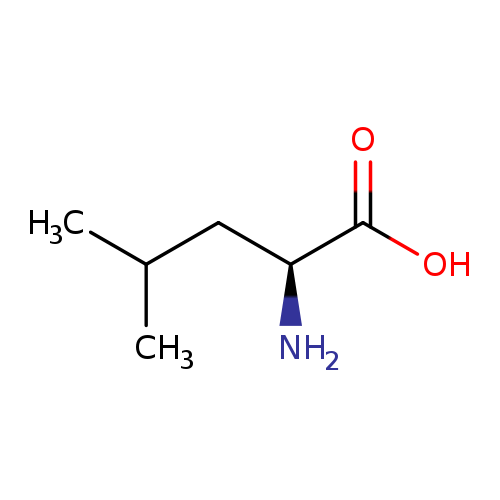
Chemical Structure
Thumb
Synonyms
ValueSource
(2S)-2-Amino-4-methylpentanoic acidChEBI
(2S)-alpha-2-Amino-4-methylvaleric acidChEBI
(2S)-alpha-LeucineChEBI
(S)-(+)-LeucineChEBI
(S)-LeucineChEBI
2-Amino-4-methylvaleric acidChEBI
LChEBI
L-LeucinChEBI
L-LeuzinChEBI
LeuChEBI
LEUCINEChEBI
(2S)-2-Amino-4-methylpentanoateGenerator
(2S)-a-2-Amino-4-methylvalerateGenerator
(2S)-a-2-Amino-4-methylvaleric acidGenerator
(2S)-alpha-2-Amino-4-methylvalerateGenerator
(2S)-Α-2-amino-4-methylvalerateGenerator
(2S)-Α-2-amino-4-methylvaleric acidGenerator
(2S)-a-LeucineGenerator
(2S)-Α-leucineGenerator
2-Amino-4-methylvalerateGenerator
(S)-2-Amino-4-methylpentanoateHMDB
(S)-2-Amino-4-methylpentanoic acidHMDB
(S)-2-Amino-4-methylvalerateHMDB
(S)-2-Amino-4-methylvaleric acidHMDB
4-Methyl-L-norvalineHMDB
L-(+)-LeucineHMDB
L-a-AminoisocaproateHMDB
L-a-Aminoisocaproic acidHMDB
L-alpha-AminoisocaproateHMDB
L-alpha-Aminoisocaproic acidHMDB
Leucine, L-isomerHMDB
L-Isomer leucineHMDB
Leucine, L isomerHMDB
Chemical FormulaC6H13NO2
Average Molecular Mass131.173 g/mol
Monoisotopic Mass131.095 g/mol
CAS Registry Number61-90-5
IUPAC Name(2S)-2-amino-4-methylpentanoic acid
Traditional NameL-leucine
SMILESCC(C)C[C@H](N)C(O)=O
InChI IdentifierInChI=1S/C6H13NO2/c1-4(2)3-5(7)6(8)9/h4-5H,3,7H2,1-2H3,(H,8,9)/t5-/m0/s1
InChI KeyROHFNLRQFUQHCH-YFKPBYRVSA-N
Chemical Taxonomy
Description belongs to the class of organic compounds known as leucine and derivatives. Leucine and derivatives are compounds containing leucine or a derivative thereof resulting from reaction of leucine at the amino group or the carboxy group, or from the replacement of any hydrogen of glycine by a heteroatom.
KingdomOrganic compounds
Super ClassOrganic acids and derivatives
ClassCarboxylic acids and derivatives
Sub ClassAmino acids, peptides, and analogues
Direct ParentLeucine and derivatives
Alternative Parents
Substituents
  • Leucine or derivatives
  • Alpha-amino acid
  • L-alpha-amino acid
  • Branched fatty acid
  • Methyl-branched fatty acid
  • Fatty acid
  • Fatty acyl
  • Amino acid
  • Monocarboxylic acid or derivatives
  • Carboxylic acid
  • Organic oxide
  • Organopnictogen compound
  • Primary amine
  • Organooxygen compound
  • Organonitrogen compound
  • Primary aliphatic amine
  • Carbonyl group
  • Organic oxygen compound
  • Amine
  • Organic nitrogen compound
  • Hydrocarbon derivative
  • Aliphatic acyclic compound
Molecular FrameworkAliphatic acyclic compounds
External Descriptors
Biological Properties
StatusDetected and Not Quantified
OriginEndogenous
Cellular Locations
  • Cytoplasm
  • Extracellular
  • Mitochondria
Biofluid LocationsNot Available
Tissue Locations
  • Adipose Tissue
  • Adrenal Medulla
  • Bladder
  • Epidermis
  • Fibroblasts
  • Intestine
  • Kidney
  • Muscle
  • Nerve Cells
  • Neuron
  • Placenta
  • Platelet
  • Prostate
  • Skeletal Muscle
  • Testes
Pathways
NameSMPDB LinkKEGG Link
Transcription/TranslationSMP00019 Not Available
Valine, Leucine and Isoleucine DegradationSMP00032 map00280
Hartnup DisorderSMP00189 Not Available
Valine, Leucine, and Isoleucine DegradationSMP0000032 Not Available
beta-Ketothiolase DeficiencySMP0000173 Not Available
2-Methyl-3-hydroxybutyryl-CoA Dehydrogenase DeficiencySMP0000137 Not Available
Propionic AcidemiaSMP0000236 Not Available
3-Hydroxy-3-methylglutaryl-CoA Lyase DeficiencySMP0000138 Not Available
Maple Syrup Urine DiseaseSMP0000199 Not Available
3-Methylcrotonyl-CoA Carboxylase Deficiency Type ISMP0000237 Not Available
3-Methylglutaconic Aciduria Type ISMP0000139 Not Available
3-Methylglutaconic Aciduria Type IIISMP0000140 Not Available
Methylmalonate Semialdehyde Dehydrogenase DeficiencySMP0000384 Not Available
Methylmalonic AciduriaSMP0000200 Not Available
Isovaleric AciduriaSMP0000238 Not Available
3-Methylglutaconic Aciduria Type IVSMP0000141 Not Available
3-Hydroxyisobutyric Acid Dehydrogenase DeficiencySMP0000521 Not Available
3-Hydroxyisobutyric AciduriaSMP0000522 Not Available
Isobutyryl-CoA Dehydrogenase DeficiencySMP0000523 Not Available
Isovaleric AcidemiaSMP0000524 Not Available
Leucine Stimulation on Insulin SignalingSMP0000682 Not Available
Glutaminolysis and CancerSMP0002298 Not Available
Protein Synthesis: LeucineSMP0111873 Not Available
Immunometabolism Pathway (Bacterial Activation)SMP0125484 Not Available
Immunometabolism Pathway (Viral Activation)SMP0125488 Not Available
Viral SepsisSMP0125490 Not Available
Bacterial SepsisSMP0125493 Not Available
beta-Ketothiolase DeficiencySMP0125657 Not Available
2-Methyl-3-hydroxybutyryl-CoA Dehydrogenase DeficiencySMP0125658 Not Available
Propionic AcidemiaSMP0125659 Not Available
3-Hydroxy-3-methylglutaryl-CoA Lyase DeficiencySMP0125660 Not Available
Maple Syrup Urine DiseaseSMP0125661 Not Available
3-Methylcrotonyl-CoA Carboxylase Deficiency Type ISMP0125662 Not Available
3-Methylglutaconic Aciduria Type ISMP0125664 Not Available
3-Methylglutaconic Aciduria Type IIISMP0125667 Not Available
Methylmalonate Semialdehyde Dehydrogenase DeficiencySMP0125669 Not Available
Methylmalonic AciduriaSMP0125670 Not Available
Isovaleric AciduriaSMP0125671 Not Available
3-Methylglutaconic Aciduria Type IVSMP0125672 Not Available
3-Hydroxyisobutyric Acid Dehydrogenase DeficiencySMP0125673 Not Available
3-Hydroxyisobutyric AciduriaSMP0125674 Not Available
Isobutyryl-CoA Dehydrogenase DeficiencySMP0125675 Not Available
Isovaleric AcidemiaSMP0125676 Not Available
Tavaborole Action PathwaySMP0125844 Not Available
mTOR Signaling pathwaySMP0535455 Not Available
ApplicationsNot Available
Biological Roles
Chemical RolesNot Available
Physical Properties
StateSolid
AppearanceWhite powder.
Experimental Properties
PropertyValue
Melting Point293°C
Boiling PointNot Available
Solubility2.15E+004 mg/L (at 25°C)
Predicted Properties
PropertyValueSource
Water Solubility69.8 g/LALOGPS
logP-1.8ALOGPS
logP-1.6ChemAxon
logS-0.27ALOGPS
pKa (Strongest Acidic)2.79ChemAxon
pKa (Strongest Basic)9.52ChemAxon
Physiological Charge0ChemAxon
Hydrogen Acceptor Count3ChemAxon
Hydrogen Donor Count2ChemAxon
Polar Surface Area63.32 ŲChemAxon
Rotatable Bond Count3ChemAxon
Refractivity34.17 m³·mol⁻¹ChemAxon
Polarizability14.16 ųChemAxon
Number of Rings0ChemAxon
Bioavailability1ChemAxon
Rule of FiveYesChemAxon
Ghose FilterNoChemAxon
Veber's RuleNoChemAxon
MDDR-like RuleNoChemAxon
Spectra
Spectra
Spectrum TypeDescriptionSplash KeyView
GC-MSGC-MS Spectrum - GC-EI-TOF (Pegasus III TOF-MS system, Leco; GC 6890, Agilent Technologies) (2 TMS)splash10-0pb9-0900000000-c0176b3cef05fc597576Spectrum
GC-MSGC-MS Spectrum - GC-EI-TOF (Pegasus III TOF-MS system, Leco; GC 6890, Agilent Technologies) (2 TMS)splash10-0a4i-0900000000-eb7cee37b9d78694010cSpectrum
GC-MSGC-MS Spectrum - GC-EI-TOF (Pegasus III TOF-MS system, Leco; GC 6890, Agilent Technologies) (2 TMS)splash10-0a4i-0900000000-7033b5fdcd4216168462Spectrum
GC-MSGC-MS Spectrum - GC-EI-TOF (Pegasus III TOF-MS system, Leco; GC 6890, Agilent Technologies) (Non-derivatized)splash10-0a4i-0900000000-cd1de48a6db61eb4455eSpectrum
GC-MSGC-MS Spectrum - GC-EI-TOF (Pegasus III TOF-MS system, Leco; GC 6890, Agilent Technologies) (2 TMS)splash10-05fr-7900000000-e3b993b282ec2115b484Spectrum
GC-MSGC-MS Spectrum - EI-B (Non-derivatized)splash10-0019-9000000000-6e468213b3429cf627bcSpectrum
GC-MSGC-MS Spectrum - EI-B (Non-derivatized)splash10-0a4i-0900000000-ef06e48ca82519977a37Spectrum
GC-MSGC-MS Spectrum - GC-EI-TOF (Non-derivatized)splash10-0pb9-0900000000-c0176b3cef05fc597576Spectrum
GC-MSGC-MS Spectrum - GC-EI-TOF (Non-derivatized)splash10-0a4i-0900000000-eb7cee37b9d78694010cSpectrum
GC-MSGC-MS Spectrum - GC-EI-TOF (Non-derivatized)splash10-0a4i-0900000000-7033b5fdcd4216168462Spectrum
GC-MSGC-MS Spectrum - GC-EI-TOF (Non-derivatized)splash10-0a4i-0900000000-cd1de48a6db61eb4455eSpectrum
GC-MSGC-MS Spectrum - GC-EI-QQ (Non-derivatized)splash10-0udi-1391000000-5183562a14017e557e33Spectrum
GC-MSGC-MS Spectrum - GC-EI-TOF (Non-derivatized)splash10-05fr-7900000000-e3b993b282ec2115b484Spectrum
Predicted GC-MSPredicted GC-MS Spectrum - GC-MS (Non-derivatized) - 70eV, Positivesplash10-0006-9000000000-70cdb961a0819be4318aSpectrum
Predicted GC-MSPredicted GC-MS Spectrum - GC-MS (1 TMS) - 70eV, Positivesplash10-000i-9100000000-991398731b9d8305622cSpectrum
Predicted GC-MSPredicted GC-MS Spectrum - GC-MS (Non-derivatized) - 70eV, PositiveNot AvailableSpectrum
Predicted GC-MSPredicted GC-MS Spectrum - GC-MS (TMS_1_2) - 70eV, PositiveNot AvailableSpectrum
Predicted GC-MSPredicted GC-MS Spectrum - GC-MS (TBDMS_1_1) - 70eV, PositiveNot AvailableSpectrum
Predicted GC-MSPredicted GC-MS Spectrum - GC-MS (TBDMS_1_2) - 70eV, PositiveNot AvailableSpectrum
LC-MS/MSLC-MS/MS Spectrum - Quattro_QQQ 10V, Positive (Annotated)splash10-000i-9100000000-05b5a7a191a32803595eSpectrum
LC-MS/MSLC-MS/MS Spectrum - Quattro_QQQ 25V, Positive (Annotated)splash10-0006-9000000000-5302e9c96e75e06e9705Spectrum
LC-MS/MSLC-MS/MS Spectrum - Quattro_QQQ 40V, Positive (Annotated)splash10-0006-9000000000-9e70778b46864cd22996Spectrum
LC-MS/MSLC-MS/MS Spectrum - EI-B (HITACHI M-80) , Positivesplash10-0019-9000000000-6e468213b3429cf627bcSpectrum
LC-MS/MSLC-MS/MS Spectrum - LC-ESI-ITFT (LTQ Orbitrap XL, Thermo Scientfic) , Positivesplash10-001i-0900000000-4f403c61aaa8a103c049Spectrum
LC-MS/MSLC-MS/MS Spectrum - LC-ESI-ITFT (LTQ Orbitrap XL, Thermo Scientfic) , Positivesplash10-000i-9000000000-d85fcc558423654f45fdSpectrum
LC-MS/MSLC-MS/MS Spectrum - LC-ESI-ITFT (LTQ Orbitrap XL, Thermo Scientfic) , Positivesplash10-000i-9000000000-931937d3bdd49b3ae623Spectrum
LC-MS/MSLC-MS/MS Spectrum - LC-ESI-ITFT (LTQ Orbitrap XL, Thermo Scientfic) , Positivesplash10-0002-0930000000-aa1256c9224fecacf025Spectrum
LC-MS/MSLC-MS/MS Spectrum - LC-ESI-ITFT (LTQ Orbitrap XL, Thermo Scientfic) , Positivesplash10-001i-0900000000-0a72425a86f804d3a16bSpectrum
LC-MS/MSLC-MS/MS Spectrum - LC-ESI-ITFT (LTQ Orbitrap XL, Thermo Scientfic) , Positivesplash10-000i-9000000000-4ed8cafebf4ee4e82e6aSpectrum
LC-MS/MSLC-MS/MS Spectrum - LC-ESI-ITFT (LTQ Orbitrap XL, Thermo Scientfic) , Positivesplash10-000i-9000000000-3ac62b780abd90dd28b1Spectrum
LC-MS/MSLC-MS/MS Spectrum - LC-ESI-ITFT (LTQ Orbitrap XL, Thermo Scientfic) , Positivesplash10-000i-9000000000-eb75eb03a58512ea36dfSpectrum
LC-MS/MSLC-MS/MS Spectrum - LC-ESI-QQ (API3000, Applied Biosystems) 10V, Negativesplash10-001i-0900000000-c0f28e4ebdef67c5b509Spectrum
LC-MS/MSLC-MS/MS Spectrum - LC-ESI-QQ (API3000, Applied Biosystems) 20V, Negativesplash10-001i-0900000000-0751a9e803a2e7715d1aSpectrum
LC-MS/MSLC-MS/MS Spectrum - LC-ESI-QQ (API3000, Applied Biosystems) 30V, Negativesplash10-001i-5900000000-8040fc883917239630a7Spectrum
LC-MS/MSLC-MS/MS Spectrum - LC-ESI-QQ (API3000, Applied Biosystems) 40V, Negativesplash10-016s-9000000000-a7f9e8d43e66dbd02b6fSpectrum
LC-MS/MSLC-MS/MS Spectrum - LC-ESI-QQ (API3000, Applied Biosystems) 10V, Positivesplash10-001r-7900000000-da119558c426d9c9d3a1Spectrum
LC-MS/MSLC-MS/MS Spectrum - LC-ESI-QQ (API3000, Applied Biosystems) 20V, Positivesplash10-000i-9000000000-ae8365105ae2a18e0c10Spectrum
LC-MS/MSLC-MS/MS Spectrum - LC-ESI-QQ (API3000, Applied Biosystems) 30V, Positivesplash10-000f-9000000000-228ee614be6648b37433Spectrum
LC-MS/MSLC-MS/MS Spectrum - LC-ESI-QQ (API3000, Applied Biosystems) 40V, Positivesplash10-0006-9000000000-d1f3e047af455e156a1eSpectrum
LC-MS/MSLC-MS/MS Spectrum - LC-ESI-QQ (API3000, Applied Biosystems) 50V, Positivesplash10-0006-9000000000-409dfbdb20719c3afda5Spectrum
LC-MS/MSLC-MS/MS Spectrum - CE-ESI-TOF (CE-system connected to 6210 Time-of-Flight MS, Agilent) , Positivesplash10-001i-0900000000-720554d58264a9cfdb67Spectrum
LC-MS/MSLC-MS/MS Spectrum - LC-ESI-QTOF (UPLC Q-Tof Premier, Waters) , Positivesplash10-001i-0900000000-90fab591d1f6d6318002Spectrum
LC-MS/MSLC-MS/MS Spectrum - LC-ESI-QTOF (UPLC Q-Tof Premier, Waters) , Negativesplash10-001i-0900000000-ed843252a559d532dc5eSpectrum
Predicted LC-MS/MSPredicted LC-MS/MS Spectrum - 10V, Positivesplash10-0019-9500000000-b9f1203176ce0ca7c11cSpectrum
MSMass Spectrum (Electron Ionization)splash10-000l-9000000000-bf752e458f13eed8d7a2Spectrum
1D NMR13C NMR SpectrumNot AvailableSpectrum
1D NMR1H NMR SpectrumNot AvailableSpectrum
1D NMR13C NMR SpectrumNot AvailableSpectrum
1D NMR1H NMR SpectrumNot AvailableSpectrum
1D NMR13C NMR SpectrumNot AvailableSpectrum
1D NMR1H NMR SpectrumNot AvailableSpectrum
1D NMR13C NMR SpectrumNot AvailableSpectrum
1D NMR1H NMR SpectrumNot AvailableSpectrum
1D NMR13C NMR SpectrumNot AvailableSpectrum
1D NMR1H NMR SpectrumNot AvailableSpectrum
1D NMR13C NMR SpectrumNot AvailableSpectrum
1D NMR1H NMR SpectrumNot AvailableSpectrum
1D NMR13C NMR SpectrumNot AvailableSpectrum
1D NMR1H NMR SpectrumNot AvailableSpectrum
1D NMR13C NMR SpectrumNot AvailableSpectrum
1D NMR1H NMR SpectrumNot AvailableSpectrum
1D NMR13C NMR SpectrumNot AvailableSpectrum
1D NMR1H NMR SpectrumNot AvailableSpectrum
1D NMR13C NMR SpectrumNot AvailableSpectrum
1D NMR1H NMR SpectrumNot AvailableSpectrum
1D NMR13C NMR SpectrumNot AvailableSpectrum
1D NMR1H NMR SpectrumNot AvailableSpectrum
1D NMR13C NMR SpectrumNot AvailableSpectrum
2D NMR[1H,13C] 2D NMR SpectrumNot AvailableSpectrum
Toxicity Profile
Route of ExposureNot Available
Mechanism of ToxicityThis group of essential amino acids are identified as the branched-chain amino acids, BCAAs. Because this arrangement of carbon atoms cannot be made by humans, these amino acids are an essential element in the diet. The catabolism of all three compounds initiates in muscle and yields NADH and FADH2 which can be utilized for ATP generation. The catabolism of all three of these amino acids uses the same enzymes in the first two steps. The first step in each case is a transamination using a single BCAA aminotransferase, with a-ketoglutarate as amine acceptor. As a result, three different a-keto acids are produced and are oxidized using a common branched-chain a-keto acid dehydrogenase, yielding the three different CoA derivatives. Subsequently the metabolic pathways diverge, producing many intermediates. The principal product from valine is propionylCoA, the glucogenic precursor of succinyl-CoA. Isoleucine catabolism terminates with production of acetylCoA and propionylCoA; thus isoleucine is both glucogenic and ketogenic. Leucine gives rise to acetylCoA and acetoacetylCoA, and is thus classified as strictly ketogenic. There are a number of genetic diseases associated with faulty catabolism of the BCAAs. The most common defect is in the branched-chain a-keto acid dehydrogenase. Since there is only one dehydrogenase enzyme for all three amino acids, all three a-keto acids accumulate and are excreted in the urine. The disease is known as Maple syrup urine disease because of the characteristic odor of the urine in afflicted individuals. Mental retardation in these cases is extensive. Unfortunately, since these are essential amino acids, they cannot be heavily restricted in the diet; ultimately, the life of afflicted individuals is short and development is abnormal The main neurological problems are due to poor formation of myelin in the CNS.
MetabolismNot Available
Toxicity ValuesNot Available
Lethal DoseNot Available
Carcinogenicity (IARC Classification)No indication of carcinogenicity to humans (not listed by IARC).
Uses/SourcesIndicated to assist in the prevention of the breakdown of muscle proteins that sometimes occur after trauma or severe stress.
Minimum Risk LevelNot Available
Health EffectsNot Available
SymptomsNot Available
TreatmentNot Available
Concentrations
Not Available
DrugBank IDDB00149
HMDB IDHMDB0000687
FooDB IDFDB000899
Phenol Explorer IDNot Available
KNApSAcK IDC00001377
BiGG ID33942
BioCyc IDLEU
METLIN ID24
PDB IDNot Available
Wikipedia LinkLeucine
Chemspider ID5880
ChEBI ID15603
PubChem Compound ID6106
Kegg Compound IDC00123
YMDB IDYMDB00387
ECMDB IDECMDB00687
References
Synthesis Reference

Takayasu Tsuchida, Haruo Momose, Yoshio Hirose, “Process for producing L-leucine.” U.S. Patent US3970519, issued February, 1975.

MSDSLink
General References
1. Leuchtenberger, Wolfgang; Karrenbauer, Michael; Ploecker, Ulf. Scale-up of an enzyme membrane reactor process for the manufacture of L-enantiomeric compounds. Annals of the New York Academy of Sciences (1984), 434(Enzyme Eng.), 78-86.
2. A. Foroutan et al. The Chemical Composition of Commercial Cow's Milk (in preparation)
3. Fooddata+, The Technical University of Denmark (DTU): https://frida.fooddata.dk/QueryFood.php?fn=milk&lang=en
4. Leuchtenberger, Wolfgang; Karrenbauer, Michael; Ploecker, Ulf. Scale-up of an enzyme membrane reactor process for the manufacture of L-enantiomeric compounds. Annals of the New York Academy of Sciences (1984), 434(Enzyme Eng.), 78-86.
5. Deng C, Shang C, Hu Y, Zhang X: Rapid diagnosis of phenylketonuria and other aminoacidemias by quantitative analysis of amino acids in neonatal blood spots by gas chromatography-mass spectrometry. J Chromatogr B Analyt Technol Biomed Life Sci. 2002 Jul 25;775(1):115-20.
6. Peng CT, Wu KH, Lan SJ, Tsai JJ, Tsai FJ, Tsai CH: Amino acid concentrations in cerebrospinal fluid in children with acute lymphoblastic leukemia undergoing chemotherapy. Eur J Cancer. 2005 May;41(8):1158-63. Epub 2005 Apr 14.
7. Cynober LA: Plasma amino acid levels with a note on membrane transport: characteristics, regulation, and metabolic significance. Nutrition. 2002 Sep;18(9):761-6.
8. Yoshimasa T, Nakao K, Ohtsuki H, Li S, Imura H: Methionine-enkephalin and leucine-enkephalin in human sympathoadrenal system and pheochromocytoma. J Clin Invest. 1982 Mar;69(3):643-50.
9. Rainesalo S, Keranen T, Palmio J, Peltola J, Oja SS, Saransaari P: Plasma and cerebrospinal fluid amino acids in epileptic patients. Neurochem Res. 2004 Jan;29(1):319-24.
10. Jansson T, Scholtbach V, Powell TL: Placental transport of leucine and lysine is reduced in intrauterine growth restriction. Pediatr Res. 1998 Oct;44(4):532-7.
11. Nicholson JK, O'Flynn MP, Sadler PJ, Macleod AF, Juul SM, Sonksen PH: Proton-nuclear-magnetic-resonance studies of serum, plasma and urine from fasting normal and diabetic subjects. Biochem J. 1984 Jan 15;217(2):365-75.
12. Lichtenstein AH, Hachey DL, Millar JS, Jenner JL, Booth L, Ordovas J, Schaefer EJ: Measurement of human apolipoprotein B-48 and B-100 kinetics in triglyceride-rich lipoproteins using [5,5,5-2H3]leucine. J Lipid Res. 1992 Jun;33(6):907-14.
13. Mero A: Leucine supplementation and intensive training. Sports Med. 1999 Jun;27(6):347-58.
14. Sakamoto M, Nakao K, Yoshimasa T, Ikeda Y, Suda M, Takasu K, Shimbo S, Yanaihara N, Imura H: Occurrence of methionine-enkephalin-Arg6-Gly7-Leu8 with methionine-enkephalin, leucine-enkephalin and methionine-enkephalin-Arg6-Phe7 in human gastric antrum. J Clin Endocrinol Metab. 1983 Jan;56(1):202-4.
15. Yudkoff M, Daikhin Y, Nissim I, Horyn O, Luhovyy B, Lazarow A, Nissim I: Brain amino acid requirements and toxicity: the example of leucine. J Nutr. 2005 Jun;135(6 Suppl):1531S-8S.
16. Iannoli P, Miller JH, Wang HT, Bode B, Souba WW, Avissar NE, Sax HC: Characterization of L-leucine transport system in brush border membranes from human and rabbit small intestine. Metabolism. 1999 Nov;48(11):1432-6.
17. Hagenfeldt L, Bjerkenstedt L, Edman G, Sedvall G, Wiesel FA: Amino acids in plasma and CSF and monoamine metabolites in CSF: interrelationship in healthy subjects. J Neurochem. 1984 Mar;42(3):833-7.
18. Sreekumar A, Poisson LM, Rajendiran TM, Khan AP, Cao Q, Yu J, Laxman B, Mehra R, Lonigro RJ, Li Y, Nyati MK, Ahsan A, Kalyana-Sundaram S, Han B, Cao X, Byun J, Omenn GS, Ghosh D, Pennathur S, Alexander DC, Berger A, Shuster JR, Wei JT, Varambally S, Beecher C, Chinnaiyan AM: Metabolomic profiles delineate potential role for sarcosine in prostate cancer progression. Nature. 2009 Feb 12;457(7231):910-4. doi: 10.1038/nature07762.
19. Elshenawy S, Pinney SE, Stuart T, Doulias PT, Zura G, Parry S, Elovitz MA, Bennett MJ, Bansal A, Strauss JF 3rd, Ischiropoulos H, Simmons RA: The Metabolomic Signature of the Placenta in Spontaneous Preterm Birth. Int J Mol Sci. 2020 Feb 4;21(3). pii: ijms21031043. doi: 10.3390/ijms21031043.
20. https://www.ncbi.nlm.nih.gov/pubmed/?term=17609475
21. https://www.ncbi.nlm.nih.gov/pubmed/?term=22735334
22. https://www.ncbi.nlm.nih.gov/pubmed/?term=24206068
23. https://www.ncbi.nlm.nih.gov/pubmed/?term=24333966
24. https://www.ncbi.nlm.nih.gov/pubmed/?term=8798704