Record Information
Version1.0
Creation Date2014-08-29 06:35:45 UTC
Update Date2026-04-17 18:55:29 UTC
Accession NumberCHEM003329
Identification
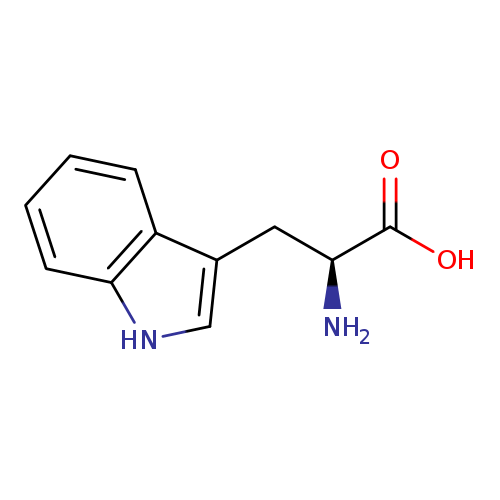
Common NameL-Tryptophan
ClassSmall Molecule
DescriptionTryptophan is an essential amino acid which is the precursor of serotonin. Serotonin is a brain neurotransmitter, platelet clotting factor and neurohormone found in organs throughout the body. Metabolism of tryptophan to serotonin requires nutrients such as vitamin B6, niacin and glutathione. Niacin is an important metabolite of tryptophan. High corn or other tryptophan-deficient diets can cause pellagra, which is a niacin-tryptophan deficiency disease with symptoms of dermatitis, diarrhea and dementia. Inborn errors of tryptophan metabolism exist where a tumor (carcinoid) makes excess serotonin. Hartnup's disease is a disease where tryptophan and other amino acids are not absorbed properly. Tryptophan supplements may be useful in each condition, in carcinoid replacing the over-metabolized nutrient and in Hartnup's supplementing a malabsorbed nutrient. Some disorders of excess tryptophan in the blood may contribute to mental retardation. Assessment of tryptophan deficiency is done through studying excretion of tryptophan metabolites in the urine or blood. Blood may be the most sensitive test because the amino acid tryptophan is transported in a unique way. Increased urination of tryptophan fragments correlates with increased tryptophan degradation, which occurs with oral contraception, depression, mental retardation, hypertension and anxiety states. The requirement for tryptophan and protein decreases with age. Adults' minimum daily requirement is 3 mg/kg/day or about 200 mg a day. This may be an underestimation, for there are 400 mg of tryptophan in just a cup of wheat germ. A cup of low fat cottage cheese contains 300 mg of tryptophan and chicken and turkey contain up to 600 mg per pound.
Contaminant Sources
  • Cosmetic Chemicals
  • EAFUS Chemicals
  • FooDB Chemicals
  • HMDB Contaminants - Feces
  • HMDB Contaminants - Urine
  • STOFF IDENT Compounds
  • T3DB toxins
  • ToxCast & Tox21 Chemicals
Contaminant Type
  • Amine
  • Amino Acid, Essential
  • Animal Toxin
  • Antidepressive Agent, Second-Generation
  • Dietary Supplement
  • Drug
  • Food Toxin
  • Metabolite
  • Micronutrient
  • Natural Compound
  • Nutraceutical
  • Organic Compound
  • Supplement
Chemical Structure
Thumb
Synonyms
ValueSource
(2S)-2-Amino-3-(1H-indol-3-yl)propanoic acidChEBI
(S)-alpha-Amino-1H-indole-3-propanoic acidChEBI
(S)-alpha-Amino-beta-(3-indolyl)-propionic acidChEBI
(S)-TryptophanChEBI
L-(-)-TryptophanChEBI
L-beta-3-IndolylalanineChEBI
TrpChEBI
TryptophanChEBI
WChEBI
(2S)-2-Amino-3-(1H-indol-3-yl)propanoateGenerator
(S)-a-Amino-1H-indole-3-propanoateGenerator
(S)-a-Amino-1H-indole-3-propanoic acidGenerator
(S)-alpha-Amino-1H-indole-3-propanoateGenerator
(S)-Α-amino-1H-indole-3-propanoateGenerator
(S)-Α-amino-1H-indole-3-propanoic acidGenerator
(S)-a-Amino-b-(3-indolyl)-propionateGenerator
(S)-a-Amino-b-(3-indolyl)-propionic acidGenerator
(S)-alpha-Amino-beta-(3-indolyl)-propionateGenerator
(S)-Α-amino-β-(3-indolyl)-propionateGenerator
(S)-Α-amino-β-(3-indolyl)-propionic acidGenerator
L-b-3-IndolylalanineGenerator
L-Β-3-indolylalanineGenerator
(-)-TryptophanHMDB
(L)-TryptophanHMDB
(S)-1H-Indole-3-alanineHMDB
(S)-2-Amino-3-(3-indolyl)propionic acidHMDB
(S)-a-Amino-b-indolepropionateHMDB
(S)-a-Amino-b-indolepropionic acidHMDB
(S)-a-Aminoindole-3-propionateHMDB
(S)-a-Aminoindole-3-propionic acidHMDB
(S)-alpha-Amino-beta-indolepropionateHMDB
(S)-alpha-Amino-beta-indolepropionic acidHMDB
(S)-alpha-Aminoindole-3-propionateHMDB
(S)-alpha-Aminoindole-3-propionic acidHMDB
1-beta-3-IndolylalanineHMDB
1beta-3-IndolylalanineHMDB
1H-Indole-3-alanineHMDB
2-Amino-3-indolylpropanoateHMDB
2-Amino-3-indolylpropanoic acidHMDB
3-(1H-indol-3-yl)-L-AlanineHMDB
3-indol-3-YlalanineHMDB
Alpha'-amino-3-indolepropionic acidHMDB
alpha-Aminoindole-3-propionic acidHMDB
ArdeytropinHMDB
H-TRP-OHHMDB
Indole-3-alanineHMDB
KalmaHMDB
L-alpha-Amino-3-indolepropionic acidHMDB
L-alpha-Aminoindole-3-propionic acidHMDB
L-TryptofanHMDB
L-TryptophaneHMDB
Lopac-T-0254HMDB
LyphanHMDB
OptimaxHMDB
PacitronHMDB
SedanoctHMDB
TriptofanoHMDB
TrofanHMDB
TryptacinHMDB
TryptanHMDB
TryptophaneHMDB
TryptophanumHMDB
ArdeydormHMDB
L TryptophanHMDB
L-Tryptophan-ratiopharmHMDB
Merck brand OF tryptophanHMDB
Niddapharm brand OF tryptophanHMDB
ICN brand OF tryptophanHMDB
LevotryptophanHMDB
PMS TryptophanHMDB
PMS-TryptophanHMDB
Ratiopharm brand OF tryptophanHMDB
Esparma brand OF tryptophanHMDB
Ratio-tryptophanHMDB
L Tryptophan ratiopharmHMDB
NaturruheHMDB
Tryptophan metabolism alterationsHMDB
Ardeypharm brand OF tryptophanHMDB
Kalma brand OF tryptophanHMDB
Pharmascience brand OF tryptophanHMDB
Upsher-smith brand OF tryptophanHMDB
Ratio tryptophanHMDB
Chemical FormulaC11H12N2O2
Average Molecular Mass204.225 g/mol
Monoisotopic Mass204.090 g/mol
CAS Registry Number73-22-3
IUPAC Name(2S)-2-amino-3-(1H-indol-3-yl)propanoic acid
Traditional NameL-tryptophan
SMILESN[C@@H](CC1=CNC2=CC=CC=C12)C(O)=O
InChI IdentifierInChI=1S/C11H12N2O2/c12-9(11(14)15)5-7-6-13-10-4-2-1-3-8(7)10/h1-4,6,9,13H,5,12H2,(H,14,15)/t9-/m0/s1
InChI KeyQIVBCDIJIAJPQS-VIFPVBQESA-N
Chemical Taxonomy
Description belongs to the class of organic compounds known as indolyl carboxylic acids and derivatives. Indolyl carboxylic acids and derivatives are compounds containing a carboxylic acid chain (of at least 2 carbon atoms) linked to an indole ring.
KingdomOrganic compounds
Super ClassOrganoheterocyclic compounds
ClassIndoles and derivatives
Sub ClassIndolyl carboxylic acids and derivatives
Direct ParentIndolyl carboxylic acids and derivatives
Alternative Parents
Substituents
  • Indolyl carboxylic acid derivative
  • Alpha-amino acid
  • Alpha-amino acid or derivatives
  • L-alpha-amino acid
  • 3-alkylindole
  • Indole
  • Aralkylamine
  • Benzenoid
  • Substituted pyrrole
  • Heteroaromatic compound
  • Pyrrole
  • Amino acid or derivatives
  • Amino acid
  • Carboxylic acid derivative
  • Carboxylic acid
  • Monocarboxylic acid or derivatives
  • Azacycle
  • Amine
  • Primary aliphatic amine
  • Hydrocarbon derivative
  • Organic oxide
  • Organic oxygen compound
  • Organic nitrogen compound
  • Carbonyl group
  • Organonitrogen compound
  • Organooxygen compound
  • Primary amine
  • Organopnictogen compound
  • Aromatic heteropolycyclic compound
Molecular FrameworkAromatic heteropolycyclic compounds
External Descriptors
Biological Properties
StatusDetected and Not Quantified
OriginEndogenous
Cellular Locations
  • Cytoplasm
  • Extracellular
Biofluid LocationsNot Available
Tissue Locations
  • Fibroblasts
  • Nerve Cells
  • Prostate
Pathways
NameSMPDB LinkKEGG Link
Transcription/TranslationSMP00019 Not Available
Tryptophan MetabolismSMP00063 map00380
Hartnup DisorderSMP00189 Not Available
Applications
Biological Roles
Chemical RolesNot Available
Physical Properties
StateSolid
AppearanceWhite powder.
Experimental Properties
PropertyValue
Melting Point290.5 dec°C
Boiling PointNot Available
Solubility1.34E+004 mg/L (at 25°C)
Predicted Properties
PropertyValueSource
Water Solubility1.36 g/LALOGPS
logP-1.1ALOGPS
logP-1.1ChemAxon
logS-2.2ALOGPS
pKa (Strongest Acidic)2.54ChemAxon
pKa (Strongest Basic)9.4ChemAxon
Physiological Charge0ChemAxon
Hydrogen Acceptor Count3ChemAxon
Hydrogen Donor Count3ChemAxon
Polar Surface Area79.11 ŲChemAxon
Rotatable Bond Count3ChemAxon
Refractivity56.2 m³·mol⁻¹ChemAxon
Polarizability21.05 ųChemAxon
Number of Rings2ChemAxon
Bioavailability1ChemAxon
Rule of FiveYesChemAxon
Ghose FilterNoChemAxon
Veber's RuleNoChemAxon
MDDR-like RuleNoChemAxon
Spectra
Spectra
Spectrum TypeDescriptionSplash KeyView
GC-MSGC-MS Spectrum - GC-EI-TOF (Pegasus III TOF-MS system, Leco; GC 6890, Agilent Technologies) (3 TMS)splash10-0udi-0190000000-feaec8547634dddcad8cSpectrum
GC-MSGC-MS Spectrum - GC-EI-TOF (Pegasus III TOF-MS system, Leco; GC 6890, Agilent Technologies) (3 TMS)splash10-0udi-0390000000-45a6c4fd79081597d44aSpectrum
GC-MSGC-MS Spectrum - GC-EI-TOF (Pegasus III TOF-MS system, Leco; GC 6890, Agilent Technologies) (Non-derivatized)splash10-0udi-0290000000-34f7274f31a4cb321a0bSpectrum
GC-MSGC-MS Spectrum - GC-EI-TOF (Pegasus III TOF-MS system, Leco; GC 6890, Agilent Technologies) (3 TMS)splash10-0fk9-9270000000-9761607cbe821f87f172Spectrum
GC-MSGC-MS Spectrum - GC-MS (1 TMS)splash10-001i-0900000000-3faeed7ad32e1755c03cSpectrum
GC-MSGC-MS Spectrum - GC-MS (3 TMS)splash10-0udi-0290000000-9c57a732e337fade3cb6Spectrum
GC-MSGC-MS Spectrum - EI-B (Non-derivatized)splash10-001i-0900000000-d054a214c1717940989fSpectrum
GC-MSGC-MS Spectrum - EI-B (Non-derivatized)splash10-0udi-0290000000-9860799c854e5c9ac1c7Spectrum
GC-MSGC-MS Spectrum - GC-EI-TOF (Non-derivatized)splash10-0udi-0190000000-feaec8547634dddcad8cSpectrum
GC-MSGC-MS Spectrum - GC-EI-TOF (Non-derivatized)splash10-0udi-0390000000-45a6c4fd79081597d44aSpectrum
GC-MSGC-MS Spectrum - GC-EI-TOF (Non-derivatized)splash10-0udi-0290000000-34f7274f31a4cb321a0bSpectrum
GC-MSGC-MS Spectrum - GC-EI-QQ (Non-derivatized)splash10-0udi-3729000000-86129db57aaf1a245f93Spectrum
GC-MSGC-MS Spectrum - GC-EI-TOF (Non-derivatized)splash10-0fk9-9270000000-9761607cbe821f87f172Spectrum
GC-MSGC-MS Spectrum - GC-MS (Non-derivatized)splash10-001i-0900000000-3faeed7ad32e1755c03cSpectrum
GC-MSGC-MS Spectrum - GC-MS (Non-derivatized)splash10-0udi-0290000000-9c57a732e337fade3cb6Spectrum
Predicted GC-MSPredicted GC-MS Spectrum - GC-MS (Non-derivatized) - 70eV, Positivesplash10-0560-4900000000-fa932bc4cffed0ca66b7Spectrum
Predicted GC-MSPredicted GC-MS Spectrum - GC-MS (1 TMS) - 70eV, Positivesplash10-00e9-9560000000-6829a8b2a2096883999fSpectrum
Predicted GC-MSPredicted GC-MS Spectrum - GC-MS (Non-derivatized) - 70eV, PositiveNot AvailableSpectrum
Predicted GC-MSPredicted GC-MS Spectrum - GC-MS (TMS_1_2) - 70eV, PositiveNot AvailableSpectrum
Predicted GC-MSPredicted GC-MS Spectrum - GC-MS (TMS_1_3) - 70eV, PositiveNot AvailableSpectrum
Predicted GC-MSPredicted GC-MS Spectrum - GC-MS (TBDMS_1_1) - 70eV, PositiveNot AvailableSpectrum
Predicted GC-MSPredicted GC-MS Spectrum - GC-MS (TBDMS_1_2) - 70eV, PositiveNot AvailableSpectrum
Predicted GC-MSPredicted GC-MS Spectrum - GC-MS (TBDMS_1_3) - 70eV, PositiveNot AvailableSpectrum
LC-MS/MSLC-MS/MS Spectrum - Quattro_QQQ 10V, Positive (Annotated)splash10-000i-0910000000-db5439a5499b19881720Spectrum
LC-MS/MSLC-MS/MS Spectrum - Quattro_QQQ 25V, Positive (Annotated)splash10-014m-0900000000-cc4a579a29d19a1c0d44Spectrum
LC-MS/MSLC-MS/MS Spectrum - Quattro_QQQ 40V, Positive (Annotated)splash10-00kf-3900000000-a931a9df4c855603d06eSpectrum
LC-MS/MSLC-MS/MS Spectrum - LC-ESI-ITFT (LTQ Orbitrap XL, Thermo Scientfic) , Positivesplash10-0a4i-0290000000-5fa576241f151a3a01a2Spectrum
LC-MS/MSLC-MS/MS Spectrum - LC-ESI-ITFT (LTQ Orbitrap XL, Thermo Scientfic) , Positivesplash10-0002-0900000000-417ea0b6e4e18e5fbde1Spectrum
LC-MS/MSLC-MS/MS Spectrum - LC-ESI-ITFT (LTQ Orbitrap XL, Thermo Scientfic) , Positivesplash10-000i-0900000000-38f5ce97d594f3e3f12dSpectrum
LC-MS/MSLC-MS/MS Spectrum - LC-ESI-ITFT (LTQ Orbitrap XL, Thermo Scientfic) , Positivesplash10-000i-0900000000-783ffff22f31096f238fSpectrum
LC-MS/MSLC-MS/MS Spectrum - LC-ESI-ITFT (LTQ Orbitrap XL, Thermo Scientfic) , Positivesplash10-0a4i-0290000000-3ced9d310dda312f8582Spectrum
LC-MS/MSLC-MS/MS Spectrum - LC-ESI-ITFT (LTQ Orbitrap XL, Thermo Scientfic) , Positivesplash10-0002-0900000000-a050919a36b995d34553Spectrum
LC-MS/MSLC-MS/MS Spectrum - LC-ESI-ITFT (LTQ Orbitrap XL, Thermo Scientfic) , Positivesplash10-000i-0900000000-1ddec73daead0ffadce4Spectrum
LC-MS/MSLC-MS/MS Spectrum - LC-ESI-ITFT (LTQ Orbitrap XL, Thermo Scientfic) , Positivesplash10-000i-0900000000-a8c9c60f075a675f6629Spectrum
LC-MS/MSLC-MS/MS Spectrum - LC-ESI-ITFT (LTQ Orbitrap XL, Thermo Scientfic) , Negativesplash10-0udi-0290602010-c09c931538bff74ac400Spectrum
LC-MS/MSLC-MS/MS Spectrum - LC-ESI-ITFT (LTQ Orbitrap XL, Thermo Scientfic) , Negativesplash10-0a4i-0900000000-0fed327c2a56f556e04cSpectrum
LC-MS/MSLC-MS/MS Spectrum - LC-ESI-ITFT (LTQ Orbitrap XL, Thermo Scientfic) , Negativesplash10-0udi-0090000000-98ec1c2c012e58eab924Spectrum
LC-MS/MSLC-MS/MS Spectrum - LC-ESI-ITFT (LTQ Orbitrap XL, Thermo Scientfic) , Negativesplash10-00di-0090000000-fc77784da5d9b288d751Spectrum
LC-MS/MSLC-MS/MS Spectrum - LC-ESI-ITFT (LTQ Orbitrap XL, Thermo Scientfic) , Negativesplash10-0udi-0290601010-d6f94902c0cf639cb7bcSpectrum
LC-MS/MSLC-MS/MS Spectrum - LC-ESI-ITFT (LTQ Orbitrap XL, Thermo Scientfic) , Negativesplash10-0a4i-0900000000-27633a4f7ecfac45c730Spectrum
LC-MS/MSLC-MS/MS Spectrum - LC-ESI-ITFT (LTQ Orbitrap XL, Thermo Scientfic) , Negativesplash10-0udi-0090000000-ee6cb8392b2e8d644bc1Spectrum
LC-MS/MSLC-MS/MS Spectrum - LC-ESI-ITFT (LTQ Orbitrap XL, Thermo Scientfic) , Negativesplash10-004i-0090000000-d81c86eceee1c9824b02Spectrum
LC-MS/MSLC-MS/MS Spectrum - LC-ESI-QQ (API3000, Applied Biosystems) 10V, Negativesplash10-0udi-0190000000-0e8b883dc8ab06c89d77Spectrum
LC-MS/MSLC-MS/MS Spectrum - LC-ESI-QQ (API3000, Applied Biosystems) 20V, Negativesplash10-0uxu-2940000000-cb35b9680612e19d8b3aSpectrum
LC-MS/MSLC-MS/MS Spectrum - LC-ESI-QQ (API3000, Applied Biosystems) 30V, Negativesplash10-014i-2900000000-7cc592351cc616b1d75fSpectrum
LC-MS/MSLC-MS/MS Spectrum - LC-ESI-QQ (API3000, Applied Biosystems) 40V, Negativesplash10-014i-1900000000-987615a0add5eb2c3169Spectrum
LC-MS/MSLC-MS/MS Spectrum - LC-ESI-QQ (API3000, Applied Biosystems) 50V, Negativesplash10-014i-1900000000-f150d9d1e19c72d337a8Spectrum
LC-MS/MSLC-MS/MS Spectrum - LC-ESI-QQ (API3000, Applied Biosystems) 10V, Positivesplash10-0a4r-0690000000-ea2d79df0b56be85abddSpectrum
1D NMR13C NMR SpectrumNot AvailableSpectrum
1D NMR1H NMR SpectrumNot AvailableSpectrum
1D NMR13C NMR SpectrumNot AvailableSpectrum
1D NMR1H NMR SpectrumNot AvailableSpectrum
1D NMR13C NMR SpectrumNot AvailableSpectrum
1D NMR1H NMR SpectrumNot AvailableSpectrum
1D NMR13C NMR SpectrumNot AvailableSpectrum
1D NMR1H NMR SpectrumNot AvailableSpectrum
1D NMR13C NMR SpectrumNot AvailableSpectrum
1D NMR1H NMR SpectrumNot AvailableSpectrum
1D NMR13C NMR SpectrumNot AvailableSpectrum
1D NMR1H NMR SpectrumNot AvailableSpectrum
1D NMR13C NMR SpectrumNot AvailableSpectrum
1D NMR1H NMR SpectrumNot AvailableSpectrum
1D NMR13C NMR SpectrumNot AvailableSpectrum
1D NMR1H NMR SpectrumNot AvailableSpectrum
1D NMR13C NMR SpectrumNot AvailableSpectrum
1D NMR1H NMR SpectrumNot AvailableSpectrum
1D NMR13C NMR SpectrumNot AvailableSpectrum
1D NMR1H NMR SpectrumNot AvailableSpectrum
1D NMR13C NMR SpectrumNot AvailableSpectrum
2D NMR[1H,1H] 2D NMR SpectrumNot AvailableSpectrum
2D NMR[1H,13C] 2D NMR SpectrumNot AvailableSpectrum
Toxicity Profile
Route of ExposureNot Available
Mechanism of ToxicityA number of important side reactions occur during the catabolism of tryptophan on the pathway to acetoacetate. The first enzyme of the catabolic pathway is an iron porphyrin oxygenase that opens the indole ring. The latter enzyme is highly inducible, its concentration rising almost 10-fold on a diet high in tryptophan. Kynurenine is the first key branch point intermediate in the pathway. Kynurenine undergoes deamniation in a standard transamination reaction yielding kynurenic acid. Kynurenic acid and metabolites have been shown to act as antiexcitotoxics and anticonvulsives. A second side branch reaction produces anthranilic acid plus alanine. Another equivalent of alanine is produced further along the main catabolic pathway, and it is the production of these alanine residues that allows tryptophan to be classified among the glucogenic and ketogenic amino acids. The second important branch point converts kynurenine into 2-amino-3-carboxymuconic semialdehyde, which has two fates. The main flow of carbon elements from this intermediate is to glutarate. An important side reaction in liver is a transamination and several rearrangements to produce limited amounts of nicotinic acid, which leads to production of a small amount of NAD+ and NADP+.
MetabolismHepatic.
Toxicity ValuesNot Available
Lethal DoseNot Available
Carcinogenicity (IARC Classification)No indication of carcinogenicity to humans (not listed by IARC).
Uses/SourcesTryptophan may be useful in increasing serotonin production, promoting healthy sleep, managing depression by enhancing mental and emotional well-being, managing pain tolerance, and managing weight.
Minimum Risk LevelNot Available
Health EffectsNot Available
SymptomsSymptoms of overdose include agitation, confusion, diarrhea, fever, overactive reflexes, poor coordination, restlessness, shivering, sweating, talking or acting with excitement you cannot control, trembling or shaking, twitching, and vomiting.
TreatmentNot Available
Concentrations
Not Available
DrugBank IDDB00150
HMDB IDHMDB0000929
FooDB IDFDB002250
Phenol Explorer IDNot Available
KNApSAcK IDC00001396
BiGG ID33772
BioCyc IDTRP
METLIN ID5879
PDB IDNot Available
Wikipedia LinkTryptophan
Chemspider ID6066
ChEBI ID16828
PubChem Compound ID6305
Kegg Compound IDC00078
YMDB IDYMDB00126
ECMDB IDECMDB00929
References
Synthesis Reference

Sten Vilhelm Gatenbeck, Per Olof Hedman, “Fermentative process for the production of L-tryptophan and its derivatives.” U.S. Patent US3963572, issued April, 1974.

MSDSLink
General References
1. Klein MS, Almstetter MF, Schlamberger G, Nurnberger N, Dettmer K, Oefner PJ, Meyer HH, Wiedemann S, Gronwald W: Nuclear magnetic resonance and mass spectrometry-based milk metabolomics in dairy cows during early and late lactation. J Dairy Sci. 2010 Apr;93(4):1539-50. doi: 10.3168/jds.2009-2563.
2. Mung D, Li L: Development of Chemical Isotope Labeling LC-MS for Milk Metabolomics: Comprehensive and Quantitative Profiling of the Amine/Phenol Submetabolome. Anal Chem. 2017 Apr 18;89(8):4435-4443. doi: 10.1021/acs.analchem.6b03737. Epub 2017 Mar 28.
3. Klein MS, Almstetter MF, Nurnberger N, Sigl G, Gronwald W, Wiedemann S, Dettmer K, Oefner PJ: Correlations between milk and plasma levels of amino and carboxylic acids in dairy cows. J Proteome Res. 2013 Nov 1;12(11):5223-32. doi: 10.1021/pr4006537. Epub 2013 Aug 23.
4. Mung D, Li L: Applying quantitative metabolomics based on chemical isotope labeling LC-MS for detecting potential milk adulterant in human milk. Anal Chim Acta. 2018 Feb 25;1001:78-85. doi: 10.1016/j.aca.2017.11.019. Epub 2017 Nov 14.
5. A. Foroutan et al. The Chemical Composition of Commercial Cow's Milk (in preparation)
6. Fooddata+, The Technical University of Denmark (DTU): https://frida.fooddata.dk/QueryFood.php?fn=milk&lang=en
7. Amir-Heidari, Bagher; Thirlway, Jenny; Micklefield, Jason. Stereochemical course of tryptophan dehydrogenation during biosynthesis of the calcium-dependent lipopeptide antibiotics. Organic Letters (2007), 9(8), 1513-1516.
8. Jonas AJ, Butler IJ: Circumvention of defective neutral amino acid transport in Hartnup disease using tryptophan ethyl ester. J Clin Invest. 1989 Jul;84(1):200-4.
9. Peng CT, Wu KH, Lan SJ, Tsai JJ, Tsai FJ, Tsai CH: Amino acid concentrations in cerebrospinal fluid in children with acute lymphoblastic leukemia undergoing chemotherapy. Eur J Cancer. 2005 May;41(8):1158-63. Epub 2005 Apr 14.
10. Cynober LA: Plasma amino acid levels with a note on membrane transport: characteristics, regulation, and metabolic significance. Nutrition. 2002 Sep;18(9):761-6.
11. Rainesalo S, Keranen T, Palmio J, Peltola J, Oja SS, Saransaari P: Plasma and cerebrospinal fluid amino acids in epileptic patients. Neurochem Res. 2004 Jan;29(1):319-24.
12. Guchhait RB, Janson C, Price WH: Validity of plasma factor in schizophrenia as measured by tryptophan uptake. Biol Psychiatry. 1975 Jun;10(3):303-14.
13. Sjoberg S, Eriksson M, Nordin C: L-thyroxine treatment and neurotransmitter levels in the cerebrospinal fluid of hypothyroid patients: a pilot study. Eur J Endocrinol. 1998 Nov;139(5):493-7.
14. Koskiniemi M, Laakso J, Kuurne T, Laipio M, Harkonen M: Indole levels in human lumbar and ventricular cerebrospinal fluid and the effect of L-tryptophan administration. Acta Neurol Scand. 1985 Feb;71(2):127-32.
15. Kennedy JS, Gwirtsman HE, Schmidt DE, Johnson BW, Fielstein E, Salomon RM, Shiavi RG, Ebert MH, Parris WC, Loosen PT: Serial cerebrospinal fluid tryptophan and 5-hydroxy indoleacetic acid concentrations in healthy human subjects. Life Sci. 2002 Aug 23;71(14):1703-15.
16. Bender KI, Lutsevich NF, Lutsevich AN, Kupchikov VV: [Endogenous metabolites as modulators of the transport of drugs by serum albumin]. Farmakol Toksikol. 1990 May-Jun;53(3):72-80.
17. Eklundh T, Eriksson M, Sjoberg S, Nordin C: Monoamine precursors, transmitters and metabolites in cerebrospinal fluid: a prospective study in healthy male subjects. J Psychiatr Res. 1996 May-Jun;30(3):201-8.
18. Heiman-Patterson TD, Bird SJ, Parry GJ, Varga J, Shy ME, Culligan NW, Edelsohn L, Tatarian GT, Heyes MP, Garcia CA, et al.: Peripheral neuropathy associated with eosinophilia-myalgia syndrome. Ann Neurol. 1990 Oct;28(4):522-8.
19. Talbert AM, Tranter GE, Holmes E, Francis PL: Determination of drug-plasma protein binding kinetics and equilibria by chromatographic profiling: exemplification of the method using L-tryptophan and albumin. Anal Chem. 2002 Jan 15;74(2):446-52.
20. Dunner DL, Heiber S, Perel JM: The effect of L-tryptophan administration on the concentration of probenecid in plasma and cerebrospinal fluid in patients. Psychopharmacology (Berl). 1977 Aug 16;53(3):305-8.
21. Heyes MP, Saito K, Crowley JS, Davis LE, Demitrack MA, Der M, Dilling LA, Elia J, Kruesi MJ, Lackner A, et al.: Quinolinic acid and kynurenine pathway metabolism in inflammatory and non-inflammatory neurological disease. Brain. 1992 Oct;115 ( Pt 5):1249-73.
22. George CF, Millar TW, Hanly PJ, Kryger MH: The effect of L-tryptophan on daytime sleep latency in normals: correlation with blood levels. Sleep. 1989 Aug;12(4):345-53.
23. Buczko W, Cylwik D, Stokowska W: [Metabolism of tryptophan via the kynurenine pathway in saliva]. Postepy Hig Med Dosw (Online). 2005;59:283-9.
24. Gutsche B, Grun C, Scheutzow D, Herderich M: Tryptophan glycoconjugates in food and human urine. Biochem J. 1999 Oct 1;343 Pt 1:11-9.
25. Sreekumar A, Poisson LM, Rajendiran TM, Khan AP, Cao Q, Yu J, Laxman B, Mehra R, Lonigro RJ, Li Y, Nyati MK, Ahsan A, Kalyana-Sundaram S, Han B, Cao X, Byun J, Omenn GS, Ghosh D, Pennathur S, Alexander DC, Berger A, Shuster JR, Wei JT, Varambally S, Beecher C, Chinnaiyan AM: Metabolomic profiles delineate potential role for sarcosine in prostate cancer progression. Nature. 2009 Feb 12;457(7231):910-4. doi: 10.1038/nature07762.
26. Milburn DS, Myers CW: Tryptophan toxicity: a pharmacoepidemiologic review of eosinophilia-myalgia syndrome. DICP. 1991 Nov;25(11):1259-62.
27. Gross B, Ronen N, Honigman S, Livne E: Tryptophan toxicity--time and dose response in rats. Adv Exp Med Biol. 1999;467:507-16.
28. Elshenawy S, Pinney SE, Stuart T, Doulias PT, Zura G, Parry S, Elovitz MA, Bennett MJ, Bansal A, Strauss JF 3rd, Ischiropoulos H, Simmons RA: The Metabolomic Signature of the Placenta in Spontaneous Preterm Birth. Int J Mol Sci. 2020 Feb 4;21(3). pii: ijms21031043. doi: 10.3390/ijms21031043.
29. https://www.ncbi.nlm.nih.gov/pubmed/?term=11395471
30. https://www.ncbi.nlm.nih.gov/pubmed/?term=11750787
31. https://www.ncbi.nlm.nih.gov/pubmed/?term=11888576
32. https://www.ncbi.nlm.nih.gov/pubmed/?term=12766158
33. https://www.ncbi.nlm.nih.gov/pubmed/?term=12830226
34. https://www.ncbi.nlm.nih.gov/pubmed/?term=12871129
35. https://www.ncbi.nlm.nih.gov/pubmed/?term=15206750
36. https://www.ncbi.nlm.nih.gov/pubmed/?term=16740930
37. https://www.ncbi.nlm.nih.gov/pubmed/?term=16934873
38. https://www.ncbi.nlm.nih.gov/pubmed/?term=17127472
39. https://www.ncbi.nlm.nih.gov/pubmed/?term=17177562
40. https://www.ncbi.nlm.nih.gov/pubmed/?term=17430113
41. https://www.ncbi.nlm.nih.gov/pubmed/?term=17585690
42. https://www.ncbi.nlm.nih.gov/pubmed/?term=17690425
43. https://www.ncbi.nlm.nih.gov/pubmed/?term=17826001
44. https://www.ncbi.nlm.nih.gov/pubmed/?term=18234569
45. https://www.ncbi.nlm.nih.gov/pubmed/?term=18419734
46. https://www.ncbi.nlm.nih.gov/pubmed/?term=18949702
47. https://www.ncbi.nlm.nih.gov/pubmed/?term=19896323
48. https://www.ncbi.nlm.nih.gov/pubmed/?term=21856896
49. https://www.ncbi.nlm.nih.gov/pubmed/?term=22071091
50. https://www.ncbi.nlm.nih.gov/pubmed/?term=22162421
51. https://www.ncbi.nlm.nih.gov/pubmed/?term=22299628
52. https://www.ncbi.nlm.nih.gov/pubmed/?term=22386992
53. https://www.ncbi.nlm.nih.gov/pubmed/?term=22402312
54. https://www.ncbi.nlm.nih.gov/pubmed/?term=22415302
55. https://www.ncbi.nlm.nih.gov/pubmed/?term=22415306
56. https://www.ncbi.nlm.nih.gov/pubmed/?term=2917974