Record Information
Version1.0
Creation Date2014-09-05 17:11:58 UTC
Update Date2026-05-14 18:08:47 UTC
Accession NumberCHEM003554
Identification
Common NameCaprylic acid
ClassSmall Molecule
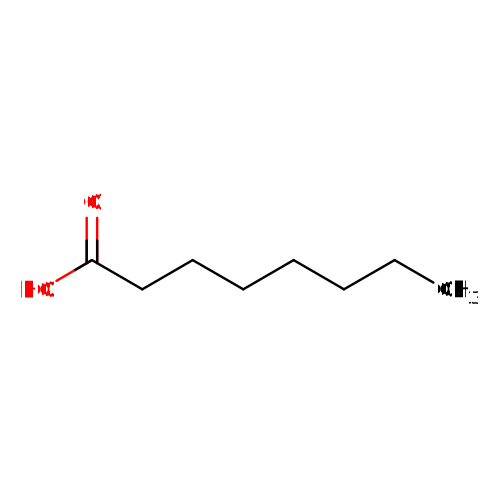
DescriptionCaprylic acid is the common name for the eight-carbon straight chain fatty acid known by the systematic name octanoic acid. It is found naturally in coconuts and breast milk. It is an oily liquid with a slightly unpleasant rancid taste that is minimally soluble in water. Caprylic acid is used commercially in the production of esters used in perfumery and also in the manufacture of dyes.
Contaminant Sources
  • EAFUS Chemicals
  • FooDB Chemicals
  • HMDB Contaminants - Feces
  • HMDB Contaminants - Urine
  • HPV EPA Chemicals
  • OECD HPV Chemicals
  • STOFF IDENT Compounds
  • T3DB toxins
  • ToxCast & Tox21 Chemicals
Contaminant Type
  • Animal Toxin
  • Dye
  • Food Toxin
  • Household Toxin
  • Industrial/Workplace Toxin
  • Metabolite
  • Natural Compound
  • Organic Compound
Chemical Structure
Thumb
Synonyms
ValueSource
1-Heptanecarboxylic acidChEBI
8:0ChEBI
Acide octanoiqueChEBI
Acido octanoicoChEBI
Acidum octanociumChEBI
Acidum octanoicumChEBI
C8:0ChEBI
CH3-[CH2]6-COOHChEBI
KaprylsaeureChEBI
N-Caprylic acidChEBI
N-Octanoic acidChEBI
N-Octoic acidChEBI
N-Octylic acidChEBI
OCTANOIC ACID (caprylIC ACID)ChEBI
OctansaeureChEBI
Octoic acidChEBI
Octylic acidChEBI
OctanoateKegg
1-HeptanecarboxylateGenerator
N-CaprylateGenerator
N-OctanoateGenerator
N-OctoateGenerator
N-OctylateGenerator
OCTANOate (caprylate)Generator
OctoateGenerator
OctylateGenerator
Octanoic acidGenerator
CaprylateGenerator
Emery 657HMDB
Kortacid 0899HMDB
Lunac 8-95HMDB
Lunac 8-98HMDB
Neo-fat 8HMDB
Neo-fat 8SHMDB
Prifac 2901HMDB
Caprylic acid, cadmium saltHMDB
Caprylic acid, cesium saltHMDB
Caprylic acid, manganese saltHMDB
Caprylic acid, nickel(+2) saltHMDB
Caprylic acid, zinc saltHMDB
Caprylic acid, aluminum saltHMDB
Caprylic acid, barium saltHMDB
Caprylic acid, chromium(+2) saltHMDB
Caprylic acid, lead(+2) saltHMDB
Caprylic acid, potassium saltHMDB
Caprylic acid, tin(+2) saltHMDB
Sodium octanoateHMDB
Caprylic acid, 14C-labeledHMDB
Caprylic acid, lithium saltHMDB
Caprylic acid, ruthenium(+3) saltHMDB
Caprylic acid, sodium saltHMDB
Caprylic acid, sodium salt, 11C-labeledHMDB
Caprylic acid, tin saltHMDB
Caprylic acid, zirconium saltHMDB
Sodium caprylateHMDB
Caprylic acid, ammonia saltHMDB
Caprylic acid, calcium saltHMDB
Caprylic acid, cobalt saltHMDB
Caprylic acid, copper saltHMDB
Caprylic acid, copper(+2) saltHMDB
Caprylic acid, iridum(+3) saltHMDB
Caprylic acid, iron(+3) saltHMDB
Caprylic acid, lanthanum(+3) saltHMDB
Caprylic acid, zirconium(+4) saltHMDB
FA(8:0)HMDB
Lithium octanoateHMDB
Chemical FormulaC8H16O2
Average Molecular Mass144.211 g/mol
Monoisotopic Mass144.115 g/mol
CAS Registry Number124-07-2
IUPAC Nameoctanoic acid
Traditional Namecaprylic acid
SMILESCCCCCCCC(O)=O
InChI IdentifierInChI=1S/C8H16O2/c1-2-3-4-5-6-7-8(9)10/h2-7H2,1H3,(H,9,10)
InChI KeyWWZKQHOCKIZLMA-UHFFFAOYSA-N
Chemical Taxonomy
Description belongs to the class of organic compounds known as medium-chain fatty acids. These are fatty acids with an aliphatic tail that contains between 4 and 12 carbon atoms.
KingdomOrganic compounds
Super ClassLipids and lipid-like molecules
ClassFatty Acyls
Sub ClassFatty acids and conjugates
Direct ParentMedium-chain fatty acids
Alternative Parents
Substituents
  • Medium-chain fatty acid
  • Straight chain fatty acid
  • Monocarboxylic acid or derivatives
  • Carboxylic acid
  • Carboxylic acid derivative
  • Organic oxygen compound
  • Organic oxide
  • Hydrocarbon derivative
  • Organooxygen compound
  • Carbonyl group
  • Aliphatic acyclic compound
Molecular FrameworkAliphatic acyclic compounds
External Descriptors
Biological Properties
StatusDetected and Not Quantified
OriginEndogenous
Cellular Locations
  • Cytoplasm
  • Extracellular
  • Membrane
Biofluid LocationsNot Available
Tissue Locations
  • Epidermis
PathwaysNot Available
Applications
Biological Roles
Chemical RolesNot Available
Physical Properties
StateLiquid
AppearanceOily colorless liquid.
Experimental Properties
PropertyValue
Melting Point16.5°C
Boiling Point239°C
Solubility789 mg/L (at 30°C)
Predicted Properties
PropertyValueSource
Water Solubility0.91 g/LALOGPS
logP2.92ALOGPS
logP2.7ChemAxon
logS-2.2ALOGPS
pKa (Strongest Acidic)5.19ChemAxon
Physiological Charge-1ChemAxon
Hydrogen Acceptor Count2ChemAxon
Hydrogen Donor Count1ChemAxon
Polar Surface Area37.3 ŲChemAxon
Rotatable Bond Count6ChemAxon
Refractivity40.28 m³·mol⁻¹ChemAxon
Polarizability17.4 ųChemAxon
Number of Rings0ChemAxon
Bioavailability1ChemAxon
Rule of FiveYesChemAxon
Ghose FilterNoChemAxon
Veber's RuleYesChemAxon
MDDR-like RuleNoChemAxon
Spectra
Spectra
Spectrum TypeDescriptionSplash KeyView
GC-MSGC-MS Spectrum - GC-EI-TOF (Pegasus III TOF-MS system, Leco; GC 6890, Agilent Technologies) (Non-derivatized)splash10-0159-0910000000-e609d5de69ede6fbcde0Spectrum
GC-MSGC-MS Spectrum - GC-MS (1 TMS)splash10-0gb9-1920000000-1dc6ed976e003f99e23dSpectrum
GC-MSGC-MS Spectrum - EI-B (Non-derivatized)splash10-03kc-9000000000-74cfce03769b41313952Spectrum
GC-MSGC-MS Spectrum - EI-B (Non-derivatized)splash10-0uyi-0931100000-7668e36e436054042b5cSpectrum
GC-MSGC-MS Spectrum - GC-EI-TOF (Non-derivatized)splash10-0159-0910000000-e609d5de69ede6fbcde0Spectrum
GC-MSGC-MS Spectrum - GC-MS (Non-derivatized)splash10-0gb9-1920000000-1dc6ed976e003f99e23dSpectrum
GC-MSGC-MS Spectrum - GC-EI-TOF (Non-derivatized)splash10-014i-0910000000-9ecb4ccb46e89710f76aSpectrum
Predicted GC-MSPredicted GC-MS Spectrum - GC-MS (Non-derivatized) - 70eV, Positivesplash10-0596-9100000000-8854c56056d8d3405087Spectrum
Predicted GC-MSPredicted GC-MS Spectrum - GC-MS (1 TMS) - 70eV, Positivesplash10-062l-9100000000-67da39159980b9078fabSpectrum
Predicted GC-MSPredicted GC-MS Spectrum - GC-MS (Non-derivatized) - 70eV, PositiveNot AvailableSpectrum
Predicted GC-MSPredicted GC-MS Spectrum - GC-MS (TBDMS_1_1) - 70eV, PositiveNot AvailableSpectrum
LC-MS/MSLC-MS/MS Spectrum - Quattro_QQQ 10V, Negative (Annotated)splash10-0006-0900000000-bb237630bedcee6145d1Spectrum
LC-MS/MSLC-MS/MS Spectrum - Quattro_QQQ 25V, Negative (Annotated)splash10-0006-2900000000-98284f50a271878c8481Spectrum
LC-MS/MSLC-MS/MS Spectrum - Quattro_QQQ 40V, Negative (Annotated)splash10-0006-5900000000-209fbbacd4996b9a770dSpectrum
LC-MS/MSLC-MS/MS Spectrum - EI-B (HITACHI M-80B) , Positivesplash10-03kc-9000000000-74cfce03769b41313952Spectrum
LC-MS/MSLC-MS/MS Spectrum - LC-ESI-QQ (API3000, Applied Biosystems) 10V, Negativesplash10-0006-0900000000-e2c4dff10393086340f7Spectrum
LC-MS/MSLC-MS/MS Spectrum - LC-ESI-QQ (API3000, Applied Biosystems) 20V, Negativesplash10-0006-1900000000-bbde8564b4e5543a636aSpectrum
LC-MS/MSLC-MS/MS Spectrum - DI-ESI-Q-Exactive Plus , Negativesplash10-0006-0900000000-d219a0c6559a4783fd81Spectrum
LC-MS/MSLC-MS/MS Spectrum - LC-ESI-QQ , negativesplash10-0006-0900000000-e2c4dff10393086340f7Spectrum
LC-MS/MSLC-MS/MS Spectrum - LC-ESI-QQ , negativesplash10-0006-1900000000-bbde8564b4e5543a636aSpectrum
LC-MS/MSLC-MS/MS Spectrum - LC-ESI-IT , negativesplash10-0006-0900000000-ca22ecd0b25fa371fc73Spectrum
LC-MS/MSLC-MS/MS Spectrum - 40V, Negativesplash10-0gvp-9100000000-58c00a2024ba0bae4ff4Spectrum
LC-MS/MSLC-MS/MS Spectrum - 20V, Negativesplash10-0002-9300000000-2505e6738cf5d5877654Spectrum
LC-MS/MSLC-MS/MS Spectrum - 10V, Negativesplash10-0006-0900000000-1ab4cdf8f74c93312743Spectrum
Predicted LC-MS/MSPredicted LC-MS/MS Spectrum - 10V, Positivesplash10-002b-2900000000-ac7c80e50c93b8cc3af7Spectrum
Predicted LC-MS/MSPredicted LC-MS/MS Spectrum - 20V, Positivesplash10-0002-9400000000-d2694b5f89d8eaeb2ab1Spectrum
Predicted LC-MS/MSPredicted LC-MS/MS Spectrum - 40V, Positivesplash10-052f-9000000000-f2b24072c91d8b0e4078Spectrum
Predicted LC-MS/MSPredicted LC-MS/MS Spectrum - 10V, Negativesplash10-0006-1900000000-ad62d44e72f4dd1760abSpectrum
Predicted LC-MS/MSPredicted LC-MS/MS Spectrum - 20V, Negativesplash10-0007-7900000000-9c869b84815f21dffc7cSpectrum
Predicted LC-MS/MSPredicted LC-MS/MS Spectrum - 40V, Negativesplash10-0a4l-9000000000-b8a648d443695914e479Spectrum
Predicted LC-MS/MSPredicted LC-MS/MS Spectrum - 10V, Positivesplash10-0a6u-9100000000-f5c38fdad70b324e75acSpectrum
Predicted LC-MS/MSPredicted LC-MS/MS Spectrum - 20V, Positivesplash10-0a4i-9000000000-bee103956686b4840d1eSpectrum
Predicted LC-MS/MSPredicted LC-MS/MS Spectrum - 40V, Positivesplash10-0a4l-9000000000-e7cbd036c8e80018c825Spectrum
Predicted LC-MS/MSPredicted LC-MS/MS Spectrum - 10V, Negativesplash10-0006-0900000000-8f2b048da6331570976cSpectrum
Predicted LC-MS/MSPredicted LC-MS/MS Spectrum - 20V, Negativesplash10-0006-0900000000-cd31ca01a5fa6be86acbSpectrum
Predicted LC-MS/MSPredicted LC-MS/MS Spectrum - 40V, Negativesplash10-052f-9100000000-682c215be5abe1fe87edSpectrum
MSMass Spectrum (Electron Ionization)splash10-03kc-9000000000-8c7db9a9d75b2cc1bd1cSpectrum
1D NMR1H NMR SpectrumNot AvailableSpectrum
1D NMR13C NMR SpectrumNot AvailableSpectrum
1D NMR1H NMR SpectrumNot AvailableSpectrum
1D NMR13C NMR SpectrumNot AvailableSpectrum
2D NMR[1H,13C] 2D NMR SpectrumNot AvailableSpectrum
Toxicity Profile
Route of ExposureIngestion
Mechanism of ToxicityIt has been demonstrated that octanoic (OA) and decanoic (DA) acids compromise the glycolytic pathway and citric acid cycle functioning, increase oxygen consumption in the liver and inhibit some activities of the respiratory chain complexes and creatine kinase in rat brain (6, 7). These fatty acids were also shown to induce oxidative stress in the brain (8). Experiments suggest that OA and DA impair brain mitochondrial energy homeostasis that could underlie at least in part the neuropathology of MCADD. (9)
MetabolismThe enzyme MCAD (medium-chain acyl-CoA dehydrogenase) is responsible for the dehydrogenation step of fatty acids with chain lengths between 6 and 12 carbons as they undergo beta-oxidation in the mitochondria. Fatty acid beta-oxidation provides energy after the body has used up its stores of glucose and glycogen. This typically occurs during periods of extended fasting or illness when caloric intake is reduced, and energy needs are increased. Beta-oxidation of long chain fatty acids produces two carbon units, acetyl-CoA and the reducing equivalents NADH and FADH2. NADH and FADH2 enter the electron transport chain and are used to make ATP. Acetyl-CoA enters the Krebs Cycle and is also used to make ATP via the electron transport chain and substrate level phosphorylation. When the supply of acetyl-CoA (coming from the beta-oxidation of fatty acids) exceeds the capacity of the Krebs Cycle to metabolize acetyl-CoA, the excess acetyl-CoA molecules are converted to ketone bodies (acetoacetate and beta-hydroxybutyrate) by HMG-CoA synthase in the liver. Ketone bodies can also be used for energy especially by the brain and heart; in fact they become the main sources of energy for those two organs after day three of starvation. (Wikipedia)
Toxicity ValuesOral rat LD50: 10080 mg/kg. Intravenous mouse LD50: 600 mg/kg. Skin rabbit LD50: over 5000 mg/kg.
Lethal DoseNot Available
Carcinogenicity (IARC Classification)No indication of carcinogenicity to humans (not listed by IARC).
Uses/SourcesCaprylic acid is found naturally in the milk of various mammals, and as a minor constituent of coconut oil and palm kernel oil. It is also an endogenously produced metabolite found in the human body. Caprylic acid is used commercially in the production of esters used in perfumery and also in the manufacture of dyes. Caprylic acid is an antimicrobial pesticide used as a food contact surface sanitizer in commercial food handling establishments on dairy equipment, food processing equipment, breweries, wineries, and beverage processing plants. It is also used as disinfectant in health care facilities, schools/colleges, animal care/veterinary facilities, industrial facilities, office buildings, recreational facilities, retail and wholesale establishments, livestock premises, restaurants, and hotels/motels. In addition, caprylic acid is used as an algaecide, bactericide, and fungicide in nurseries, greenhouses, garden centers, and interiorscapes on ornamentals. Products containing caprylic acid are formulated as soluble concentrate/liquids and ready-to-use liquids. The acid chloride of caprylic acid is used in the synthesis of perfluorooctanoic acid. Caprylic acid has medical uses as a medium-chain triglyceride. Caprylic acid is also used in the treatment of some bacterial infections. Due to its relatively short chain length it has no difficulty in penetrating fatty cell wall membranes, hence its effectiveness in combating certain lipid-coated bacteria, such as Staphylococcus aureus and various species of Streptococcus. The octanoic acid breath test is used to measure gastric emptying. Some potential benefit is possible from administration of octanoic acid for patients with Essential tremor. Caprylic acid is taken as a dietary supplement. It is believed to suppress fungal infections within the gut, notably candida albicans infection. (Wikipedia)
Minimum Risk LevelNot Available
Health EffectsOctanoic (OA) and decanoic (DA) acids are the predominant metabolites accumulating in medium-chain acyl-CoA dehydrogenase (MCAD; E.C. 1.3.99.3) deficiency (MCADD), the most common inherited defect of fatty acid oxidation. Glycine and l-carnitine bind to these fatty acids giving rise to derivatives that also accumulate in this disorder. The clinical presentation typically occurs in early childhood but can occasionally be delayed until adulthood. The major features of the disease include hypoglycemia, vomiting, lethargy and encephalopathy after fasting, infection or other metabolic stressors. (9)
SymptomsMCADD presents in early childhood with hypoketotic hypoglycemia and liver dysfunction, often preceded by extended periods of fasting or an infection with vomiting. Infants who are exclusively breast-fed may present in this manner shortly after birth, due to poor feeding. In some individuals the first manifestation of MCADD may be sudden death following a minor illness. A number of individuals with MCADD may remain completely asymptomatic, provided they never encounter a situation that sufficiently stresses their metabolism. (Wikipedia)
TreatmentManagement of acute MCADD includes rapid correction of hypoglycemia, rehydration and treatment of the underlying infection or other stress factor. Current long-term therapy includes avoidance of fasting and a high carbohydrate low-fat diet, but it does not fully prevent the crises and the neurological alterations. (9)
Concentrations
Not Available
DrugBank IDDB04519
HMDB IDHMDB0000482
FooDB IDFDB003336
Phenol Explorer IDNot Available
KNApSAcK IDC00001231
BiGG ID48223
BioCyc IDCPD-195
METLIN ID5469
PDB IDNot Available
Wikipedia LinkCaprylic_acid
Chemspider ID370
ChEBI ID28837
PubChem Compound ID379
Kegg Compound IDC06423
YMDB IDYMDB00676
ECMDB IDECMDB00482
References
Synthesis Reference

William Elliott Bay, Joseph Norman Bernadino, George Frederick Klein, Yi Ren, Pingsheng Zhang, “METHODS FOR PRODUCING N-(8-[2-HYDROXYBENZOYL]-AMINO) CAPRYLIC ACID.” U.S. Patent US20080064890, issued March 13, 2008.

MSDSLink
General References
1. Caprylic acid. Jpn. Kokai Tokkyo Koho (1983), 4 pp.
2. Soyeurt H, Dardenne P, Dehareng F, Lognay G, Veselko D, Marlier M, Bertozzi C, Mayeres P, Gengler N: Estimating fatty acid content in cow milk using mid-infrared spectrometry. J Dairy Sci. 2006 Sep;89(9):3690-5. doi: 10.3168/jds.S0022-0302(06)72409-2.
3. Jensen RG: The composition of bovine milk lipids: January 1995 to December 2000. J Dairy Sci. 2002 Feb;85(2):295-350. doi: 10.3168/jds.S0022-0302(02)74079-4.
4. Jensen RG, Ferris AM, Lammi-Keefe CJ: The composition of milk fat. J Dairy Sci. 1991 Sep;74(9):3228-43. doi: 10.3168/jds.S0022-0302(91)78509-3.
5. Colman E, Fokkink WB, Craninx M, Newbold JR, De Baets B, Fievez V: Effect of induction of subacute ruminal acidosis on milk fat profile and rumen parameters. J Dairy Sci. 2010 Oct;93(10):4759-73. doi: 10.3168/jds.2010-3158.
6. GARTON GA: THE COMPOSITION AND BIOSYNTHESIS OF MILK LIPIDS. J Lipid Res. 1963 Jul;4:237-54.
7. O'Callaghan TF, Vazquez-Fresno R, Serra-Cayuela A, Dong E, Mandal R, Hennessy D, McAuliffe S, Dillon P, Wishart DS, Stanton C, Ross RP: Pasture Feeding Changes the Bovine Rumen and Milk Metabolome. Metabolites. 2018 Apr 6;8(2). pii: metabo8020027. doi: 10.3390/metabo8020027.
8. van Gastelen S, Antunes-Fernandes EC, Hettinga KA, Dijkstra J: Relationships between methane emission of Holstein Friesian dairy cows and fatty acids, volatile metabolites and non-volatile metabolites in milk. Animal. 2017 Sep;11(9):1539-1548. doi: 10.1017/S1751731117000295. Epub 2017 Feb 21.
9. Kurt J. Boudonck, Matthew W. Mitchell, Jacob Wulff and John A. Ryals. Characterization of the biochemical variability of bovine milk using metabolomics. Metabolomics (2009) 5:375?386
10. M. Ferrand et al. Determination of fatty acid profile in cow's milk using mid-infrared spectrometry: Interest of applying a variable selection by genetic algorithms before a PLS regression. Chemometrics and Intelligent Laboratory Systems 106 (2011) 183?189
11. Lawrence K. Creamer, Alastair K.H. MacGibbon. Some recent advances in the basic chemistry of milk proteins and lipids. International Dairy J. (1996) 6(6):539-568 doi: 10.1016/0958-6946(96)85309-X
12. A. Foroutan et al. The Chemical Composition of Commercial Cow's Milk (in preparation)
13. Fooddata+, The Technical University of Denmark (DTU): https://frida.fooddata.dk/QueryFood.php?fn=milk&lang=en
14. Caprylic acid. Jpn. Kokai Tokkyo Koho (1983), 4 pp.
15. Giannakou SA, Dallas PP, Rekkas DM, Choulis NH: In vitro evaluation of nimodipine permeation through human epidermis using response surface methodology. Int J Pharm. 2002 Jul 8;241(1):27-34.
16. Dieterle F, Muller-Hagedorn S, Liebich HM, Gauglitz G: Urinary nucleosides as potential tumor markers evaluated by learning vector quantization. Artif Intell Med. 2003 Jul;28(3):265-79.
17. Nair MK, Joy J, Venkitanarayanan KS: Inactivation of Enterobacter sakazakii in reconstituted infant formula by monocaprylin. J Food Prot. 2004 Dec;67(12):2815-9.
18. Habeeb AF, Francis RD: Preparation of human immunoglobulin by caprylic acid precipitation. Prep Biochem. 1984;14(1):1-17.
19. Hoffmann GF, Meier-Augenstein W, Stockler S, Surtees R, Rating D, Nyhan WL: Physiology and pathophysiology of organic acids in cerebrospinal fluid. J Inherit Metab Dis. 1993;16(4):648-69.
20. Simons K, Toomre D: Lipid rafts and signal transduction. Nat Rev Mol Cell Biol. 2000 Oct;1(1):31-9.
21. Watson AD: Thematic review series: systems biology approaches to metabolic and cardiovascular disorders. Lipidomics: a global approach to lipid analysis in biological systems. J Lipid Res. 2006 Oct;47(10):2101-11. Epub 2006 Aug 10.
22. Sethi JK, Vidal-Puig AJ: Thematic review series: adipocyte biology. Adipose tissue function and plasticity orchestrate nutritional adaptation. J Lipid Res. 2007 Jun;48(6):1253-62. Epub 2007 Mar 20.
23. Lingwood D, Simons K: Lipid rafts as a membrane-organizing principle. Science. 2010 Jan 1;327(5961):46-50. doi: 10.1126/science.1174621.
24. Elshenawy S, Pinney SE, Stuart T, Doulias PT, Zura G, Parry S, Elovitz MA, Bennett MJ, Bansal A, Strauss JF 3rd, Ischiropoulos H, Simmons RA: The Metabolomic Signature of the Placenta in Spontaneous Preterm Birth. Int J Mol Sci. 2020 Feb 4;21(3). pii: ijms21031043. doi: 10.3390/ijms21031043.
25. The lipid handbook with CD-ROM
26. https://www.ncbi.nlm.nih.gov/pubmed/?term=16162522
27. https://www.ncbi.nlm.nih.gov/pubmed/?term=16872526
28. https://www.ncbi.nlm.nih.gov/pubmed/?term=19096058