Record Information
Version1.0
Creation Date2014-09-11 02:05:30 UTC
Update Date2026-03-26 20:17:52 UTC
Accession NumberCHEM003657
Identification
Common NameIsopropyl alcohol
ClassSmall Molecule
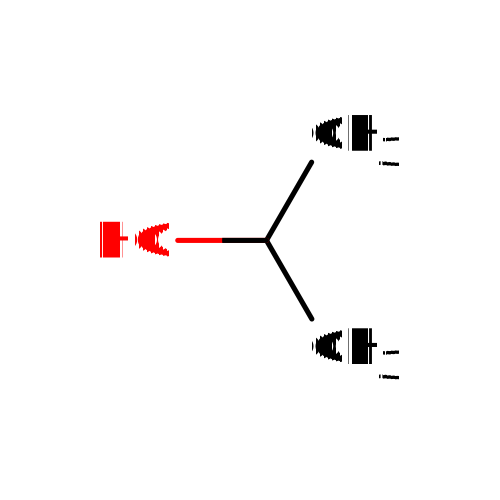
DescriptionIsopropyl alcohol or 2-propanol is an isomer of 1-propanol. It is a colorless liquid having disinfectant properties. It is used in the manufacture of acetone and its derivatives and as a solvent. Topically, it is used as an antiseptic. Small amounts of this alcohol are produced naturally by gut microbial flora.
Contaminant Sources
  • Clean Air Act Chemicals
  • Cosmetic Chemicals
  • EAFUS Chemicals
  • FooDB Chemicals
  • HMDB Contaminants - Feces
  • HMDB Contaminants - Urine
  • HPV EPA Chemicals
  • IARC Carcinogens Group 3
  • OECD HPV Chemicals
  • STOFF IDENT Compounds
  • T3DB toxins
  • ToxCast & Tox21 Chemicals
Contaminant Type
  • Disinfectant
  • Food Toxin
  • Household Toxin
  • Industrial/Workplace Toxin
  • Metabolite
  • Organic Compound
  • Solvent
  • Synthetic Compound
Chemical Structure
Thumb
Synonyms
ValueSource
1-MethylethanolChEBI
1-Methylethyl alcoholChEBI
2-HydroxypropaneChEBI
2-PropanolChEBI
I-propanolChEBI
I-propylalkoholChEBI
IPAChEBI
IsopropanolChEBI
IsopropylalkoholChEBI
Sec-propanolChEBI
IsoproKegg
2-Propyl alcoholHMDB
AlcojelHMDB
AlkolaveHMDB
AvantinHMDB
AvantineHMDB
HartosolHMDB
LavacoHMDB
PetroholHMDB
TakineocolHMDB
Alcohol, isopropylHMDB
Alcohol, rubbingHMDB
Rubbing alcoholHMDB
2 PropanolHMDB
ISOPROPYL alcoholChEBI
Chemical FormulaC3H8O
Average Molecular Mass60.095 g/mol
Monoisotopic Mass60.058 g/mol
CAS Registry Number67-63-0
IUPAC Namepropan-2-ol
Traditional Nameisopropyl alcohol
SMILESCC(C)O
InChI IdentifierInChI=1S/C3H8O/c1-3(2)4/h3-4H,1-2H3
InChI KeyKFZMGEQAYNKOFK-UHFFFAOYSA-N
Chemical Taxonomy
Description belongs to the class of organic compounds known as secondary alcohols. Secondary alcohols are compounds containing a secondary alcohol functional group, with the general structure HOC(R)(R') (R,R'=alkyl, aryl).
KingdomOrganic compounds
Super ClassOrganic oxygen compounds
ClassOrganooxygen compounds
Sub ClassAlcohols and polyols
Direct ParentSecondary alcohols
Alternative Parents
Substituents
  • Secondary alcohol
  • Hydrocarbon derivative
  • Aliphatic acyclic compound
Molecular FrameworkAliphatic acyclic compounds
External Descriptors
Biological Properties
StatusDetected and Not Quantified
OriginExogenous
Cellular Locations
  • Cytoplasm
  • Extracellular
  • Membrane
Biofluid LocationsNot Available
Tissue Locations
  • Pancreas
  • Platelet
  • Skin
  • Stratum Corneum
PathwaysNot Available
ApplicationsNot Available
Biological RolesNot Available
Chemical RolesNot Available
Physical Properties
StateLiquid
AppearanceNot Available
Experimental Properties
PropertyValue
Melting Point-89.5°C
Boiling Point82.3°C
Solubility1E+006 mg/L (at 25°C)
Predicted Properties
PropertyValueSource
Water Solubility378 g/LALOGPS
logP0.04ALOGPS
logP0.25ChemAxon
logS0.8ALOGPS
pKa (Strongest Acidic)17.26ChemAxon
pKa (Strongest Basic)-1.8ChemAxon
Physiological Charge0ChemAxon
Hydrogen Acceptor Count1ChemAxon
Hydrogen Donor Count1ChemAxon
Polar Surface Area20.23 ŲChemAxon
Rotatable Bond Count0ChemAxon
Refractivity17.43 m³·mol⁻¹ChemAxon
Polarizability7.14 ųChemAxon
Number of Rings0ChemAxon
Bioavailability1ChemAxon
Rule of FiveYesChemAxon
Ghose FilterNoChemAxon
Veber's RuleYesChemAxon
MDDR-like RuleNoChemAxon
Spectra
Spectra
Spectrum TypeDescriptionSplash KeyView
GC-MSGC-MS Spectrum - EI-B (Non-derivatized)splash10-0002-9000000000-b56f808ef55c854e8324Spectrum
GC-MSGC-MS Spectrum - EI-B (Non-derivatized)splash10-0002-9000000000-f68d78a99d0ee77081c8Spectrum
GC-MSGC-MS Spectrum - EI-B (Non-derivatized)splash10-0002-9000000000-a1c27780d39325f67c84Spectrum
GC-MSGC-MS Spectrum - EI-B (Non-derivatized)splash10-0002-9000000000-40a45591af6378500aebSpectrum
GC-MSGC-MS Spectrum - EI-B (Non-derivatized)splash10-0002-9000000000-2261ea7d03d835d46644Spectrum
GC-MSGC-MS Spectrum - EI-B (Non-derivatized)splash10-0002-9000000000-3c81c56ab53eb5aaa2ecSpectrum
GC-MSGC-MS Spectrum - EI-B (Non-derivatized)splash10-0002-9000000000-7936ed4d93d5699b0366Spectrum
GC-MSGC-MS Spectrum - EI-B (Non-derivatized)splash10-0002-9000000000-b56f808ef55c854e8324Spectrum
GC-MSGC-MS Spectrum - EI-B (Non-derivatized)splash10-0002-9000000000-f68d78a99d0ee77081c8Spectrum
GC-MSGC-MS Spectrum - EI-B (Non-derivatized)splash10-0002-9000000000-a1c27780d39325f67c84Spectrum
GC-MSGC-MS Spectrum - EI-B (Non-derivatized)splash10-0002-9000000000-40a45591af6378500aebSpectrum
GC-MSGC-MS Spectrum - EI-B (Non-derivatized)splash10-0002-9000000000-2261ea7d03d835d46644Spectrum
GC-MSGC-MS Spectrum - EI-B (Non-derivatized)splash10-0002-9000000000-3c81c56ab53eb5aaa2ecSpectrum
GC-MSGC-MS Spectrum - EI-B (Non-derivatized)splash10-0002-9000000000-7936ed4d93d5699b0366Spectrum
Predicted GC-MSPredicted GC-MS Spectrum - GC-MS (Non-derivatized) - 70eV, Positivesplash10-0006-9000000000-026d02184beec46b90ccSpectrum
Predicted GC-MSPredicted GC-MS Spectrum - GC-MS (1 TMS) - 70eV, Positivesplash10-010c-9200000000-82e9183374d718888481Spectrum
Predicted GC-MSPredicted GC-MS Spectrum - GC-MS (Non-derivatized) - 70eV, PositiveNot AvailableSpectrum
Predicted GC-MSPredicted GC-MS Spectrum - GC-MS (TBDMS_1_1) - 70eV, PositiveNot AvailableSpectrum
LC-MS/MSLC-MS/MS Spectrum - Quattro_QQQ 10V, Positive (Annotated)splash10-03di-9000000000-958007b112253f530fa1Spectrum
LC-MS/MSLC-MS/MS Spectrum - Quattro_QQQ 25V, Positive (Annotated)splash10-03dl-9000000000-eec0fd84c38e3cc2fb7dSpectrum
LC-MS/MSLC-MS/MS Spectrum - Quattro_QQQ 40V, Positive (Annotated)splash10-03di-9000000000-e524005ac3e29f5e6e60Spectrum
LC-MS/MSLC-MS/MS Spectrum - EI-B (HITACHI RMU-6M) , Positivesplash10-0002-9000000000-b56f808ef55c854e8324Spectrum
LC-MS/MSLC-MS/MS Spectrum - EI-B (JEOL JMS-D-3000) , Positivesplash10-0002-9000000000-2261ea7d03d835d46644Spectrum
LC-MS/MSLC-MS/MS Spectrum - EI-B (HITACHI M-80B) , Positivesplash10-0002-9000000000-3c81c56ab53eb5aaa2ecSpectrum
LC-MS/MSLC-MS/MS Spectrum - EI-B (HITACHI RMU-7M) , Positivesplash10-0002-9000000000-7936ed4d93d5699b0366Spectrum
Predicted LC-MS/MSPredicted LC-MS/MS Spectrum - 10V, Positivesplash10-03di-9000000000-52e1a906e58615d920fdSpectrum
Predicted LC-MS/MSPredicted LC-MS/MS Spectrum - 20V, Positivesplash10-03di-9000000000-e66cba449fc3e39cabcbSpectrum
Predicted LC-MS/MSPredicted LC-MS/MS Spectrum - 40V, Positivesplash10-0006-9000000000-34d2b3ce7e4949d6207eSpectrum
Predicted LC-MS/MSPredicted LC-MS/MS Spectrum - 10V, Negativesplash10-0a4i-9000000000-06d1878fb0f08269b040Spectrum
Predicted LC-MS/MSPredicted LC-MS/MS Spectrum - 20V, Negativesplash10-0a4i-9000000000-a3c0cec1f0523a5089d6Spectrum
Predicted LC-MS/MSPredicted LC-MS/MS Spectrum - 40V, Negativesplash10-0a4i-9000000000-b7cef7808f5c6bfd85c9Spectrum
Predicted LC-MS/MSPredicted LC-MS/MS Spectrum - 10V, Negativesplash10-0a4i-9000000000-28b1a4f33a69b25b3b12Spectrum
Predicted LC-MS/MSPredicted LC-MS/MS Spectrum - 20V, Negativesplash10-0a4i-9000000000-28b1a4f33a69b25b3b12Spectrum
Predicted LC-MS/MSPredicted LC-MS/MS Spectrum - 40V, Negativesplash10-0a4i-9000000000-c6a8f10b148e0b66c2deSpectrum
Predicted LC-MS/MSPredicted LC-MS/MS Spectrum - 10V, Positivesplash10-0006-9000000000-5381c9dfee7dd1735ffdSpectrum
Predicted LC-MS/MSPredicted LC-MS/MS Spectrum - 20V, Positivesplash10-0006-9000000000-469388653449614be285Spectrum
Predicted LC-MS/MSPredicted LC-MS/MS Spectrum - 40V, Positivesplash10-0006-9000000000-8d43c0c8144267964937Spectrum
MSMass Spectrum (Electron Ionization)splash10-0002-9000000000-8f0393a68e54e5668638Spectrum
1D NMR1H NMR SpectrumNot AvailableSpectrum
1D NMR13C NMR SpectrumNot AvailableSpectrum
2D NMR[1H,13C] 2D NMR SpectrumNot AvailableSpectrum
Toxicity Profile
Route of ExposureNot Available
Mechanism of ToxicityNot Available
MetabolismNot Available
Toxicity ValuesNot Available
Lethal DoseNot Available
Carcinogenicity (IARC Classification)3, not classifiable as to its carcinogenicity to humans. (13)
Uses/SourcesIt is used in the manufacture of acetone and its derivatives and as a solvent. Topically, it is used as an antiseptic. Small amounts of this alcohol are produced naturally by gut microbial flora.
Minimum Risk LevelNot Available
Health EffectsNot Available
SymptomsNot Available
TreatmentNot Available
Concentrations
Not Available
DrugBank IDDB02325
HMDB IDHMDB0000863
FooDB IDFDB008282
Phenol Explorer IDNot Available
KNApSAcK IDC00048438
BiGG IDNot Available
BioCyc IDISO-PROPANOL
METLIN ID4192
PDB IDNot Available
Wikipedia LinkIsopropyl_Alcohol
Chemspider ID3644
ChEBI ID17824
PubChem Compound ID3776
Kegg Compound IDC01845
YMDB IDYMDB01718
ECMDB IDM2MDB005352
References
Synthesis Reference

http://en.wikipedia.org/wiki/Alcohol#Laboratory_synthesis

MSDSLink
General References
1. Gu, Xiaoyan; Wu, Xiaolan; Ma, Guangyu. Process for preparation of hyper pure isopropyl alcohol. Faming Zhuanli Shenqing Gongkai Shuomingshu (2005), 6 pp.
2. A. Foroutan et al. The Chemical Composition of Commercial Cow's Milk (in preparation)
3. Gu, Xiaoyan; Wu, Xiaolan; Ma, Guangyu. Process for preparation of hyper pure isopropyl alcohol. Faming Zhuanli Shenqing Gongkai Shuomingshu (2005), 6 pp.
4. Lindberg M, Farm G, Scheynius A: Differential effects of sodium lauryl sulphate and non-anoic acid on the expression of CD1a and ICAM-1 in human epidermis. Acta Derm Venereol. 1991;71(5):384-8.
5. Lee CK, Ho PL, Chan NK, Mak A, Hong J, Lin CK: Impact of donor arm skin disinfection on the bacterial contamination rate of platelet concentrates. Vox Sang. 2002 Oct;83(3):204-8.
6. Specht C, Stoye I, Muller-Goymann CC: Comparative investigations to evaluate the use of organotypic cultures of transformed and native dermal and epidermal cells for permeation studies. Eur J Pharm Biopharm. 1998 Nov;46(3):273-8.
7. Zesch A, Schaefer H: [On interactions of drugs on and in the skin/comparative studies on the mutual influences of ethyleneglycol-monosalicylate and benzylnicotinate (author's transl)]. Derm Beruf Umwelt. 1981;29(6):161-7.
8. Authors unspecified: NTP Toxicology and Carcinogenesis Studies of 1-Chloro-2-propanol (Technical Grade) (CAS NO. 127-00-4) in F344/N Rats and B6C3F1 Mice (Drinking Water Studies. Natl Toxicol Program Tech Rep Ser. 1998 Sep;477:1-264.
9. Liu P, Bergstrom TK: Quantitative evaluation of aqueous isopropyl alcohol enhancement on skin flux of terbutaline (sulfate). 2. Permeability contributions of equilibrated drug species across human skin in vitro. J Pharm Sci. 1996 Mar;85(3):320-5.
10. Froman RD, Owen SV, Murphy C: Isopropyl pad use in neonatal intensive care units. J Perinatol. 1998 May-Jun;18(3):216-20.
11. Bailey DG, Wilson TW, Johnson GE: A gas chromatographic method for measuring 6-mercaptopurine in serum. J Chromatogr. 1975 Sep 3;111(2):305-11.
12. Abdashirova NF: [Peculiarities of alternations in free radical oxidation in blood of humans contacting ozone at work]. Aviakosm Ekolog Med. 1999;33(1):38-41.
13. Wittmann S, Gilg T, Dietz HG, Grantzow R, Peschel O, von Meyer L: [Isopropanol and acetone level in serum after preoperative surface disinfection with antiseptics containing isopropanol]. Blutalkohol. 1992 Sep;29(5):326-35.
14. Anderson LM, Koseniauskas R, Burak ES, Moskal TJ, Gombar CT, Phillips JM, Sansone EB, Keimig S, Magee PN, Rice JM, et al.: Reduced blood clearance and increased urinary excretion of N-nitrosodimethylamine in patas monkeys exposed to ethanol or isopropyl alcohol. Cancer Res. 1992 Mar 15;52(6):1463-8.
15. Jones AE, Summers RL: Detection of isopropyl alcohol in a patient with diabetic ketoacidosis. J Emerg Med. 2000 Aug;19(2):165-8.
16. George HA, Johnson JL, Moore WE, Holdeman LV, Chen JS: Acetone, Isopropanol, and Butanol Production by Clostridium beijerinckii (syn. Clostridium butylicum) and Clostridium aurantibutyricum. Appl Environ Microbiol. 1983 Mar;45(3):1160-3.
17. https://www.ncbi.nlm.nih.gov/pubmed/?term=24524727
18. https://www.ncbi.nlm.nih.gov/pubmed/?term=24653974