Record Information
Version1.0
Creation Date2014-09-11 05:17:40 UTC
Update Date2016-10-28 10:02:51 UTC
Accession NumberCHEM003769
Identification
Common NameAlpha-Linolenic Acid
ClassSmall Molecule
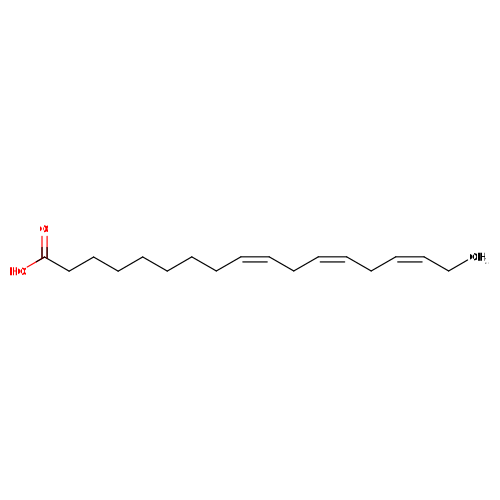
DescriptionAlpha-linolenic acid (ALA) is a polyunsaturated omega-3 fatty acid. It is a component of many common vegetable oils and is important to human nutrition.
Contaminant Sources
  • Cosmetic Chemicals
  • FooDB Chemicals
  • HMDB Contaminants - Feces
  • HMDB Contaminants - Urine
  • HPV EPA Chemicals
  • OECD HPV Chemicals
  • T3DB toxins
  • ToxCast & Tox21 Chemicals
Contaminant Type
  • Animal Toxin
  • Dietary Supplement
  • Drug
  • Food Toxin
  • Household Toxin
  • Metabolite
  • Micronutrient
  • Natural Compound
  • Nutraceutical
  • Organic Compound
  • Supplement
Chemical Structure
Thumb
Synonyms
ValueSource
(9,12,15)-Linolenic acidChEBI
(9Z,12Z,15Z)-Octadecatrienoic acidChEBI
(Z,Z,Z)-9,12,15-Octadecatrienoic acidChEBI
9,12,15-Octadecatrienoic acidChEBI
9-cis,12-cis,15-cis-Octadecatrienoic acidChEBI
ALAChEBI
all-cis-9,12,15-Octadecatrienoic acidChEBI
cis,cis,cis-9,12,15-Octadecatrienoic acidChEBI
cis-Delta(9,12,15)-Octadecatrienoic acidChEBI
Linolenic acidChEBI
LinolenateKegg
alpha-LinolenateKegg
(9,12,15)-LinolenateGenerator
(9Z,12Z,15Z)-OctadecatrienoateGenerator
(Z,Z,Z)-9,12,15-OctadecatrienoateGenerator
9,12,15-OctadecatrienoateGenerator
9-cis,12-cis,15-cis-OctadecatrienoateGenerator
all-cis-9,12,15-OctadecatrienoateGenerator
cis,cis,cis-9,12,15-OctadecatrienoateGenerator
cis-delta(9,12,15)-OctadecatrienoateGenerator
cis-Δ(9,12,15)-octadecatrienoateGenerator
cis-Δ(9,12,15)-octadecatrienoic acidGenerator
a-LinolenateGenerator
a-Linolenic acidGenerator
Α-linolenateGenerator
Α-linolenic acidGenerator
alpha Linolenic acidMeSH
cis-9,12,15-OctadecatrienoateHMDB
cis-9,12,15-Octadecatrienoic acidHMDB
Industrene 120HMDB
FA(18:3(9Z,12Z,15Z))HMDB
FA(18:3n3)HMDB
Chemical FormulaC18H30O2
Average Molecular Mass278.430 g/mol
Monoisotopic Mass278.225 g/mol
CAS Registry Number463-40-1
IUPAC Name(9Z,12Z,15Z)-octadeca-9,12,15-trienoic acid
Traditional Nameα linolenic acid
SMILESCC\C=C/C\C=C/C\C=C/CCCCCCCC(O)=O
InChI IdentifierInChI=1S/C18H30O2/c1-2-3-4-5-6-7-8-9-10-11-12-13-14-15-16-17-18(19)20/h3-4,6-7,9-10H,2,5,8,11-17H2,1H3,(H,19,20)/b4-3-,7-6-,10-9-
InChI KeyDTOSIQBPPRVQHS-PDBXOOCHSA-N
Chemical Taxonomy
Description belongs to the class of organic compounds known as lineolic acids and derivatives. These are derivatives of lineolic acid. Lineolic acid is a polyunsaturated omega-6 18 carbon long fatty acid, with two CC double bonds at the 9- and 12-positions.
KingdomOrganic compounds
Super ClassLipids and lipid-like molecules
ClassFatty Acyls
Sub ClassLineolic acids and derivatives
Direct ParentLineolic acids and derivatives
Alternative Parents
Substituents
  • Octadecanoid
  • Long-chain fatty acid
  • Fatty acid
  • Unsaturated fatty acid
  • Straight chain fatty acid
  • Monocarboxylic acid or derivatives
  • Carboxylic acid
  • Carboxylic acid derivative
  • Organic oxygen compound
  • Organic oxide
  • Hydrocarbon derivative
  • Organooxygen compound
  • Carbonyl group
  • Aliphatic acyclic compound
Molecular FrameworkAliphatic acyclic compounds
External Descriptors
Biological Properties
StatusDetected and Not Quantified
OriginEndogenous
Cellular Locations
  • Cytoplasm
  • Extracellular
  • Membrane
Biofluid LocationsNot Available
Tissue Locations
  • Adipose Tissue
  • Epidermis
  • Fibroblasts
  • Intestine
  • Muscle
  • Nervous Tissues
  • Placenta
  • Platelet
  • Prostate
Pathways
NameSMPDB LinkKEGG Link
Alpha Linolenic Acid and Linoleic Acid MetabolismSMP00018 map00592
ApplicationsNot Available
Biological RolesNot Available
Chemical RolesNot Available
Physical Properties
StateLiquid
AppearanceNot Available
Experimental Properties
PropertyValue
Melting Point-16.5°C
Boiling Point231°C at 1.70E+01 mm Hg
Solubility0.000124 mg/mL at 25°C
Predicted Properties
PropertyValueSource
Water Solubility0.00027 g/LALOGPS
logP6.62ALOGPS
logP6.06ChemAxon
logS-6ALOGPS
pKa (Strongest Acidic)4.99ChemAxon
Physiological Charge-1ChemAxon
Hydrogen Acceptor Count2ChemAxon
Hydrogen Donor Count1ChemAxon
Polar Surface Area37.3 ŲChemAxon
Rotatable Bond Count13ChemAxon
Refractivity89.64 m³·mol⁻¹ChemAxon
Polarizability34.98 ųChemAxon
Number of Rings0ChemAxon
Bioavailability0ChemAxon
Rule of FiveNoChemAxon
Ghose FilterNoChemAxon
Veber's RuleNoChemAxon
MDDR-like RuleNoChemAxon
Spectra
Spectra
Spectrum TypeDescriptionSplash KeyView
GC-MSGC-MS Spectrum - GC-EI-TOF (Pegasus III TOF-MS system, Leco; GC 6890, Agilent Technologies) (1 TMS)splash10-052f-7900000000-8765cf82603feb1b448fSpectrum
GC-MSGC-MS Spectrum - GC-EI-TOF (Pegasus III TOF-MS system, Leco; GC 6890, Agilent Technologies) (1 TMS)splash10-004i-9300000000-302519a616eaed5fcc59Spectrum
GC-MSGC-MS Spectrum - GC-MS (1 TMS)splash10-005c-9800000000-2d44b3c70e2992b9a812Spectrum
GC-MSGC-MS Spectrum - GC-EI-TOF (Non-derivatized)splash10-052f-7900000000-8765cf82603feb1b448fSpectrum
GC-MSGC-MS Spectrum - GC-EI-TOF (Non-derivatized)splash10-004i-9300000000-302519a616eaed5fcc59Spectrum
GC-MSGC-MS Spectrum - GC-MS (Non-derivatized)splash10-005c-9800000000-2d44b3c70e2992b9a812Spectrum
GC-MSGC-MS Spectrum - GC-EI-TOF (Non-derivatized)splash10-052f-5900000000-28710ea35f196c595e03Spectrum
Predicted GC-MSPredicted GC-MS Spectrum - GC-MS (Non-derivatized) - 70eV, Positivesplash10-052e-6950000000-27037263e74c8119ead0Spectrum
Predicted GC-MSPredicted GC-MS Spectrum - GC-MS (1 TMS) - 70eV, Positivesplash10-00ds-6931000000-657fa0cc66a206a36409Spectrum
Predicted GC-MSPredicted GC-MS Spectrum - GC-MS (Non-derivatized) - 70eV, PositiveNot AvailableSpectrum
LC-MS/MSLC-MS/MS Spectrum - Quattro_QQQ 10V, N/A (Annotated)splash10-004i-0190000000-aee97e9ea2c7f0783adfSpectrum
LC-MS/MSLC-MS/MS Spectrum - Quattro_QQQ 25V, N/A (Annotated)splash10-05nb-9500000000-fb92aefc701027239359Spectrum
LC-MS/MSLC-MS/MS Spectrum - Quattro_QQQ 40V, N/A (Annotated)splash10-0aru-9100000000-a5dddfe6f629d1371facSpectrum
LC-MS/MSLC-MS/MS Spectrum - ESI-TOF 10V, Negativesplash10-004i-0090000000-2b7bea03a685454dd135Spectrum
LC-MS/MSLC-MS/MS Spectrum - ESI-TOF , Negativesplash10-004i-0090000000-53ddfaed6ce13c37d957Spectrum
LC-MS/MSLC-MS/MS Spectrum - ESI-TOF 20V, Negativesplash10-004i-0090000000-e5350a66361bc63d1071Spectrum
LC-MS/MSLC-MS/MS Spectrum - ESI-TOF 30V, Negativesplash10-004i-0090000000-5731aa5e301022c06813Spectrum
LC-MS/MSLC-MS/MS Spectrum - ESI-TOF 10V, Negativesplash10-004i-0091010000-6922411e48d747e592b5Spectrum
LC-MS/MSLC-MS/MS Spectrum - LC-ESI-IT , negativesplash10-001i-0090000000-a18b573ad888d048efa6Spectrum
LC-MS/MSLC-MS/MS Spectrum - LC-ESI-TOF , negativesplash10-004i-0090000000-2b7bea03a685454dd135Spectrum
LC-MS/MSLC-MS/MS Spectrum - LC-ESI-TOF , negativesplash10-004i-0090000000-e5350a66361bc63d1071Spectrum
LC-MS/MSLC-MS/MS Spectrum - LC-ESI-TOF , negativesplash10-004i-0090000000-5731aa5e301022c06813Spectrum
LC-MS/MSLC-MS/MS Spectrum - LC-ESI-QTOF 10V, positivesplash10-004i-0090000000-1d391027db3704d71cb9Spectrum
LC-MS/MSLC-MS/MS Spectrum - LC-ESI-QTOF 20V, positivesplash10-00lr-9210000000-41acd8a55f52afec6d79Spectrum
LC-MS/MSLC-MS/MS Spectrum - LC-ESI-QTOF 40V, positivesplash10-014i-9000000000-a976b4a80a07eb2c4641Spectrum
LC-MS/MSLC-MS/MS Spectrum - 40V, Positivesplash10-0a4i-9100000000-497eddf5d738a45f83fbSpectrum
LC-MS/MSLC-MS/MS Spectrum - 10V, Negativesplash10-004i-0090000000-0c00ca98901526cb2e26Spectrum
LC-MS/MSLC-MS/MS Spectrum - 30V, Negativesplash10-004i-1090000000-35ffce9343fe0d15ea0dSpectrum
LC-MS/MSLC-MS/MS Spectrum - 30V, Negativesplash10-004i-0090000000-373584fbab950d6676ccSpectrum
Predicted LC-MS/MSPredicted LC-MS/MS Spectrum - 10V, Positivesplash10-01t9-0090000000-ae1f482177d0e208165eSpectrum
Predicted LC-MS/MSPredicted LC-MS/MS Spectrum - 20V, Positivesplash10-00o0-5690000000-20804c8382f14ff0ccf4Spectrum
Predicted LC-MS/MSPredicted LC-MS/MS Spectrum - 40V, Positivesplash10-014l-8930000000-9d5e342b1351adc71c20Spectrum
Predicted LC-MS/MSPredicted LC-MS/MS Spectrum - 10V, Negativesplash10-004i-0090000000-4d3e8d1180800a7b4ed5Spectrum
Predicted LC-MS/MSPredicted LC-MS/MS Spectrum - 20V, Negativesplash10-0059-1090000000-67ab14c068a142dd3c30Spectrum
Predicted LC-MS/MSPredicted LC-MS/MS Spectrum - 40V, Negativesplash10-0a4i-9230000000-403c610d63380e63109aSpectrum
1D NMR1H NMR SpectrumNot AvailableSpectrum
1D NMR13C NMR SpectrumNot AvailableSpectrum
1D NMR1H NMR SpectrumNot AvailableSpectrum
1D NMR13C NMR SpectrumNot AvailableSpectrum
1D NMR1H NMR SpectrumNot AvailableSpectrum
1D NMR13C NMR SpectrumNot AvailableSpectrum
1D NMR1H NMR SpectrumNot AvailableSpectrum
1D NMR13C NMR SpectrumNot AvailableSpectrum
1D NMR1H NMR SpectrumNot AvailableSpectrum
1D NMR13C NMR SpectrumNot AvailableSpectrum
1D NMR1H NMR SpectrumNot AvailableSpectrum
1D NMR13C NMR SpectrumNot AvailableSpectrum
1D NMR1H NMR SpectrumNot AvailableSpectrum
1D NMR13C NMR SpectrumNot AvailableSpectrum
1D NMR1H NMR SpectrumNot AvailableSpectrum
1D NMR13C NMR SpectrumNot AvailableSpectrum
1D NMR1H NMR SpectrumNot AvailableSpectrum
1D NMR13C NMR SpectrumNot AvailableSpectrum
1D NMR1H NMR SpectrumNot AvailableSpectrum
1D NMR13C NMR SpectrumNot AvailableSpectrum
1D NMR1H NMR SpectrumNot AvailableSpectrum
2D NMR[1H,13C] 2D NMR SpectrumNot AvailableSpectrum
Toxicity Profile
Route of ExposureNot Available
Mechanism of ToxicityAlpha Linolenic Acid or ALA is considered an essential fatty acid because it is required for human health, but cannot be synthesized by humans. It is in fact a plant-derived fatty acid. Humans can synthesize other omega-3 fatty acids from ALA, including eicosapentaenoic acid (EPA) and docosahexaenoic acid (DHA). EPA is a precursor of the series-3 prostaglandins, the series-5 leukotrienes and the series-3 thromboxanes. These eicosanoids have anti-inflammatory and anti-atherogenic properties. ALA metabolites may also inhibit the production of the pro-inflammatory eicosanoids, prostaglandin E2 (PGE2) and leukotriene B4 (LTB4), as well as the pro-inflammatory cytokines, tumor necrosis factor-alpha (TNF-alpha) and interleukin-1 beta (IL-1 beta). Omega-3 fatty acids like ALA and its byproducts can modulate the expression of a number of genes, including those involved with fatty acid metabolism and inflammation. They regulate gene expression through their effects on the activity of transcription factors including NF-kappa B and members of the peroxisome proliferator-activated receptor (PPAR) family. Incorporation of ALA and its metabolites in cell membranes can affect membrane fluidity and may play a role in anti-inflammatory activity, inhibition of platelet aggregation and possibly in anti-proliferative actions of ALA. ALA is first metabolized by delta6 desaturease into steridonic acid.
MetabolismNot Available
Toxicity ValuesNot Available
Lethal DoseNot Available
Carcinogenicity (IARC Classification)Not listed by IARC.
Uses/SourcesFor nutritional supplementation and for treating dietary shortage or imbalance.
Minimum Risk LevelNot Available
Health EffectsNot Available
SymptomsNot Available
TreatmentNot Available
Concentrations
Not Available
DrugBank IDDB00132
HMDB IDHMDB0001388
FooDB IDFDB012462
Phenol Explorer IDNot Available
KNApSAcK IDC00007247
BiGG ID48237
BioCyc IDLINOLENIC_ACID
METLIN ID6208
PDB IDNot Available
Wikipedia LinkAlpha-Linolenic_acid
Chemspider ID4444437
ChEBI ID27432
PubChem Compound ID5280934
Kegg Compound IDC06427
YMDB IDNot Available
ECMDB IDECMDB01388
References
Synthesis Reference

Jean-Pierre Masse, “Therapeutic composition containing alpha-linolenic acid and a compound capable of promoting the passage of the acid through the cell membrane, plant extract comprising the acid and the compound, and process for the preparation of the extract.” U.S. Patent US5002767, issued February, 1986.

MSDSLink
General References
1. Li, Guihua; Qian, Xiangming; Jiang, Yanchao; Ma, Shushi. Preparation of a-linolenic acid from linseed oil. Zhengzhou Gongcheng Xueyuan Xuebao (2004), 25(3), 13-15.
2. Richieri GV, Ogata RT, Kleinfeld AM: Equilibrium constants for the binding of fatty acids with fatty acid-binding proteins from adipocyte, intestine, heart, and liver measured with the fluorescent probe ADIFAB. J Biol Chem. 1994 Sep 30;269(39):23918-30.
3. Bajaj M, Suraamornkul S, Romanelli A, Cline GW, Mandarino LJ, Shulman GI, DeFronzo RA: Effect of a sustained reduction in plasma free fatty acid concentration on intramuscular long-chain fatty Acyl-CoAs and insulin action in type 2 diabetic patients. Diabetes. 2005 Nov;54(11):3148-53.
4. Christensen JH, Fabrin K, Borup K, Barber N, Poulsen J: Prostate tissue and leukocyte levels of n-3 polyunsaturated fatty acids in men with benign prostate hyperplasia or prostate cancer. BJU Int. 2006 Feb;97(2):270-3.
5. Attar-Bashi NM, Frauman AG, Sinclair AJ: Alpha-linolenic acid and the risk of prostate cancer. What is the evidence? J Urol. 2004 Apr;171(4):1402-7.
6. Rastogi SK, Singh J: Effect of chemical penetration enhancer and iontophoresis on the in vitro percutaneous absorption enhancement of insulin through porcine epidermis. Pharm Dev Technol. 2005;10(1):97-104.
7. Allman MA, Pena MM, Pang D: Supplementation with flaxseed oil versus sunflowerseed oil in healthy young men consuming a low fat diet: effects on platelet composition and function. Eur J Clin Nutr. 1995 Mar;49(3):169-78.
8. Fokkema MR, Brouwer DA, Hasperhoven MB, Martini IA, Muskiet FA: Short-term supplementation of low-dose gamma-linolenic acid (GLA), alpha-linolenic acid (ALA), or GLA plus ALA does not augment LCP omega 3 status of Dutch vegans to an appreciable extent. Prostaglandins Leukot Essent Fatty Acids. 2000 Nov;63(5):287-92.
9. Becker CC, Lund P, Holmer G, Jensen H, Sandstrom B: Effects of butter oil blends with increased concentrations of stearic, oleic and linolenic acid on blood lipids in young adults. Eur J Clin Nutr. 1999 Jul;53(7):535-41.
10. Jones DB, Scaretto L, Carter R, Mann JI: Glucose, insulin and platelet fatty acids following myocardial infarction: an association with infarct size. Diabete Metab. 1987 Jul-Aug;13(4):463-6.
11. Crastes de Paulet A, Babin F, Billeaud C, Bougle D, Sarda P, Mendy F: [Biological effects on premature neonates of a milk formula enriched with alpha-linolenic acid: a multicenter study]. Bull Acad Natl Med. 1994 Feb;178(2):267-73; discussion 273-8.
12. Li D, Sinclair A, Wilson A, Nakkote S, Kelly F, Abedin L, Mann N, Turner A: Effect of dietary alpha-linolenic acid on thrombotic risk factors in vegetarian men. Am J Clin Nutr. 1999 May;69(5):872-82.
13. Bhatia KS, Singh J: Effect of linolenic acid/ethanol or limonene/ethanol and iontophoresis on the in vitro percutaneous absorption of LHRH and ultrastructure of human epidermis. Int J Pharm. 1999 Apr 15;180(2):235-50.
14. Baylin A, Kabagambe EK, Ascherio A, Spiegelman D, Campos H: Adipose tissue alpha-linolenic acid and nonfatal acute myocardial infarction in Costa Rica. Circulation. 2003 Apr 1;107(12):1586-91. Epub 2003 Mar 10.
15. Williard DE, Nwankwo JO, Kaduce TL, Harmon SD, Irons M, Moser HW, Raymond GV, Spector AA: Identification of a fatty acid delta6-desaturase deficiency in human skin fibroblasts. J Lipid Res. 2001 Apr;42(4):501-8.
16. Campbell FM, Gordon MJ, Dutta-Roy AK: Preferential uptake of long chain polyunsaturated fatty acids by isolated human placental membranes. Mol Cell Biochem. 1996 Feb 9;155(1):77-83.
17. Cunnane SC, Hamadeh MJ, Liede AC, Thompson LU, Wolever TM, Jenkins DJ: Nutritional attributes of traditional flaxseed in healthy young adults. Am J Clin Nutr. 1995 Jan;61(1):62-8.
18. Connor WE: Importance of n-3 fatty acids in health and disease. Am J Clin Nutr. 2000 Jan;71(1 Suppl):171S-5S.
19. Lauritzen I, Blondeau N, Heurteaux C, Widmann C, Romey G, Lazdunski M: Polyunsaturated fatty acids are potent neuroprotectors. EMBO J. 2000 Apr 17;19(8):1784-93.
20. Cho E, Hung S, Willett WC, Spiegelman D, Rimm EB, Seddon JM, Colditz GA, Hankinson SE: Prospective study of dietary fat and the risk of age-related macular degeneration. Am J Clin Nutr. 2001 Feb;73(2):209-18.
21. Kris-Etherton PM, Harris WS, Appel LJ: Fish consumption, fish oil, omega-3 fatty acids, and cardiovascular disease. Circulation. 2002 Nov 19;106(21):2747-57.
22. Brouwer IA, Katan MB, Zock PL: Dietary alpha-linolenic acid is associated with reduced risk of fatal coronary heart disease, but increased prostate cancer risk: a meta-analysis. J Nutr. 2004 Apr;134(4):919-22.
23. Elshenawy S, Pinney SE, Stuart T, Doulias PT, Zura G, Parry S, Elovitz MA, Bennett MJ, Bansal A, Strauss JF 3rd, Ischiropoulos H, Simmons RA: The Metabolomic Signature of the Placenta in Spontaneous Preterm Birth. Int J Mol Sci. 2020 Feb 4;21(3). pii: ijms21031043. doi: 10.3390/ijms21031043.
24. https://www.ncbi.nlm.nih.gov/pubmed/?term=10232625
25. https://www.ncbi.nlm.nih.gov/pubmed/?term=11304127
26. https://www.ncbi.nlm.nih.gov/pubmed/?term=19269799
27. https://www.ncbi.nlm.nih.gov/pubmed/?term=24320056
28. https://www.ncbi.nlm.nih.gov/pubmed/?term=24639012
29. https://www.ncbi.nlm.nih.gov/pubmed/?term=24855655