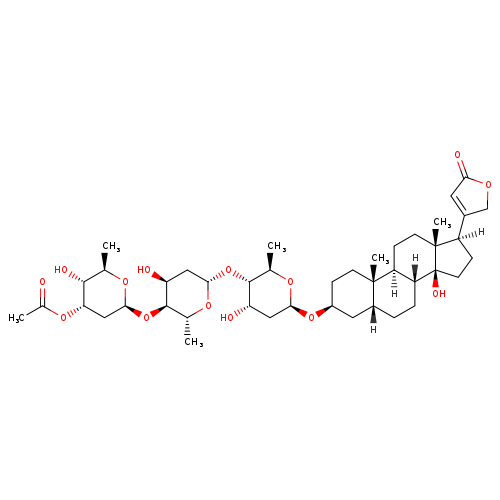
Acetyldigitoxin belongs to the steroid lactones, a subclass of steroids and steroid derivatives within the organic compounds. With an average molecular weight of 806.98 g/mol, Acetyldigitoxin is a heavy molecule with the chemical formula C43H66O14. In terms of biological activity, it is a recorded inhibitor of the protein target Sodium/potassium-transporting ATPase subunit alpha-1 (ATP1A1).
This compound is found in or released from 13 recorded sources across several sectors. These include electrical and electronic equipment, specifically cell phones, capacitors, wires and cables, batteries, and printed circuit boards, among one other source. It is also present in textiles, leather and furnishings, including synthetic textiles and carpets and rugs. Additional sources include food packaging from the food, food processing and cookware sector, as well as medical devices from the healthcare, pharmaceuticals and veterinary products sector. Furthermore, it is found in lubricants within the energy, oil and gas sector, as well as lubricants used in industrial manufacturing and chemical processing, plus one additional sector. Recorded exposure routes for Acetyldigitoxin include inhalation, oral, and touch.
belongs to the class of organic compounds known as cardenolide glycosides and derivatives. Cardenolide glycosides and derivatives are compounds containing a carbohydrate glycosidically bound to the cardenolide moiety.