Record Information
Version1.0
Creation Date2009-05-06 21:41:26 UTC
Update Date2026-03-26 19:55:31 UTC
Accession NumberCHEM000694
Identification
Common NameMethanol
ClassSmall Molecule
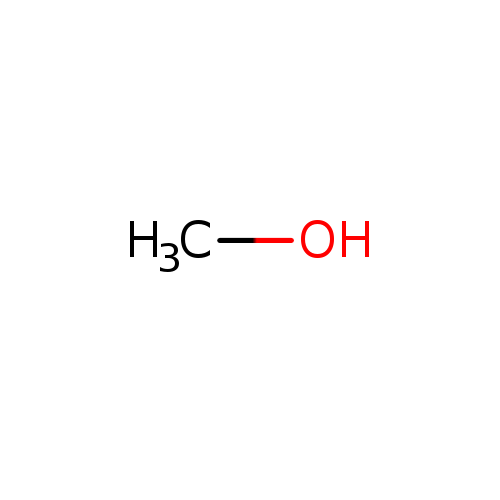
DescriptionMethanol is the simplest alcohol, and is a light, volatile, colourless, flammable, poisonous liquid with a distinctive odor that is somewhat milder and sweeter than ethanol (Wikipedia). Methanol is responsible for accidental, suicidal, and epidemic poisonings, resulting in death or permanent sequelae. Toxicity is due to the metabolic products of alcohol dehydrogenase (ADH) and aldehyde dehydrogenase. (2). The rapid and accurate diagnosis of toxic alcohol poisoning due to methanol (methyl alcohol) is paramount in preventing serious adverse outcomes. The quantitative measurement of specific serum levels of methanol using gas chromatography is expensive, time consuming and generally only available at major tertiary-care facilities. (3).
Contaminant Sources
  • Clean Air Act Chemicals
  • Cosmetic Chemicals
  • EAFUS Chemicals
  • FooDB Chemicals
  • HMDB Contaminants - Feces
  • HMDB Contaminants - Urine
  • HPV EPA Chemicals
  • OECD HPV Chemicals
  • STOFF IDENT Compounds
  • T3DB toxins
  • Tobacco Smoke Compounds
  • ToxCast & Tox21 Chemicals
Contaminant Type
  • Food Toxin
  • Household Toxin
  • Industrial/Workplace Toxin
  • Metabolite
  • Natural Compound
  • Organic Compound
  • Pollutant
  • Solvent
Chemical Structure
Thumb
Synonyms
ValueSource
CarbinolChEBI
CH3OHChEBI
MeOHChEBI
Methyl alcoholChEBI
MethylalkoholChEBI
Spirit OF woodChEBI
Wood alcoholChEBI
Wood naphthaChEBI
Wood spiritChEBI
Alcohol, methylMeSH
Alcohol, woodMeSH
Methoxide, sodiumMeSH
Sodium methoxideMeSH
Alcool methyliqueHMDB
Alcool metilicoHMDB
Colonial spiritHMDB
Columbian spiritHMDB
Columbian spiritsHMDB
HydroxymethaneHMDB
MetanoloHMDB
Methanol-water mixtureHMDB
Methyl hydroxideHMDB
MethylolHMDB
Metylowy alkoholHMDB
MonohydroxymethaneHMDB
pyro AlcoholHMDB
Pyroxylic spiritHMDB
Chemical FormulaCH4O
Average Molecular Mass32.042 g/mol
Monoisotopic Mass32.026 g/mol
CAS Registry Number67-56-1
IUPAC Namemethanol
Traditional Namemethanol
SMILESCO
InChI IdentifierInChI=1S/CH4O/c1-2/h2H,1H3
InChI KeyOKKJLVBELUTLKV-UHFFFAOYSA-N
Chemical Taxonomy
Description belongs to the class of organic compounds known as primary alcohols. Primary alcohols are compounds comprising the primary alcohol functional group, with the general structure RCOH (R=alkyl, aryl).
KingdomOrganic compounds
Super ClassOrganic oxygen compounds
ClassOrganooxygen compounds
Sub ClassAlcohols and polyols
Direct ParentPrimary alcohols
Alternative Parents
Substituents
  • Hydrocarbon derivative
  • Primary alcohol
  • Aliphatic acyclic compound
Molecular FrameworkAliphatic acyclic compounds
External Descriptors
Biological Properties
StatusDetected and Not Quantified
OriginEndogenous
Cellular Locations
  • Cytoplasm
  • Endoplasmic reticulum
  • Extracellular
  • Lysosome
Biofluid LocationsNot Available
Tissue Locations
  • Adrenal Gland
  • Brain
  • Erythrocyte
  • Fibroblasts
  • Hair
  • Intestine
  • Kidney
  • Liver
  • Myelin
  • Nerve Cells
  • Pancreas
  • Platelet
  • Prostate
  • Skeletal Muscle
  • Skin
  • Spleen
  • Stratum Corneum
  • Testes
PathwaysNot Available
Applications
Biological Roles
Chemical Roles
Physical Properties
StateLiquid
AppearanceNot Available
Experimental Properties
PropertyValue
Melting Point-97.6°C
Boiling PointNot Available
Solubility1000 mg/mL at 25°C
Predicted Properties
PropertyValueSource
Water Solubility519 g/LALOGPS
logP-1.4ALOGPS
logP-0.52ChemAxon
logS1.21ALOGPS
pKa (Strongest Acidic)15.78ChemAxon
pKa (Strongest Basic)-2.5ChemAxon
Physiological Charge0ChemAxon
Hydrogen Acceptor Count1ChemAxon
Hydrogen Donor Count1ChemAxon
Polar Surface Area20.23 ŲChemAxon
Rotatable Bond Count0ChemAxon
Refractivity8.26 m³·mol⁻¹ChemAxon
Polarizability3.38 ųChemAxon
Number of Rings0ChemAxon
Bioavailability1ChemAxon
Rule of FiveYesChemAxon
Ghose FilterNoChemAxon
Veber's RuleYesChemAxon
MDDR-like RuleNoChemAxon
Spectra
Spectra
Spectrum TypeDescriptionSplash KeyView
GC-MSGC-MS Spectrum - EI-B (Non-derivatized)splash10-001i-9000000000-2173f5595be586c5c940Spectrum
GC-MSGC-MS Spectrum - EI-B (Non-derivatized)splash10-001i-9000000000-14ea8d185227ede9bff7Spectrum
GC-MSGC-MS Spectrum - EI-B (Non-derivatized)splash10-001i-9000000000-2173f5595be586c5c940Spectrum
GC-MSGC-MS Spectrum - EI-B (Non-derivatized)splash10-001i-9000000000-14ea8d185227ede9bff7Spectrum
Predicted GC-MSPredicted GC-MS Spectrum - GC-MS (Non-derivatized) - 70eV, Positivesplash10-001i-9000000000-4c6569479bda044bbec6Spectrum
Predicted GC-MSPredicted GC-MS Spectrum - GC-MS (1 TMS) - 70eV, Positivesplash10-00dr-9000000000-7cc6047a4db3644c3b83Spectrum
Predicted GC-MSPredicted GC-MS Spectrum - GC-MS (Non-derivatized) - 70eV, PositiveNot AvailableSpectrum
LC-MS/MSLC-MS/MS Spectrum - Quattro_QQQ 10V, Positive (Annotated)splash10-0000-0000000000-e3b0c44298fc1c149afbSpectrum
LC-MS/MSLC-MS/MS Spectrum - Quattro_QQQ 25V, Positive (Annotated)splash10-001i-9000000000-6d633534165eedf07b4dSpectrum
LC-MS/MSLC-MS/MS Spectrum - Quattro_QQQ 40V, Positive (Annotated)splash10-014i-9000000000-757b6964771196ee308fSpectrum
LC-MS/MSLC-MS/MS Spectrum - EI-B (HITACHI RMU-7M) , Positivesplash10-001i-9000000000-fef92d3f671a9282b5a0Spectrum
Predicted LC-MS/MSPredicted LC-MS/MS Spectrum - 10V, Positivesplash10-001i-9000000000-60e278e17032d30c1c8fSpectrum
Predicted LC-MS/MSPredicted LC-MS/MS Spectrum - 20V, Positivesplash10-001i-9000000000-60e278e17032d30c1c8fSpectrum
Predicted LC-MS/MSPredicted LC-MS/MS Spectrum - 40V, Positivesplash10-001i-9000000000-60e278e17032d30c1c8fSpectrum
Predicted LC-MS/MSPredicted LC-MS/MS Spectrum - 10V, Negativesplash10-001i-9000000000-793a330f9e6c7661e86dSpectrum
Predicted LC-MS/MSPredicted LC-MS/MS Spectrum - 20V, Negativesplash10-001i-9000000000-793a330f9e6c7661e86dSpectrum
Predicted LC-MS/MSPredicted LC-MS/MS Spectrum - 40V, Negativesplash10-001i-9000000000-793a330f9e6c7661e86dSpectrum
Predicted LC-MS/MSPredicted LC-MS/MS Spectrum - 10V, Positivesplash10-001i-9000000000-9d3a102faa7d9058eb88Spectrum
Predicted LC-MS/MSPredicted LC-MS/MS Spectrum - 20V, Positivesplash10-001i-9000000000-9d3a102faa7d9058eb88Spectrum
Predicted LC-MS/MSPredicted LC-MS/MS Spectrum - 40V, Positivesplash10-001i-9000000000-9d3a102faa7d9058eb88Spectrum
Predicted LC-MS/MSPredicted LC-MS/MS Spectrum - 10V, Negativesplash10-001i-9000000000-8071a59ff1eb417f4a9aSpectrum
Predicted LC-MS/MSPredicted LC-MS/MS Spectrum - 20V, Negativesplash10-001i-9000000000-8071a59ff1eb417f4a9aSpectrum
Predicted LC-MS/MSPredicted LC-MS/MS Spectrum - 40V, Negativesplash10-001i-9000000000-8071a59ff1eb417f4a9aSpectrum
MSMass Spectrum (Electron Ionization)splash10-001i-9000000000-5a9d4ce5dca0ae1a6765Spectrum
1D NMR1H NMR SpectrumNot AvailableSpectrum
1D NMR13C NMR SpectrumNot AvailableSpectrum
1D NMR1H NMR SpectrumNot AvailableSpectrum
1D NMR13C NMR SpectrumNot AvailableSpectrum
1D NMR1H NMR SpectrumNot AvailableSpectrum
1D NMR13C NMR SpectrumNot AvailableSpectrum
1D NMR1H NMR SpectrumNot AvailableSpectrum
1D NMR13C NMR SpectrumNot AvailableSpectrum
1D NMR1H NMR SpectrumNot AvailableSpectrum
1D NMR13C NMR SpectrumNot AvailableSpectrum
1D NMR1H NMR SpectrumNot AvailableSpectrum
1D NMR13C NMR SpectrumNot AvailableSpectrum
1D NMR1H NMR SpectrumNot AvailableSpectrum
1D NMR13C NMR SpectrumNot AvailableSpectrum
1D NMR1H NMR SpectrumNot AvailableSpectrum
1D NMR13C NMR SpectrumNot AvailableSpectrum
1D NMR1H NMR SpectrumNot AvailableSpectrum
1D NMR13C NMR SpectrumNot AvailableSpectrum
1D NMR1H NMR SpectrumNot AvailableSpectrum
1D NMR13C NMR SpectrumNot AvailableSpectrum
1D NMR1H NMR SpectrumNot AvailableSpectrum
2D NMR[1H,1H] 2D NMR SpectrumNot AvailableSpectrum
2D NMR[1H,13C] 2D NMR SpectrumNot AvailableSpectrum
Toxicity Profile
Route of ExposureOral (18)
Mechanism of ToxicityThe target of methanol in the eye is the retina, specifically the optic disk and optic nerve. Muller cells and rod and cone cells are altered functionally and structurally, because cytochrome oxidase activity in mitochondria is inhibited, resulting in a reduction in ATP. (18)
MetabolismMethanol is metabolized to formaldehyde by alcohol dehydrogenase, then from that to formate by formaldehyde dehydrogenase, and then to carbon dioxide by limited H4 folate. (18)
Toxicity ValuesNot Available
Lethal DoseNot Available
Carcinogenicity (IARC Classification)No indication of carcinogenicity to humans (not listed by IARC).
Uses/SourcesMethanol is found in a host of consumer products, including windshield washer fluid, and is used in the manufacture of formaldehyde. (18)
Minimum Risk LevelNot Available
Health EffectsAcute methanol poisoning in humans is characterized by an asymptomatic period of 12h to 24h followed by formic acidemia, ocular toxicity, coma, and in extreme cases death. Visual disturbances develop between 18h to 48h after ingestion and range from mild photophobia and blurred vision to markedly reduced visual acuity and complete blindness. (18)
SymptomsMethanol can produce sensory irritation and narcosis at airborne concentrations below those which produce organ system pathology. (18)
TreatmentNot Available
Concentrations
Not Available
DrugBank IDNot Available
HMDB IDHMDB0001875
FooDB IDFDB008124
Phenol Explorer IDNot Available
KNApSAcK IDC00050480
BiGG ID33974
BioCyc IDMETOH
METLIN ID4201
PDB IDNot Available
Wikipedia LinkMethanol
Chemspider ID864
ChEBI ID17790
PubChem Compound ID887
Kegg Compound IDC00132
YMDB IDNot Available
ECMDB IDECMDB01875
References
Synthesis ReferenceCummings, Donald Ray. Process for production of methanol from a methane gas stream. PCT Int. Appl. (2007), 21pp.
MSDSLink
General References
1. https://www.ncbi.nlm.nih.gov/pubmed/?term=11141607
2. https://www.ncbi.nlm.nih.gov/pubmed/?term=11430978
3. https://www.ncbi.nlm.nih.gov/pubmed/?term=11489599
4. https://www.ncbi.nlm.nih.gov/pubmed/?term=11680737
5. https://www.ncbi.nlm.nih.gov/pubmed/?term=11684179
6. https://www.ncbi.nlm.nih.gov/pubmed/?term=14012711
7. https://www.ncbi.nlm.nih.gov/pubmed/?term=14678513
8. https://www.ncbi.nlm.nih.gov/pubmed/?term=14760634
9. https://www.ncbi.nlm.nih.gov/pubmed/?term=15172721
10. https://www.ncbi.nlm.nih.gov/pubmed/?term=15906011
11. https://www.ncbi.nlm.nih.gov/pubmed/?term=16705261
12. https://www.ncbi.nlm.nih.gov/pubmed/?term=17451998
13. https://www.ncbi.nlm.nih.gov/pubmed/?term=17733096
14. https://www.ncbi.nlm.nih.gov/pubmed/?term=19064074
15. https://www.ncbi.nlm.nih.gov/pubmed/?term=19850112
16. https://www.ncbi.nlm.nih.gov/pubmed/?term=20314698
17. Cummings, Donald Ray. Process for production of methanol from a methane gas stream. PCT Int. Appl. (2007), 21pp.
18. O'Callaghan TF, Vazquez-Fresno R, Serra-Cayuela A, Dong E, Mandal R, Hennessy D, McAuliffe S, Dillon P, Wishart DS, Stanton C, Ross RP: Pasture Feeding Changes the Bovine Rumen and Milk Metabolome. Metabolites. 2018 Apr 6;8(2). pii: metabo8020027. doi: 10.3390/metabo8020027.
19. Brigitta Gaspardo et al. Determination of volatile fractions in raw milk and ripened cheese by means of GC-MS. Results of a survey performed in the marginal area between Italy and Slovenia. Italian Jounal of Animal Science Vol 8, 377-390, 2009
20. A. Foroutan et al. The Chemical Composition of Commercial Cow's Milk (in preparation)
21. Cummings, Donald Ray. Process for production of methanol from a methane gas stream. PCT Int. Appl. (2007), 21pp.
22. Avella J, Briglia E, Harleman G, Lehrer M: Percutaneous absorption and distribution of methanol in a homicide. J Anal Toxicol. 2005 Oct;29(7):734-7.
23. Bogdanov-Berezovsky A, Glesinger R, Kachko L, Arbel E, Rosenberg L, Grossman N: Accreditation of skin from a methanol-poisoned victim for banking and grafting. Transplantation. 2002 Jun 27;73(12):1913-7.
24. Heinig K, Henion J: Determination of carnitine and acylcarnitines in biological samples by capillary electrophoresis-mass spectrometry. J Chromatogr B Biomed Sci Appl. 1999 Dec 10;735(2):171-88.
25. Kaphalia BS, Carr JB, Ansari GA: Increased endobiotic fatty acid methyl esters following exposure to methanol. Fundam Appl Toxicol. 1995 Dec;28(2):264-73.
26. Batterman SA, Franzblau A, Zhou N: Airborne emissions at skin surfaces: a potential biological exposure index. Int Arch Occup Environ Health. 1996;68(4):268-74.
27. Vassiliadis J, Graudins A, Dowsett RP: Triethylene glycol poisoning treated with intravenous ethanol infusion. J Toxicol Clin Toxicol. 1999;37(6):773-6.
28. Nagasawa H, Wada M, Koyama S, Kawanami T, Kurita K, Kato T: [A case of methanol intoxication with optic neuropathy visualized on STIR sequence of MR images]. Rinsho Shinkeigaku. 2005 Jul;45(7):527-30.
29. Silwood CJ, Lynch E, Claxson AW, Grootveld MC: 1H and (13)C NMR spectroscopic analysis of human saliva. J Dent Res. 2002 Jun;81(6):422-7.
30. Lee XP, Kumazawa T, Kondo K, Sato K, Suzuki O: Analysis of methanol or formic acid in body fluids by headspace solid-phase microextraction and capillary gas chromatography. J Chromatogr B Biomed Sci Appl. 1999 Oct 29;734(1):155-62.
31. Ferrari LA, Arado MG, Nardo CA, Giannuzzi L: Post-mortem analysis of formic acid disposition in acute methanol intoxication. Forensic Sci Int. 2003 Apr 23;133(1-2):152-8.
32. Jose N, Ajith TA, Janardhanan KK: Methanol extract of the oyster mushroom, Pleurotus florida, inhibits inflammation and platelet aggregation. Phytother Res. 2004 Jan;18(1):43-6.
33. Comoglu S, Ozen B, Ozbakir S: Methanol intoxication with bilateral basal ganglia infarct. Australas Radiol. 2001 Aug;45(3):357-8.
34. Yu C, Shin YG, Chow A, Li Y, Kosmeder JW, Lee YS, Hirschelman WH, Pezzuto JM, Mehta RG, van Breemen RB: Human, rat, and mouse metabolism of resveratrol. Pharm Res. 2002 Dec;19(12):1907-14.
35. Keum YS, Park KK, Lee JM, Chun KS, Park JH, Lee SK, Kwon H, Surh YJ: Antioxidant and anti-tumor promoting activities of the methanol extract of heat-processed ginseng. Cancer Lett. 2000 Mar 13;150(1):41-8.
36. Megarbane B, Borron SW, Baud FJ: Current recommendations for treatment of severe toxic alcohol poisonings. Intensive Care Med. 2005 Feb;31(2):189-95. Epub 2004 Dec 31.
37. Purssell RA, Lynd LD, Koga Y: The use of the osmole gap as a screening test for the presence of exogenous substances. Toxicol Rev. 2004;23(3):189-202.