Record Information
Version1.0
Creation Date2014-09-11 05:15:14 UTC
Update Date2026-04-05 16:29:08 UTC
Accession NumberCHEM003716
Identification
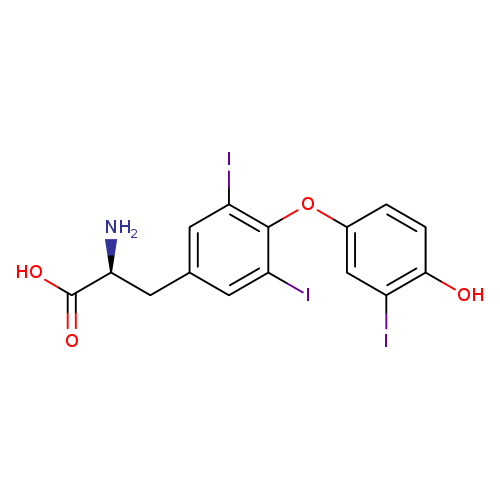
Common NameLiothyronine
ClassSmall Molecule
DescriptionThe L-triiodothyronine (T3, liothyronine) thyroid hormone is normally synthesized and secreted by the thyroid gland in much smaller quantities than L-tetraiodothyronine (T4, levothyroxine, L-thyroxine). Most T3 is derived from peripheral monodeiodination of T4 at the 5 position of the outer ring of the iodothyronine nucleus. The hormone finally delivered and used by the tissues is mainly T3.
Contaminant Sources
  • FooDB Chemicals
  • HMDB Contaminants - Urine
  • STOFF IDENT Compounds
  • T3DB toxins
  • ToxCast & Tox21 Chemicals
Contaminant Type
  • Amine
  • Animal Toxin
  • Drug
  • Ether
  • Food Toxin
  • Hormone Replacement Agent
  • Metabolite
  • Natural Compound
  • Organic Compound
Chemical Structure
Thumb
Synonyms
ValueSource
3,5,3'-Triiodo-L-thyronineChEBI
3,5,3'-TriiodothyronineChEBI
3,5,3'TRIIODOTHYRONINEChEBI
4-(4-Hydroxy-3-iodophenoxy)-3,5-diiodo-L-phenylalanineChEBI
L-3,5,3'-TriiodothyronineChEBI
L-T3ChEBI
LiothyroninumChEBI
LiotironinaChEBI
O-(4-Hydroxy-3-iodophenyl)-3,5-diiodo-L-tyrosineChEBI
T3ChEBI
TertroxinChEBI
TresitopeChEBI
TriiodothyronineChEBI
3,3',5-Triiodo-L-thyronineKegg
ThyrolarKegg
3,3',5-TriiodothyronineHMDB
CytomelHMDB
T3 Thyroid hormoneHMDB
Thyroid hormone, T3HMDB
Liothyronine sodiumHMDB
3,3',5'-Triiodo-L-thyronineHMDB
3,3',5'-TriiodothyronineHMDB
4-(4-Hydroxy-3-iodophenoxy)-3,5-diiodophenylalanineHMDB
CyronineHMDB
L-3,3',5-Triiodo-thyronineHMDB
L-3,3',5-TriiodothyronineHMDB
L-3-[4-(4-Hydroxy-3-iodophenoxy)-3,5-diiodophenyl]-alanineHMDB
L-LiothyronineHMDB
L-TriiodothyronineHMDB
LiothyroninHMDB
Triiodo-L-thyronineHMDB
Chemical FormulaC15H12I3NO4
Average Molecular Mass650.974 g/mol
Monoisotopic Mass650.790 g/mol
CAS Registry Number6893-02-3
IUPAC Name(2S)-2-amino-3-[4-(4-hydroxy-3-iodophenoxy)-3,5-diiodophenyl]propanoic acid
Traditional Nameliothyronine
SMILESN[C@@H](CC1=CC(I)=C(OC2=CC(I)=C(O)C=C2)C(I)=C1)C(O)=O
InChI IdentifierInChI=1S/C15H12I3NO4/c16-9-6-8(1-2-13(9)20)23-14-10(17)3-7(4-11(14)18)5-12(19)15(21)22/h1-4,6,12,20H,5,19H2,(H,21,22)/t12-/m0/s1
InChI KeyAUYYCJSJGJYCDS-LBPRGKRZSA-N
Chemical Taxonomy
Description belongs to the class of organic compounds known as phenylalanine and derivatives. Phenylalanine and derivatives are compounds containing phenylalanine or a derivative thereof resulting from reaction of phenylalanine at the amino group or the carboxy group, or from the replacement of any hydrogen of glycine by a heteroatom.
KingdomOrganic compounds
Super ClassOrganic acids and derivatives
ClassCarboxylic acids and derivatives
Sub ClassAmino acids, peptides, and analogues
Direct ParentPhenylalanine and derivatives
Alternative Parents
Substituents
  • Phenylalanine or derivatives
  • Diphenylether
  • Diaryl ether
  • 3-phenylpropanoic-acid
  • Alpha-amino acid
  • Amphetamine or derivatives
  • L-alpha-amino acid
  • Phenoxy compound
  • 2-iodophenol
  • 2-halophenol
  • Phenol ether
  • Iodobenzene
  • 1-hydroxy-2-unsubstituted benzenoid
  • Halobenzene
  • Phenol
  • Aralkylamine
  • Aryl iodide
  • Aryl halide
  • Monocyclic benzene moiety
  • Benzenoid
  • Amino acid
  • Ether
  • Carboxylic acid
  • Monocarboxylic acid or derivatives
  • Organic nitrogen compound
  • Primary aliphatic amine
  • Organohalogen compound
  • Organoiodide
  • Organonitrogen compound
  • Organooxygen compound
  • Primary amine
  • Carbonyl group
  • Hydrocarbon derivative
  • Organic oxide
  • Organopnictogen compound
  • Organic oxygen compound
  • Amine
  • Aromatic homomonocyclic compound
Molecular FrameworkAromatic homomonocyclic compounds
External Descriptors
Biological Properties
StatusDetected and Not Quantified
OriginExogenous
Cellular Locations
  • Cytoplasm
  • Extracellular
  • Membrane
Biofluid LocationsNot Available
Tissue Locations
  • Adipose Tissue
  • Adrenal Gland
  • Epidermis
  • Fibroblasts
  • Intestine
  • Nerve Cells
  • Neuron
  • Placenta
  • Platelet
  • Skeletal Muscle
  • Testes
  • Thyroid Gland
Pathways
NameSMPDB LinkKEGG Link
Tyrosine MetabolismSMP00006 map00350
ApplicationsNot Available
Biological RolesNot Available
Chemical RolesNot Available
Physical Properties
StateSolid
AppearanceWhite powder.
Experimental Properties
PropertyValue
Melting Point236-237°C
Boiling PointNot Available
Solubility3.96 mg/L (at 37°C)
Predicted Properties
PropertyValueSource
Water Solubility0.02 g/LALOGPS
logP0.82ALOGPS
logP2.8ChemAxon
logS-4.5ALOGPS
pKa (Strongest Acidic)0.3ChemAxon
pKa (Strongest Basic)9.48ChemAxon
Physiological Charge0ChemAxon
Hydrogen Acceptor Count4ChemAxon
Hydrogen Donor Count3ChemAxon
Polar Surface Area92.78 ŲChemAxon
Rotatable Bond Count5ChemAxon
Refractivity113.43 m³·mol⁻¹ChemAxon
Polarizability43.92 ųChemAxon
Number of Rings2ChemAxon
Bioavailability1ChemAxon
Rule of FiveNoChemAxon
Ghose FilterNoChemAxon
Veber's RuleNoChemAxon
MDDR-like RuleNoChemAxon
Spectra
Spectra
Spectrum TypeDescriptionSplash KeyView
Predicted GC-MSPredicted GC-MS Spectrum - GC-MS (Non-derivatized) - 70eV, Positivesplash10-05a9-5090378000-014ef55558b58a3d38f2Spectrum
Predicted GC-MSPredicted GC-MS Spectrum - GC-MS (TMS_1_1) - 70eV, PositiveNot AvailableSpectrum
Predicted GC-MSPredicted GC-MS Spectrum - GC-MS (TMS_1_2) - 70eV, PositiveNot AvailableSpectrum
Predicted GC-MSPredicted GC-MS Spectrum - GC-MS (TMS_1_3) - 70eV, PositiveNot AvailableSpectrum
Predicted GC-MSPredicted GC-MS Spectrum - GC-MS (TMS_2_1) - 70eV, PositiveNot AvailableSpectrum
Predicted GC-MSPredicted GC-MS Spectrum - GC-MS (TMS_2_2) - 70eV, PositiveNot AvailableSpectrum
Predicted GC-MSPredicted GC-MS Spectrum - GC-MS (TMS_2_3) - 70eV, PositiveNot AvailableSpectrum
Predicted GC-MSPredicted GC-MS Spectrum - GC-MS (TMS_2_4) - 70eV, PositiveNot AvailableSpectrum
Predicted GC-MSPredicted GC-MS Spectrum - GC-MS (TBDMS_1_1) - 70eV, PositiveNot AvailableSpectrum
Predicted GC-MSPredicted GC-MS Spectrum - GC-MS (TBDMS_1_2) - 70eV, PositiveNot AvailableSpectrum
Predicted GC-MSPredicted GC-MS Spectrum - GC-MS (TBDMS_1_3) - 70eV, PositiveNot AvailableSpectrum
Predicted GC-MSPredicted GC-MS Spectrum - GC-MS (TBDMS_2_1) - 70eV, PositiveNot AvailableSpectrum
Predicted GC-MSPredicted GC-MS Spectrum - GC-MS (TBDMS_2_2) - 70eV, PositiveNot AvailableSpectrum
Predicted GC-MSPredicted GC-MS Spectrum - GC-MS (TBDMS_2_3) - 70eV, PositiveNot AvailableSpectrum
Predicted GC-MSPredicted GC-MS Spectrum - GC-MS (TBDMS_2_4) - 70eV, PositiveNot AvailableSpectrum
Predicted GC-MSPredicted GC-MS Spectrum - GC-MS ("Liothyronine,1TMS,#1" TMS) - 70eV, PositiveNot AvailableSpectrum
LC-MS/MSLC-MS/MS Spectrum - Quattro_QQQ 10V, N/A (Annotated)splash10-000i-0009001000-1d47041336da63b556e4Spectrum
LC-MS/MSLC-MS/MS Spectrum - Quattro_QQQ 25V, N/A (Annotated)splash10-000i-1009001000-15f70073b9018f013c9cSpectrum
LC-MS/MSLC-MS/MS Spectrum - Quattro_QQQ 40V, N/A (Annotated)splash10-000i-0009000000-71c231d7a3ab505815ffSpectrum
LC-MS/MSLC-MS/MS Spectrum - LC-ESI-QQ (API3000, Applied Biosystems) 10V, Negativesplash10-0udi-0000009000-f932659d1e6d8a622985Spectrum
LC-MS/MSLC-MS/MS Spectrum - LC-ESI-QQ (API3000, Applied Biosystems) 20V, Negativesplash10-0udi-0000009000-6506a7a71dab928abfb0Spectrum
LC-MS/MSLC-MS/MS Spectrum - LC-ESI-QQ (API3000, Applied Biosystems) 30V, Negativesplash10-0fc0-0700119000-1df6db0e3031eb2739faSpectrum
LC-MS/MSLC-MS/MS Spectrum - LC-ESI-QQ (API3000, Applied Biosystems) 40V, Negativesplash10-004i-0900000000-973fc871534b19242cc8Spectrum
LC-MS/MSLC-MS/MS Spectrum - LC-ESI-QQ (API3000, Applied Biosystems) 50V, Negativesplash10-004i-0900000000-ac3c4a198bb017dc7cccSpectrum
LC-MS/MSLC-MS/MS Spectrum - LC-ESI-QQ (API3000, Applied Biosystems) 10V, Positivesplash10-0udi-0000009000-2770ece749a9fa1042f4Spectrum
LC-MS/MSLC-MS/MS Spectrum - LC-ESI-QQ (API3000, Applied Biosystems) 20V, Positivesplash10-0udi-0000009000-881174c66da97022d645Spectrum
LC-MS/MSLC-MS/MS Spectrum - LC-ESI-QQ (API3000, Applied Biosystems) 30V, Positivesplash10-0a4i-0000019000-6f798ae76702a3053339Spectrum
LC-MS/MSLC-MS/MS Spectrum - LC-ESI-QQ (API3000, Applied Biosystems) 40V, Positivesplash10-0a4i-0000219000-d2ca9f0cc3c1b47176b5Spectrum
LC-MS/MSLC-MS/MS Spectrum - LC-ESI-QQ (API3000, Applied Biosystems) 50V, Positivesplash10-056r-0021915000-6f3810619f383bce651aSpectrum
LC-MS/MSLC-MS/MS Spectrum - LC-ESI-QQ , negativesplash10-0udi-0000009000-f932659d1e6d8a622985Spectrum
LC-MS/MSLC-MS/MS Spectrum - LC-ESI-QQ , negativesplash10-0udi-0000009000-6506a7a71dab928abfb0Spectrum
LC-MS/MSLC-MS/MS Spectrum - LC-ESI-QQ , negativesplash10-0fc0-0700119000-1df6db0e3031eb2739faSpectrum
LC-MS/MSLC-MS/MS Spectrum - LC-ESI-QQ , negativesplash10-004i-0900000000-973fc871534b19242cc8Spectrum
LC-MS/MSLC-MS/MS Spectrum - LC-ESI-QQ , negativesplash10-004i-0900000000-ac3c4a198bb017dc7cccSpectrum
LC-MS/MSLC-MS/MS Spectrum - LC-ESI-QQ , positivesplash10-0udi-0000009000-2770ece749a9fa1042f4Spectrum
Predicted LC-MS/MSPredicted LC-MS/MS Spectrum - 10V, Positivesplash10-0pb9-0000009000-4d60e144164273111464Spectrum
Predicted LC-MS/MSPredicted LC-MS/MS Spectrum - 20V, Positivesplash10-0a4i-0000149000-87babecf610c68223da5Spectrum
Predicted LC-MS/MSPredicted LC-MS/MS Spectrum - 40V, Positivesplash10-016r-0039010000-b57f6dd23e6456cf7c1eSpectrum
Predicted LC-MS/MSPredicted LC-MS/MS Spectrum - 10V, Negativesplash10-0002-0010009000-50e441d89395debe176bSpectrum
Predicted LC-MS/MSPredicted LC-MS/MS Spectrum - 20V, Negativesplash10-001j-0050139000-a259e39ad1204b60b373Spectrum
Predicted LC-MS/MSPredicted LC-MS/MS Spectrum - 40V, Negativesplash10-00e9-9262431000-bcc1f7554c4e309cef17Spectrum
1D NMR1H NMR SpectrumNot AvailableSpectrum
2D NMR[1H,13C] 2D NMR SpectrumNot AvailableSpectrum
Toxicity Profile
Route of Exposure95% in 4 hours
Mechanism of ToxicityThe hormones, T4 and T3, are tyrosine-based hormones produced by the thyroid gland. Iodine is an important component in their synthesis. The major form of thyroid hormone in the blood is thyroxine (T4). This is converted to the more active liothyronine form by deiodinases in peripheral tissues. Liothyronine acts on the body to increase the basal metabolic rate, affect protein synthesis and increase the body's sensitivity to catecholamines (such as adrenaline). The thyroid hormones are essential to proper development and differentiation of all cells of the human body. To various extents T4 and T3 regulate protein, fat and carbohydrate metabolism. Their most pronounced effect is on how human cells use energetic compounds. The thyroid hormone derivatives bind to the thyroid hormone receptors initially to initiate their downstream effects.
MetabolismHalf Life: 2.5 days
Toxicity ValuesNot Available
Lethal DoseNot Available
Carcinogenicity (IARC Classification)No indication of carcinogenicity to humans (not listed by IARC).
Uses/SourcesUsed as replacement or supplemental therapy in patients with hypothyroidism of any etiology, except transient hypothyrodism during the recovery phase of subacute thyroiditis.
Minimum Risk LevelNot Available
Health EffectsNot Available
SymptomsNot Available
TreatmentNot Available
Concentrations
Not Available
DrugBank IDDB00279
HMDB IDHMDB0000265
FooDB IDNot Available
Phenol Explorer IDNot Available
KNApSAcK IDNot Available
BiGG IDNot Available
BioCyc IDCPD-10813
METLIN IDNot Available
PDB IDNot Available
Wikipedia LinkTriiodothyronine
Chemspider IDNot Available
ChEBI ID18258
PubChem Compound ID5920
Kegg Compound IDC02465
YMDB IDNot Available
ECMDB IDECMDB24026
References
Synthesis Reference

Martin Beasley, David Hause, Irwin Klein, Charles Pamplin, David Reynolds, Kevin Sills, “Controlled release pharmaceutical compositions of liothyronine and methods of making and using the same.” U.S. Patent US20060246133, issued November 02, 2006.

MSDSLink
General References
1. Slebodzinski AB, Nowak J, Gawecka H, Sechman A: Thyroid hormones and insulin in milk; a comparative study. Endocrinol Exp. 1986 Aug;20(2-3):247-55.
2. Salamonczyk, Grzegorz M.; Oza, Vibha B.; Sih, Charles J. A concise synthesis of thyroxine (T4) and 3,5,3'-triiodo-L-thyronine (T3). Tetrahedron Letters (1997), 38(40), 6965-69
3. Stalenheim EG: Long-term validity of biological markers of psychopathy and criminal recidivism: follow-up 6-8 years after forensic psychiatric investigation. Psychiatry Res. 2004 Jan 1;121(3):281-91.
4. Schwartz CE, May MM, Carpenter NJ, Rogers RC, Martin J, Bialer MG, Ward J, Sanabria J, Marsa S, Lewis JA, Echeverri R, Lubs HA, Voeller K, Simensen RJ, Stevenson RE: Allan-Herndon-Dudley syndrome and the monocarboxylate transporter 8 (MCT8) gene. Am J Hum Genet. 2005 Jul;77(1):41-53. Epub 2005 May 11.
5. Zimmermann-Belsing T, Dreyer M, Holst JJ, Feldt-Rasmussen U: The relationship between the serum leptin concentrations of thyrotoxic patients during treatment and their total fat mass is different from that of normal subjects. Clin Endocrinol (Oxf). 1998 Nov;49(5):589-95.
6. Holt PJ: In vitro responses of the epidermis to triiodothyronine. J Invest Dermatol. 1978 Sep;71(3):202-4.
7. Mizuma H, Murakami M, Mori M: Thyroid hormone activation in human vascular smooth muscle cells: expression of type II iodothyronine deiodinase. Circ Res. 2001 Feb 16;88(3):313-8.
8. Himms-Hagen J: Brown adipose tissue thermogenesis: interdisciplinary studies. FASEB J. 1990 Aug;4(11):2890-8.
9. Gledhill RF, Dessein PH, Van der Merwe CA: Treatment of Raynaud's phenomenon with triiodothyronine corrects co-existent autonomic dysfunction: preliminary findings. Postgrad Med J. 1992 Apr;68(798):263-7.
10. Kassem M, Brixen K, Mosekilde L, Blum WF, Flyvbjerg A: Effects of growth hormone treatment on serum levels of insulin-like growth factors (IGFs) and IGF binding proteins 1-4 in postmenopausal women. Clin Endocrinol (Oxf). 1998 Dec;49(6):747-56.
11. Llewellyn L, Ramsurn VP, Wigham T, Sweeney GE, Power DM: Cloning, characterisation and expression of the apolipoprotein A-I gene in the sea bream (Sparus aurata). Biochim Biophys Acta. 1998 Nov 8;1442(2-3):399-404.
12. Dutkiewicz S, Witeska A, Nauman A: The deiodination of thyroxine to triiodothyronine in the testes of patients with prostate cancer. Int Urol Nephrol. 1995;27(1):81-5.
13. Gil'miiarova FN, Pervova IuV, Radomskaia VM, Gergel' NI, Tarasova SV: [Levels of unified metabolites and thyroid hormones in blood and oral fluid of children with minimal brain dysfunction]. Biomed Khim. 2004 Mar-Apr;50(2):204-10.
14. Rosenbaum M, Goldsmith R, Bloomfield D, Magnano A, Weimer L, Heymsfield S, Gallagher D, Mayer L, Murphy E, Leibel RL: Low-dose leptin reverses skeletal muscle, autonomic, and neuroendocrine adaptations to maintenance of reduced weight. J Clin Invest. 2005 Dec;115(12):3579-86.
15. Urcelay E, Jareno MA, Menaya J, Parrilla R, Ayuso MS, Martin-Requero A: Cloning and functional characterization of the 5' regulatory region of the human mitochondrial glycerol-3-phosphate dehydrogenase gene. Lack of 3,5,3'-triiodothyronine responsiveness in adipose tissue. Eur J Biochem. 2000 Dec;267(24):7209-17.
16. Escobar-Morreale HF, Botella-Carretero JI, Gomez-Bueno M, Galan JM, Barrios V, Sancho J: Thyroid hormone replacement therapy in primary hypothyroidism: a randomized trial comparing L-thyroxine plus liothyronine with L-thyroxine alone. Ann Intern Med. 2005 Mar 15;142(6):412-24.
17. Lebon V, Dufour S, Petersen KF, Ren J, Jucker BM, Slezak LA, Cline GW, Rothman DL, Shulman GI: Effect of triiodothyronine on mitochondrial energy coupling in human skeletal muscle. J Clin Invest. 2001 Sep;108(5):733-7.
18. Iwao H, Abe Y: [Expression of the renin and angiotensinogen genes]. Nihon Yakurigaku Zasshi. 1991 Jan;97(1):1-11.
19. Calvo R, Obregon MJ, Ruiz de Ona C, Escobar del Rey F, Morreale de Escobar G: Congenital hypothyroidism, as studied in rats. Crucial role of maternal thyroxine but not of 3,5,3'-triiodothyronine in the protection of the fetal brain. J Clin Invest. 1990 Sep;86(3):889-99.
20. Haas MJ, Fishman M, Mreyoud A, Mooradian AD: Thyroid hormone responsive protein (THRP) mediates thyroid hormone-induced cytotoxicity in primary neuronal cultures. Exp Brain Res. 2005 Jan;160(4):424-32. Epub 2004 Oct 15.
21. https://www.ncbi.nlm.nih.gov/pubmed/?term=11738632
22. https://www.ncbi.nlm.nih.gov/pubmed/?term=15206581
23. https://www.ncbi.nlm.nih.gov/pubmed/?term=19339791